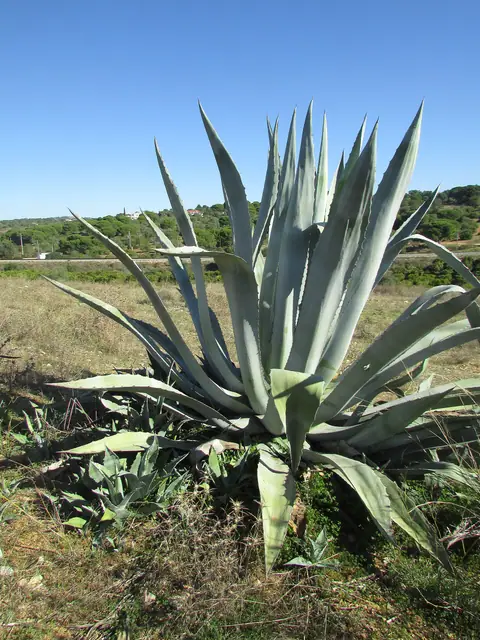
Century Plant problems & how to fix them
Agave americana
Drooping, yellowing, brown tips, or a plant that just won’t thrive? Here are the most common Century Plant problems, what usually causes them, and how to turn things around.
Common problems
Root rot
Cool, damp soil in winter rots the core; agaves die from the center outward. A fungal or bacterial infection of the roots, almost always triggered by soil staying wet too long. Caught early, most plants recover within a few weeks after repotting; if most roots are already mushy, recovery is uncertain.
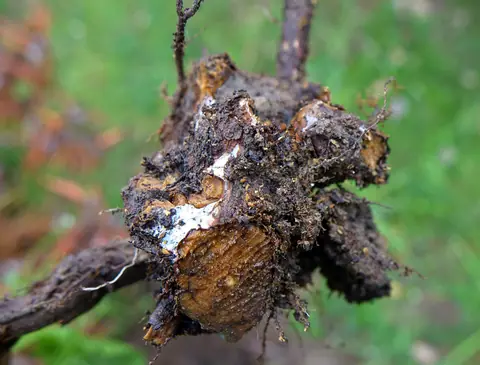
Phytophthora root rot on a dug-up root ball
Photo: Jerzy Opioła · CC BY-SA 4.0 · Wikimedia Commons
Etiolation (insufficient light)
Indoors without direct sun the stiff rosette grows floppy, pale, and drawn. The plant is stretching toward light it isn't getting: long gaps between leaves, pale thin growth, and leaning. Stretched growth never compacts again, but with more light all new growth comes in full and sturdy - the plant's future is good.
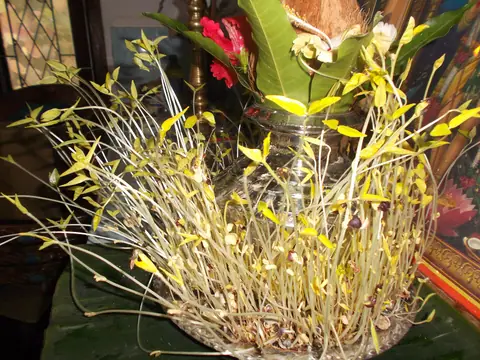
etiolated seedlings stretching pale toward the light
Photo: சஞ்சீவி சிவகுமார் · CC BY-SA 4.0 · Wikimedia Commons
Scale insects
Armored scale specks fasten along the leaf undersides and margins. Sap-sucking insects that hide under hard, shell-like bumps stuck to stems and leaves, making them resistant to sprays. Treatment is mostly manual and takes patience, but most plants recover well over 4-6 weeks of consistent removal.
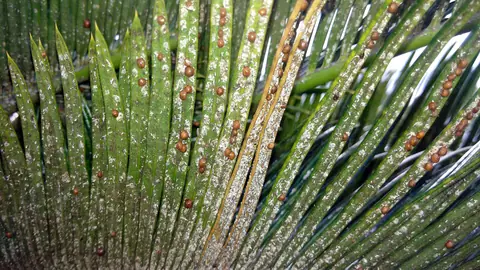
armoured scale insects dotting a cycad frond
Photo: Plant pests and diseases · CC0 · Wikimedia Commons
Sunburn
Even sun-lovers scorch when moved straight from indoors to intense summer sun. Leaf tissue scorched by more direct sun than the plant was acclimated to, often after moving it to a brighter spot or outdoors. Burned patches are permanent, but the plant itself usually recovers fully once moved - new growth comes in healthy.
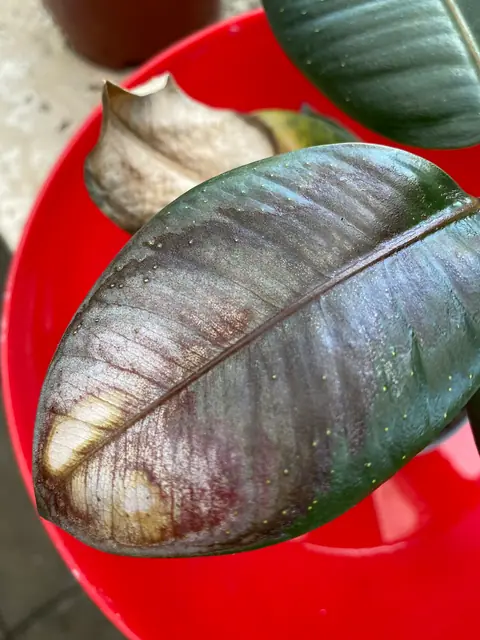
a sunburnt rubber plant leaf, bleached and browned where the sun hit
Photo: Secretlondon · CC BY-SA 4.0 · Wikimedia Commons
The mistakes that most often kill it
- Winter watering in a cold room — the rosette core rots invisibly.
- A shady placement that slowly starves this sun-dependent plant.
- Ignoring the spines around pets and children; the sap and punctures both cause harm.
Not sure what’s wrong?
Ploomily’s rescue tool walks you through the symptoms, gives an honest diagnosis, and schedules a day-by-day recovery plan. The founding price in force today is shown in full before you confirm, and locked for as long as you stay subscribed — with 30 days to change your mind.
Rescue my plant