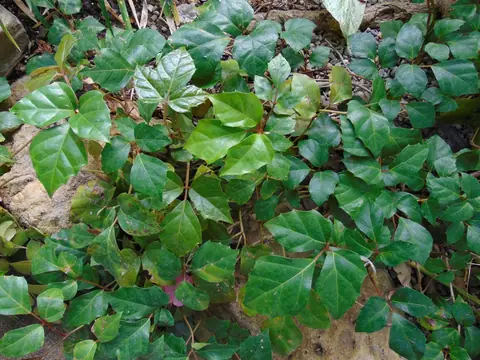
Grape Ivy problems & how to fix them
Cissus rhombifolia
Drooping, yellowing, brown tips, or a plant that just won’t thrive? Here are the most common Grape Ivy problems, what usually causes them, and how to turn things around.
Common problems
Powdery mildew
Cissus is notably prone to mildew in still, humid air with poor circulation. A fungal disease that coats leaves in a white, powdery film and slowly weakens the plant. Caught early and treated consistently, most plants recover fully within a few weeks.
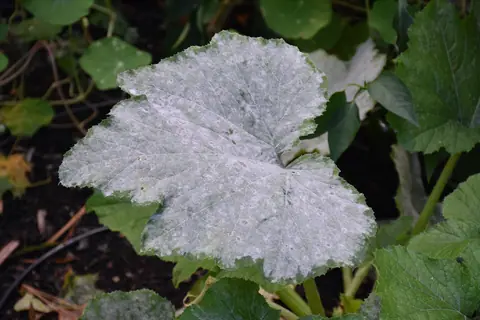
powdery mildew's white coating on leaves
Photo: Dmitry Brant · CC BY-SA 4.0 · Wikimedia Commons
Root rot
Leaf drop throughout the vine usually signals wet, airless soil. A fungal or bacterial infection of the roots, almost always triggered by soil staying wet too long. Caught early, most plants recover within a few weeks after repotting; if most roots are already mushy, recovery is uncertain.
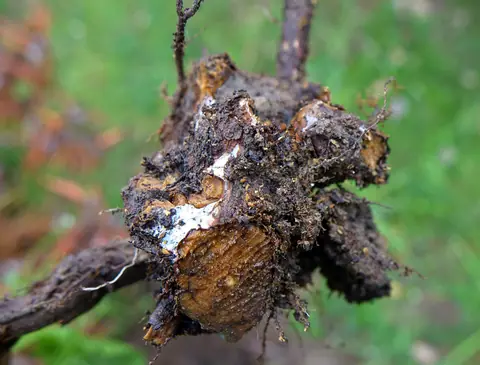
Phytophthora root rot on a dug-up root ball
Photo: Jerzy Opioła · CC BY-SA 4.0 · Wikimedia Commons
Spider mites
Dry heated air lets mites colonize the leaf undersides. Tiny sap-sucking mites that thrive in warm, dry air and leave fine webbing and speckled leaves. Caught early they are very treatable; most plants recover fully within 3-4 weeks of consistent treatment.
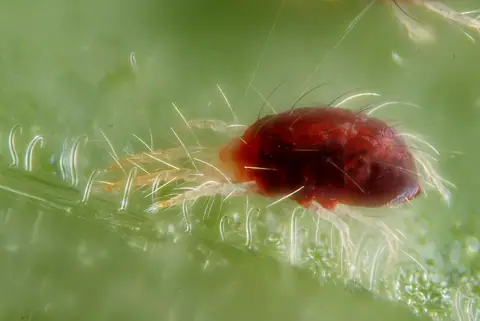
a two-spotted spider mite among its silk threads
Photo: Gilles San Martin · CC BY-SA 2.0 · Wikimedia Commons
Etiolation (insufficient light)
Deep shade produces thin, sparse runners. The plant is stretching toward light it isn't getting: long gaps between leaves, pale thin growth, and leaning. Stretched growth never compacts again, but with more light all new growth comes in full and sturdy - the plant's future is good.
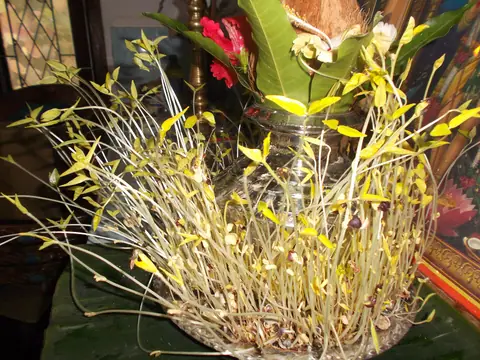
etiolated seedlings stretching pale toward the light
Photo: சஞ்சீவி சிவகுமார் · CC BY-SA 4.0 · Wikimedia Commons
The mistakes that most often kill it
- Chronic overwatering, which defoliates the vine branch by branch.
- Stagnant, muggy corners where mildew coats the leaves.
- Hot direct sun scorching the glossy foliage.
Not sure what’s wrong?
Ploomily’s rescue tool walks you through the symptoms, gives an honest diagnosis, and schedules a day-by-day recovery plan. The founding price in force today is shown in full before you confirm, and locked for as long as you stay subscribed — with 30 days to change your mind.
Rescue my plant