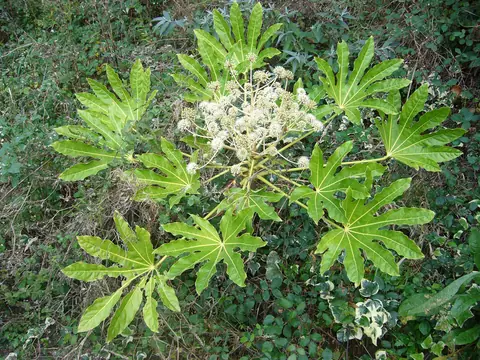
Japanese Aralia problems & how to fix them
Fatsia japonica
Drooping, yellowing, brown tips, or a plant that just won’t thrive? Here are the most common Japanese Aralia problems, what usually causes them, and how to turn things around.
Common problems
Spider mites
Warm, dry rooms are its weak point; mites hit stressed plants fast. Tiny sap-sucking mites that thrive in warm, dry air and leave fine webbing and speckled leaves. Caught early they are very treatable; most plants recover fully within 3-4 weeks of consistent treatment.
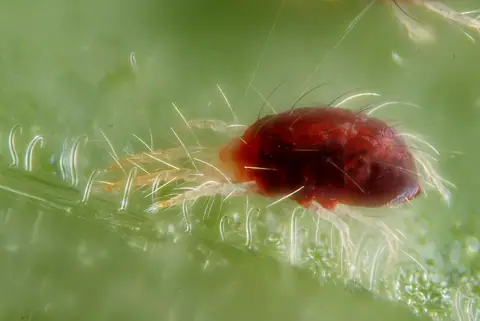
a two-spotted spider mite among its silk threads
Photo: Gilles San Martin · CC BY-SA 2.0 · Wikimedia Commons
Underwatering
The big leaves lose water quickly and wilt dramatically when the pot dries. The plant is not getting enough water, either from infrequent watering or soil so dry it repels water. Prognosis is excellent - most underwatered plants perk up within days of proper rehydration.
Scale insects
Check stems and leaf undersides for brown bumps on older plants. Sap-sucking insects that hide under hard, shell-like bumps stuck to stems and leaves, making them resistant to sprays. Treatment is mostly manual and takes patience, but most plants recover well over 4-6 weeks of consistent removal.
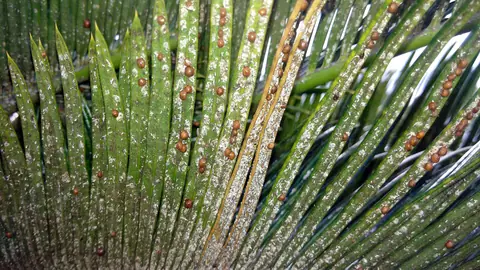
armoured scale insects dotting a cycad frond
Photo: Plant pests and diseases · CC0 · Wikimedia Commons
Sunburn
Direct summer sun bleaches and burns the broad leaves. Leaf tissue scorched by more direct sun than the plant was acclimated to, often after moving it to a brighter spot or outdoors. Burned patches are permanent, but the plant itself usually recovers fully once moved - new growth comes in healthy.
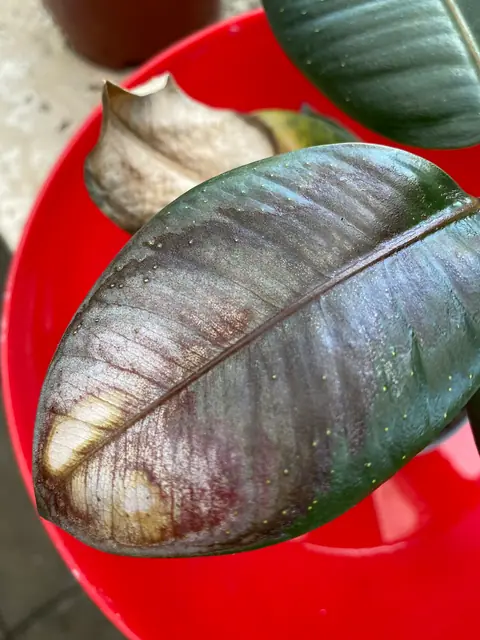
a sunburnt rubber plant leaf, bleached and browned where the sun hit
Photo: Secretlondon · CC BY-SA 4.0 · Wikimedia Commons
The mistakes that most often kill it
- Hot, dry air near heating vents, which brings mites and crisped leaves.
- Full afternoon sun through glass.
- Letting a large, thirsty specimen dry out repeatedly.
Not sure what’s wrong?
Ploomily’s rescue tool walks you through the symptoms, gives an honest diagnosis, and schedules a day-by-day recovery plan. The founding price in force today is shown in full before you confirm, and locked for as long as you stay subscribed — with 30 days to change your mind.
Rescue my plant