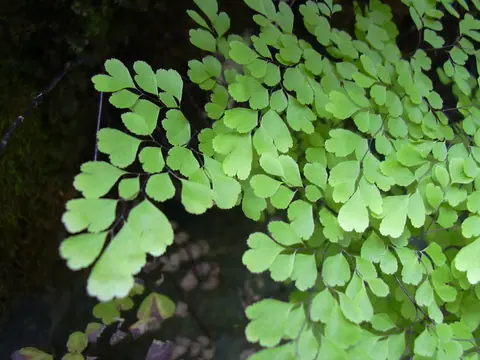
Maidenhair Fern problems & how to fix them
Adiantum raddianum
Drooping, yellowing, brown tips, or a plant that just won’t thrive? Here are the most common Maidenhair Fern problems, what usually causes them, and how to turn things around.
Common problems
Crispy tips (low humidity)
Even one missed watering or a spell of dry air browns the delicate leaflets almost overnight. Brown, dry leaf tips caused by air that is too dry for the plant, common in heated or air-conditioned rooms. Existing crispy tips never turn green again, but with higher humidity new growth should come in clean within a few weeks.
Underwatering
The thin fronds have no water reserves; a fully dried pot can crisp the whole plant in a day. The plant is not getting enough water, either from infrequent watering or soil so dry it repels water. Prognosis is excellent - most underwatered plants perk up within days of proper rehydration.
Spider mites
Dry winter air invites mites, which quickly stipple the fine foliage. Tiny sap-sucking mites that thrive in warm, dry air and leave fine webbing and speckled leaves. Caught early they are very treatable; most plants recover fully within 3-4 weeks of consistent treatment.
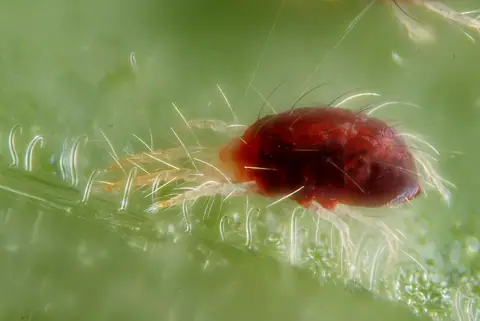
a two-spotted spider mite among its silk threads
Photo: Gilles San Martin · CC BY-SA 2.0 · Wikimedia Commons
Fungus gnats
The constantly moist soil this fern needs is prime gnat habitat — top-dress with sand or use BTI if they appear. Small dark flies that breed in constantly moist potting soil; the adults are harmless but annoying, while larvae can nibble roots of seedlings and weak plants. Very treatable by drying out the soil; expect the flies to fade over 2-3 weeks.
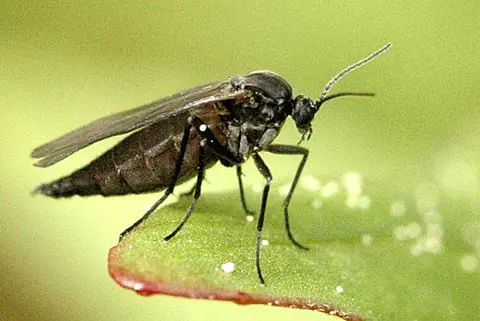
an adult fungus gnat resting on a leaf
Photo: James K. Lindsey · CC BY-SA 3.0 · Wikimedia Commons
The mistakes that most often kill it
- Letting the root ball dry out completely, even once.
- Placing it near a heater or in direct sun.
- Assuming a crisped plant is dead and tossing it instead of cutting back and rehydrating.
Not sure what’s wrong?
Ploomily’s rescue tool walks you through the symptoms, gives an honest diagnosis, and schedules a day-by-day recovery plan. The founding price in force today is shown in full before you confirm, and locked for as long as you stay subscribed — with 30 days to change your mind.
Rescue my plant