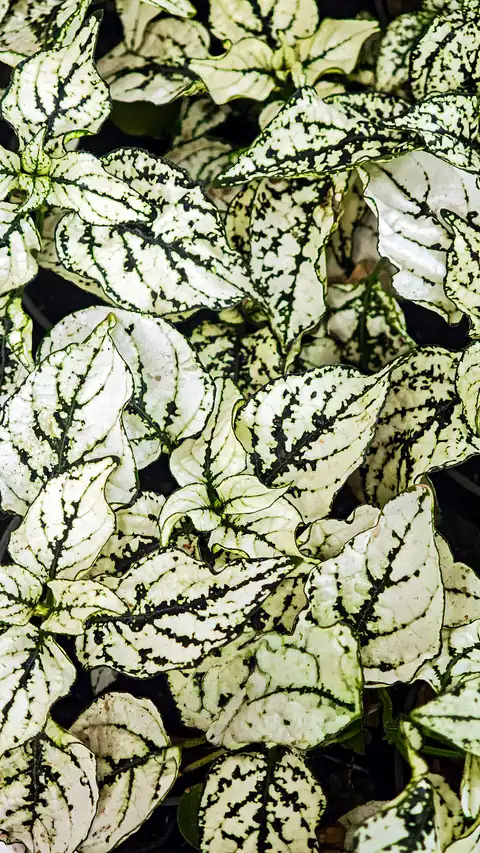
Polka Dot Plant problems & how to fix them
Hypoestes phyllostachya
Drooping, yellowing, brown tips, or a plant that just won’t thrive? Here are the most common Polka Dot Plant problems, what usually causes them, and how to turn things around.
Common problems
Etiolation (insufficient light)
Stretches into a leggy sprawl fast in dim light — pinch constantly. The plant is stretching toward light it isn't getting: long gaps between leaves, pale thin growth, and leaning. Stretched growth never compacts again, but with more light all new growth comes in full and sturdy - the plant's future is good.
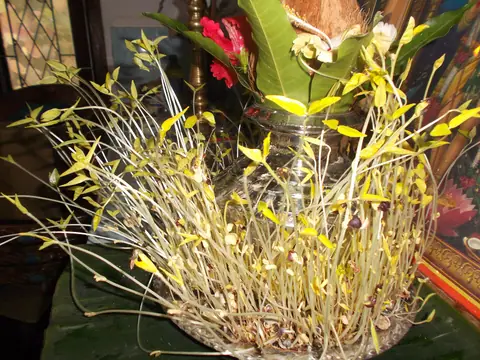
etiolated seedlings stretching pale toward the light
Photo: சஞ்சீவி சிவகுமார் · CC BY-SA 4.0 · Wikimedia Commons
Underwatering
Small pots dry quickly and repeated wilting costs lower leaves. The plant is not getting enough water, either from infrequent watering or soil so dry it repels water. Prognosis is excellent - most underwatered plants perk up within days of proper rehydration.
Powdery mildew
White powder on leaves appears in humid, still air. A fungal disease that coats leaves in a white, powdery film and slowly weakens the plant. Caught early and treated consistently, most plants recover fully within a few weeks.
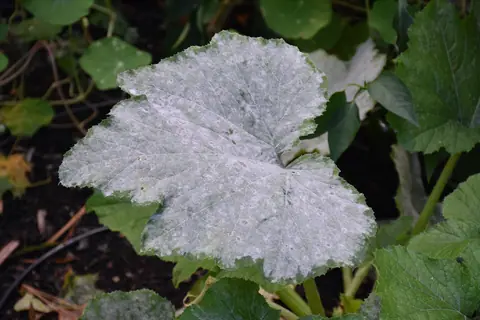
powdery mildew's white coating on leaves
Photo: Dmitry Brant · CC BY-SA 4.0 · Wikimedia Commons
Root rot
Soggy soil rots the fine roots, especially in cool rooms. A fungal or bacterial infection of the roots, almost always triggered by soil staying wet too long. Caught early, most plants recover within a few weeks after repotting; if most roots are already mushy, recovery is uncertain.
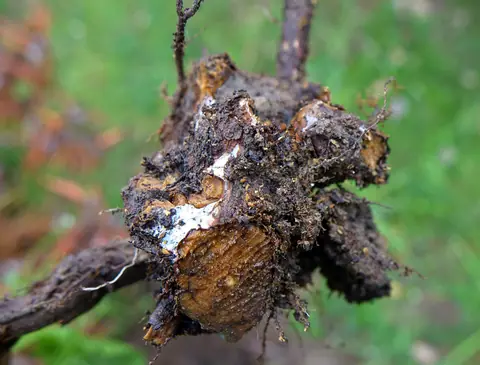
Phytophthora root rot on a dug-up root ball
Photo: Jerzy Opioła · CC BY-SA 4.0 · Wikimedia Commons
The mistakes that most often kill it
- Letting it repeatedly wilt dry until it exhausts itself.
- Deep shade that ruins both color and shape.
- Letting it bolt into flower and set seed without taking cuttings first.
Not sure what’s wrong?
Ploomily’s rescue tool walks you through the symptoms, gives an honest diagnosis, and schedules a day-by-day recovery plan. The founding price in force today is shown in full before you confirm, and locked for as long as you stay subscribed — with 30 days to change your mind.
Rescue my plant