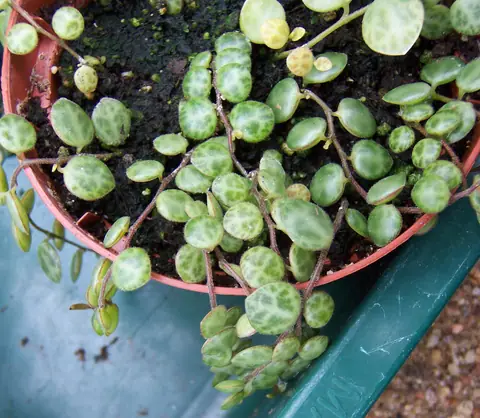
String of Turtles problems & how to fix them
Peperomia prostrata
Drooping, yellowing, brown tips, or a plant that just won’t thrive? Here are the most common String of Turtles problems, what usually causes them, and how to turn things around.
Common problems
Overwatering
Its shallow, fine roots rot quickly in constantly damp soil; leaves go translucent and drop. The soil is staying wet longer than the plant can handle, starving roots of oxygen. If caught before roots start rotting, the fix is simple - let the soil dry out and adjust the routine - and most plants bounce back within 2-3 weeks.
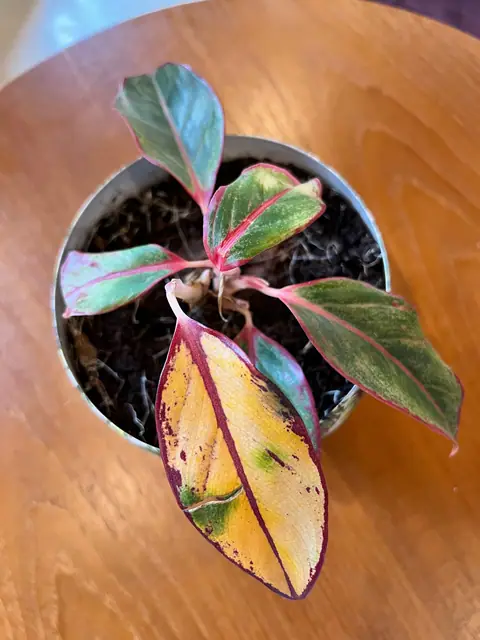
a yellowing lower leaf on a potted Chinese evergreen
Photo: Saurav9656 · CC BY-SA 4.0 · Wikimedia Commons
Underwatering
Left bone-dry too long, the small leaves shrivel and strands die back from the tips. The plant is not getting enough water, either from infrequent watering or soil so dry it repels water. Prognosis is excellent - most underwatered plants perk up within days of proper rehydration.
Fungus gnats
The consistently moist, peaty mix it likes is prime gnat habitat if kept too wet. Small dark flies that breed in constantly moist potting soil; the adults are harmless but annoying, while larvae can nibble roots of seedlings and weak plants. Very treatable by drying out the soil; expect the flies to fade over 2-3 weeks.
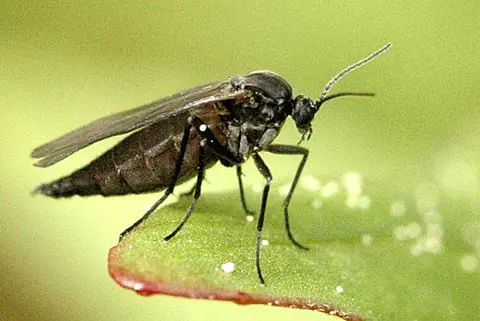
an adult fungus gnat resting on a leaf
Photo: James K. Lindsey · CC BY-SA 3.0 · Wikimedia Commons
Sunburn
Direct sun washes out the turtle-shell variegation and scorches the thin leaves. Leaf tissue scorched by more direct sun than the plant was acclimated to, often after moving it to a brighter spot or outdoors. Burned patches are permanent, but the plant itself usually recovers fully once moved - new growth comes in healthy.
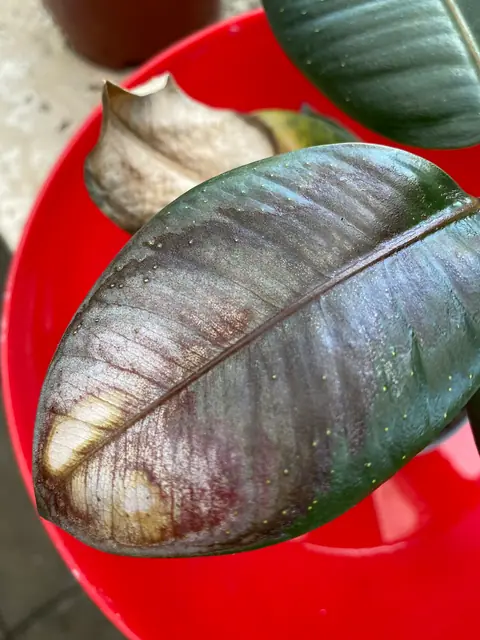
a sunburnt rubber plant leaf, bleached and browned where the sun hit
Photo: Secretlondon · CC BY-SA 4.0 · Wikimedia Commons
The mistakes that most often kill it
- Treating it like a true succulent and letting it fully desiccate between waterings.
- Potting it in a deep pot where the lower soil never dries — shallow pots only.
- Blasting it with direct sun, which fades and crisps the leaves within days.
Not sure what’s wrong?
Ploomily’s rescue tool walks you through the symptoms, gives an honest diagnosis, and schedules a day-by-day recovery plan. The founding price in force today is shown in full before you confirm, and locked for as long as you stay subscribed — with 30 days to change your mind.
Rescue my plant