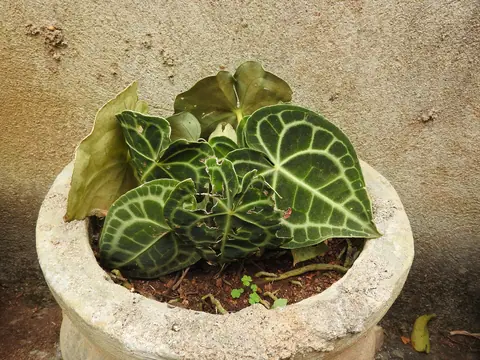
Velvet Cardboard Anthurium problems & how to fix them
Anthurium clarinervium
Drooping, yellowing, brown tips, or a plant that just won’t thrive? Here are the most common Velvet Cardboard Anthurium problems, what usually causes them, and how to turn things around.
Common problems
Root rot
The thick epiphytic roots rot fast in dense or constantly wet mix. A fungal or bacterial infection of the roots, almost always triggered by soil staying wet too long. Caught early, most plants recover within a few weeks after repotting; if most roots are already mushy, recovery is uncertain.
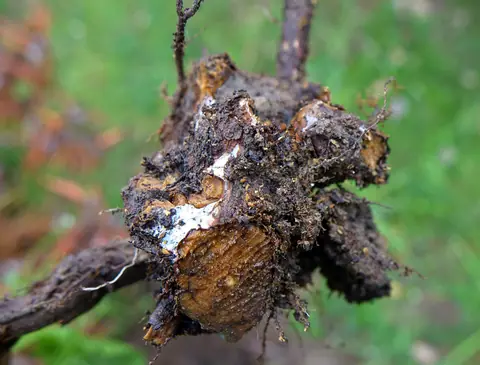
Phytophthora root rot on a dug-up root ball
Photo: Jerzy Opioła · CC BY-SA 4.0 · Wikimedia Commons
Crispy tips (low humidity)
Below ~50% humidity the leaf edges brown and new leaves emerge damaged. Brown, dry leaf tips caused by air that is too dry for the plant, common in heated or air-conditioned rooms. Existing crispy tips never turn green again, but with higher humidity new growth should come in clean within a few weeks.
Spider mites
Dry air brings mites to the textured undersides; damage shows badly on the slow-replaced leaves. Tiny sap-sucking mites that thrive in warm, dry air and leave fine webbing and speckled leaves. Caught early they are very treatable; most plants recover fully within 3-4 weeks of consistent treatment.
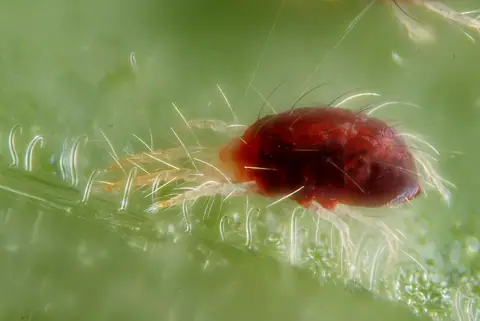
a two-spotted spider mite among its silk threads
Photo: Gilles San Martin · CC BY-SA 2.0 · Wikimedia Commons
Transplant shock
Root disturbance can stall this slow grower for months; repot gently. Stress that follows repotting or planting, caused by disturbed roots that temporarily cannot supply enough water. Most plants stabilize within two to four weeks with steady moisture and reduced stress, though some leaf loss along the way is normal.
The mistakes that most often kill it
- Potting in standard soil and watering like a pothos.
- Keeping it in dry air until every leaf edge browns.
- Cold, wet winter conditions — the fatal combination.
Not sure what’s wrong?
Ploomily’s rescue tool walks you through the symptoms, gives an honest diagnosis, and schedules a day-by-day recovery plan. The founding price in force today is shown in full before you confirm, and locked for as long as you stay subscribed — with 30 days to change your mind.
Rescue my plant