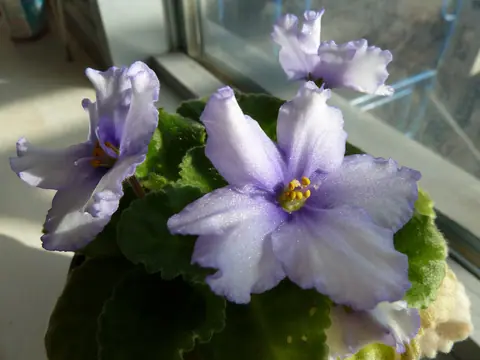
African Violet problems & how to fix them
Streptocarpus ionanthus
Drooping, yellowing, brown tips, or a plant that just won’t thrive? Here are the most common African Violet problems, what usually causes them, and how to turn things around.
Common problems
Root rot
Heavy soil and overzealous watering rot the crown and roots — use a light violet mix and modest pots. A fungal or bacterial infection of the roots, almost always triggered by soil staying wet too long. Caught early, most plants recover within a few weeks after repotting; if most roots are already mushy, recovery is uncertain.
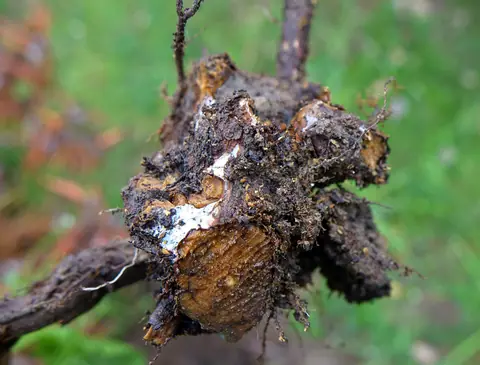
Phytophthora root rot on a dug-up root ball
Photo: Jerzy Opioła · CC BY-SA 4.0 · Wikimedia Commons
Overwatering
Its fuzzy leaves wilt from rot just like from drought, tricking owners into watering more. The soil is staying wet longer than the plant can handle, starving roots of oxygen. If caught before roots start rotting, the fix is simple - let the soil dry out and adjust the routine - and most plants bounce back within 2-3 weeks.
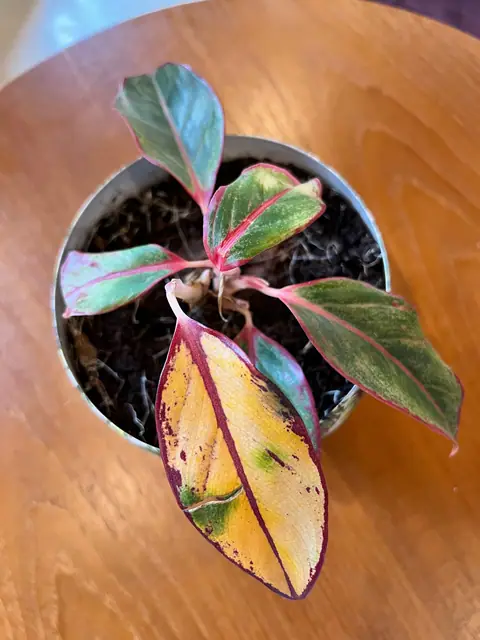
a yellowing lower leaf on a potted Chinese evergreen
Photo: Saurav9656 · CC BY-SA 4.0 · Wikimedia Commons
Powdery mildew
White powder dusts leaves and flowers in cool, stuffy rooms with poor airflow. A fungal disease that coats leaves in a white, powdery film and slowly weakens the plant. Caught early and treated consistently, most plants recover fully within a few weeks.
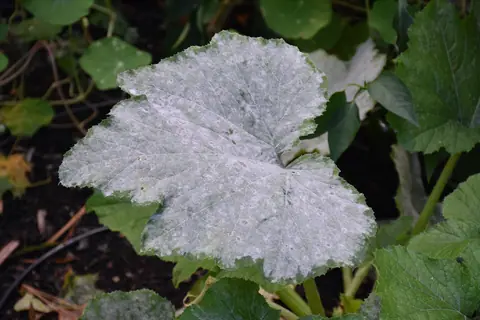
powdery mildew's white coating on leaves
Photo: Dmitry Brant · CC BY-SA 4.0 · Wikimedia Commons
Thrips
Thrips spill pollen from the flowers and scar petals — a common reason blooms look dirty. Tiny slender insects that rasp leaf surfaces and suck the sap, leaving silvery patches and deformed new growth. They are among the harder houseplant pests to clear, but persistent weekly treatment usually brings a plant back over 4-6 weeks.
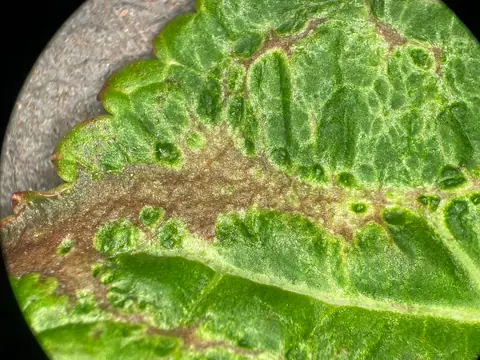
thrips scarring and bronzing on a hydrangea leaf
Photo: m.borden · CC BY-SA 2.0 · Wikimedia Commons
The mistakes that most often kill it
- Cold water on the leaves or roots, causing spots and shock.
- Overpotting into a large container of dense, wet soil.
- Interpreting a rot-wilt as thirst and watering it to death.
Not sure what’s wrong?
Ploomily’s rescue tool walks you through the symptoms, gives an honest diagnosis, and schedules a day-by-day recovery plan. The founding price in force today is shown in full before you confirm, and locked for as long as you stay subscribed — with 30 days to change your mind.
Rescue my plant