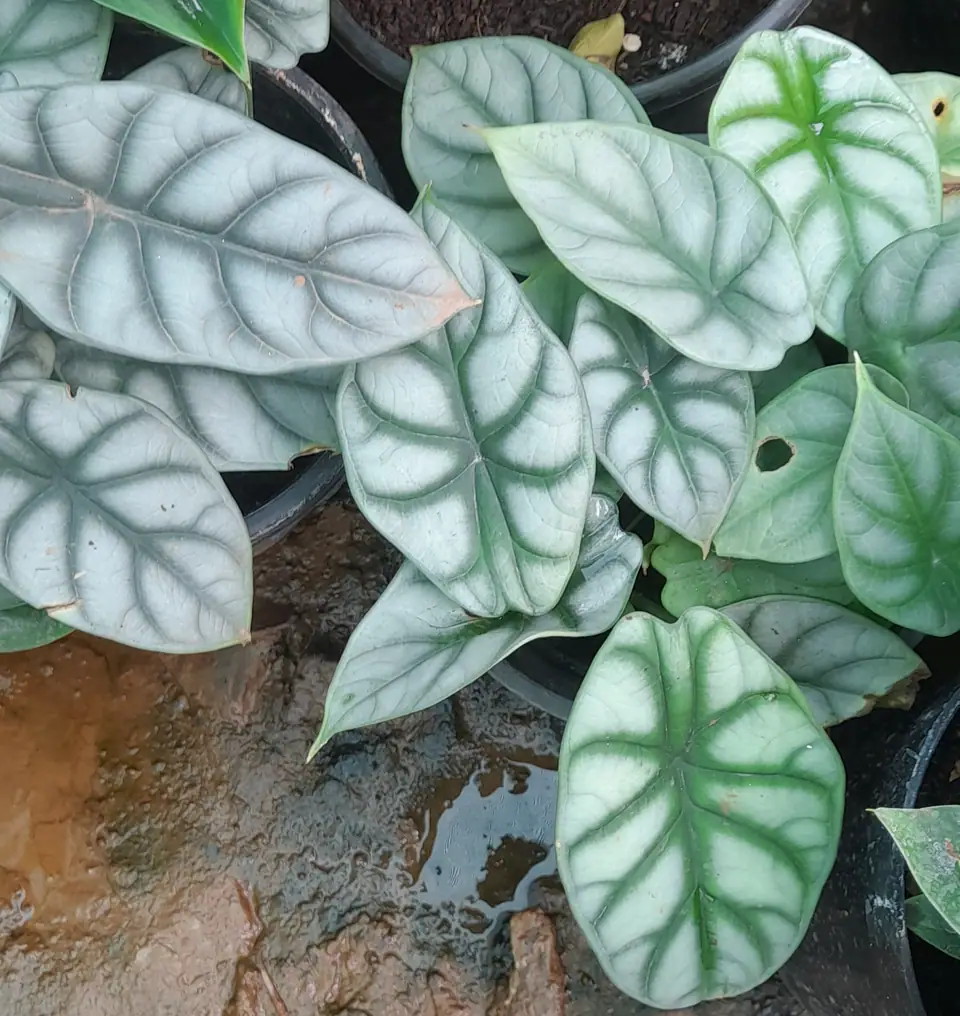
How to care for Alocasia Dragon Scale
Alocasia baginda 'Dragon Scale' · Araceae
Famous for hard, textured leaves that look like hammered reptile scales in silvery green with dark veining. A Bornean jewel alocasia that stays compact indoors. It thrives on warmth, high humidity, and an airy mix — and sulks quickly when any of those slip. Water roughly every 7 days while it's growing (about every 12 in winter), give it bright, indirect light, kept above 61°F (16°C) — it wants humid air.
Care at a glance
Water when the top few centimeters are dry; the thick leaves store a little water, so err on the drier side.
Bright, filtered light near a window brings out the scale texture; harsh direct sun bleaches and burns it.
Quarter-strength balanced liquid feed monthly while it is pushing new leaves.
Mistakes that kill this plant
- Potting in heavy, moisture-retentive soil.
- Letting it sit cold and wet through winter.
- Chasing dormancy leaf-drop with more water — that finishes off the rhizome.
Seasonal tips
- In winter, prioritize warmth over light — a warm interior spot beats a cold bright windowsill.
- Losing older leaves while making new ones is normal; jewel alocasias often hold only a few leaves at a time.
- Bump humidity with a pebble tray or humidifier when heating season starts.
Is it safe for pets?
We have Alocasia Dragon Scale recorded as toxic to cats and dogs.
Full pet-safety details for cats & dogsCare for your Alocasia Dragon Scale on autopilot
Ploomily turns this guide into a Living Schedule — watering tuned to your city’s climate, the season, the pot and the light, and feeding tuned to that same pot, drainage and light, following the growing season and pausing while the plant rests. The founding price in force today is shown in full before you confirm, and locked for as long as you stay subscribed — with 30 days to change your mind.
Build my Living ScheduleAlocasia Dragon Scale is featured in
More foliage plants
Toxicity here is informational, not a safety guarantee. Those are our own records, compiled by following the ASPCA's published toxic and non-toxic plant lists and Pet Poison Helpline's plant poison list rather than copied from them — confirm anything that matters against the ASPCA's published lists, which this one is matched to, or with your vet. If your pet ingested this plant, contact your vet or the ASPCA Animal Poison Control Center at (888) 426-4435.