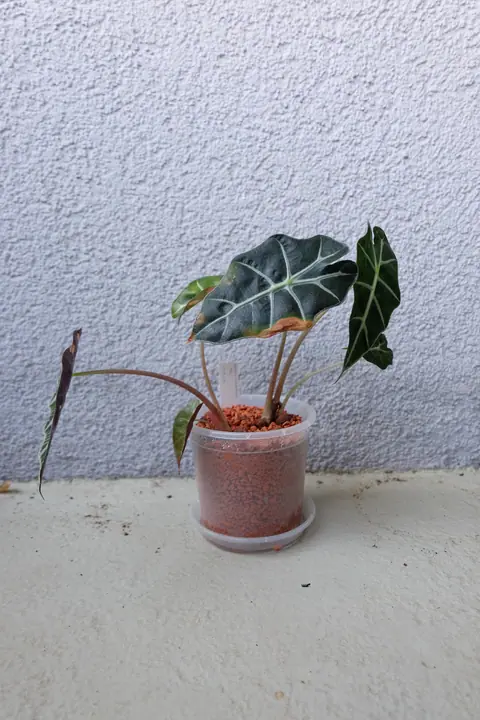
Alocasia Polly problems & how to fix them
Alocasia × amazonica 'Polly'
Drooping, yellowing, brown tips, or a plant that just won’t thrive? Here are the most common Alocasia Polly problems, what usually causes them, and how to turn things around.
Common problems
Spider mites
The alocasia curse — mites appear almost inevitably in dry air; inspect leaf undersides weekly. Tiny sap-sucking mites that thrive in warm, dry air and leave fine webbing and speckled leaves. Caught early they are very treatable; most plants recover fully within 3-4 weeks of consistent treatment.
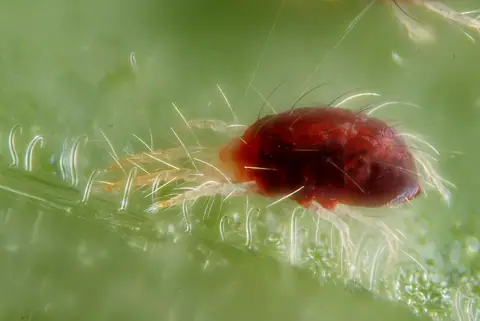
a two-spotted spider mite among its silk threads
Photo: Gilles San Martin · CC BY-SA 2.0 · Wikimedia Commons
Root rot
The tuber rots quickly in cold, wet soil, especially during winter slowdowns. A fungal or bacterial infection of the roots, almost always triggered by soil staying wet too long. Caught early, most plants recover within a few weeks after repotting; if most roots are already mushy, recovery is uncertain.
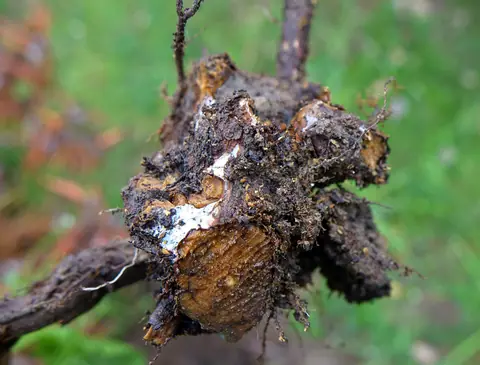
Phytophthora root rot on a dug-up root ball
Photo: Jerzy Opioła · CC BY-SA 4.0 · Wikimedia Commons
Cold damage
Below ~61°F (16 °C) leaves yellow and drop and the plant may crash into dormancy. Tissue injury from a cold draft, a chilly windowsill, or a night outdoors below the plant's tolerance. Damaged leaves will not heal, but if the stems and roots survived, new growth typically appears within three to four weeks in a warm, stable spot.
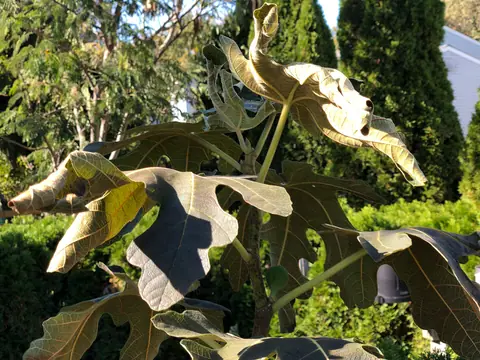
fig leaves killed by a frost
Photo: Famartin · CC BY-SA 4.0 · Wikimedia Commons
Fungus gnats
The consistently moist mix it needs is prime gnat breeding ground. Small dark flies that breed in constantly moist potting soil; the adults are harmless but annoying, while larvae can nibble roots of seedlings and weak plants. Very treatable by drying out the soil; expect the flies to fade over 2-3 weeks.
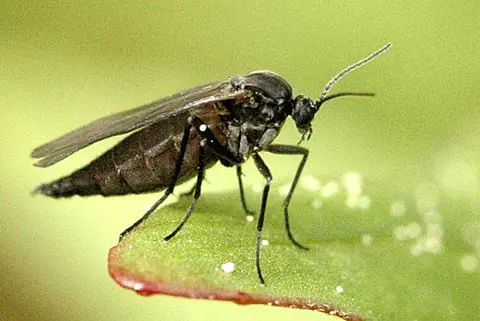
an adult fungus gnat resting on a leaf
Photo: James K. Lindsey · CC BY-SA 3.0 · Wikimedia Commons
The mistakes that most often kill it
- Tossing a dormant tuber that would have resprouted.
- Cold and wet at the same time — the classic alocasia killer.
- Ignoring spider mites until every leaf is stippled and lost.
Not sure what’s wrong?
Ploomily’s rescue tool walks you through the symptoms, gives an honest diagnosis, and schedules a day-by-day recovery plan. The founding price in force today is shown in full before you confirm, and locked for as long as you stay subscribed — with 30 days to change your mind.
Rescue my plant