How to care for Alocasia Zebrina
Alocasia zebrina · Araceae
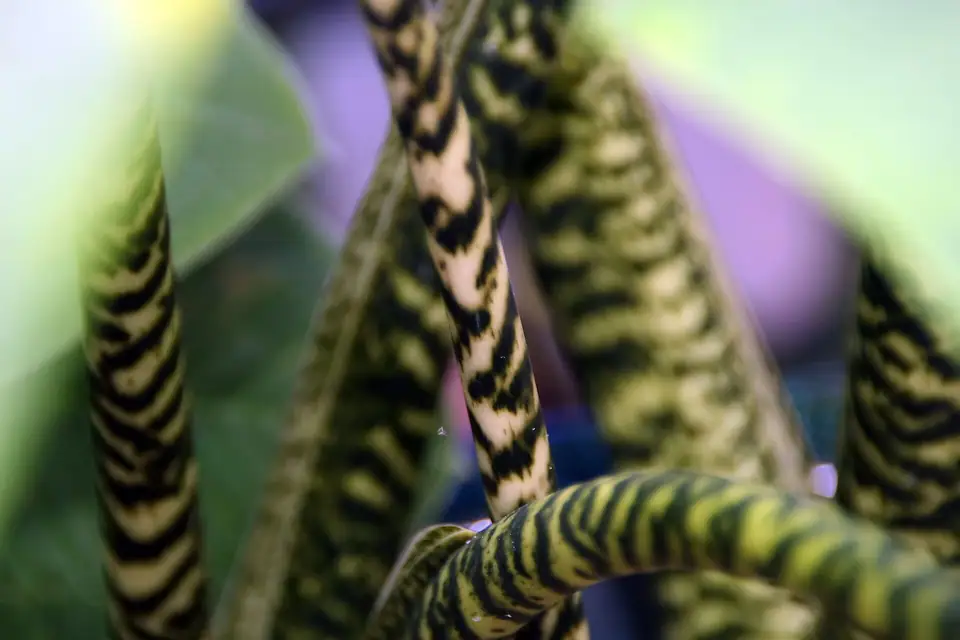
Instantly recognizable for its zebra-striped petioles holding up shield-shaped green leaves. From the Philippines, it wants warmth, bright light, and careful watering — its thick stems and tuber store water, making it more rot-prone than other alocasias. It often cycles leaves, dropping an old one as each new one opens. Water roughly every 6 days while it's growing (about every 12 in winter), give it bright, indirect light, kept above 61°F (16°C) — it wants humid air.
Care at a glance
Let the top 1–1.5 inches (3–4 cm) dry before watering — its water-storing petioles make it the most overwatering-sensitive of the common alocasias.
Bright indirect light near a window; it leans hard toward light, so rotate every few days.
Quarter-strength balanced fertilizer every 3 weeks in active growth.
Mistakes that kill this plant
- Watering it as often as a thin-leaved tropical — the stems store plenty.
- Cold, damp winter conditions rotting the tuber.
- Letting spider mites take hold unnoticed.
Seasonal tips
- Rotate frequently — those striped stems bend dramatically toward the light.
- Losing one old leaf per new leaf is normal, not a crisis.
- Keep it warm and much drier through winter; resume normal care when new spears push.
Is it safe for pets?
We have Alocasia Zebrina recorded as toxic to cats and dogs.
Full pet-safety details for cats & dogsCare for your Alocasia Zebrina on autopilot
Ploomily turns this guide into a Living Schedule — watering tuned to your city’s climate, the season, the pot and the light, and feeding tuned to that same pot, drainage and light, following the growing season and pausing while the plant rests. The founding price in force today is shown in full before you confirm, and locked for as long as you stay subscribed — with 30 days to change your mind.
Build my Living ScheduleAlocasia Zebrina is featured in
More foliage plants
Toxicity here is informational, not a safety guarantee. Those are our own records, compiled by following the ASPCA's published toxic and non-toxic plant lists and Pet Poison Helpline's plant poison list rather than copied from them — confirm anything that matters against the ASPCA's published lists, which this one is matched to, or with your vet. If your pet ingested this plant, contact your vet or the ASPCA Animal Poison Control Center at (888) 426-4435.