
Coleus problems & how to fix them
Coleus scutellarioides
Drooping, yellowing, brown tips, or a plant that just won’t thrive? Here are the most common Coleus problems, what usually causes them, and how to turn things around.
Common problems
Etiolation (insufficient light)
Stretches into a lanky mess within weeks of insufficient light. The plant is stretching toward light it isn't getting: long gaps between leaves, pale thin growth, and leaning. Stretched growth never compacts again, but with more light all new growth comes in full and sturdy - the plant's future is good.
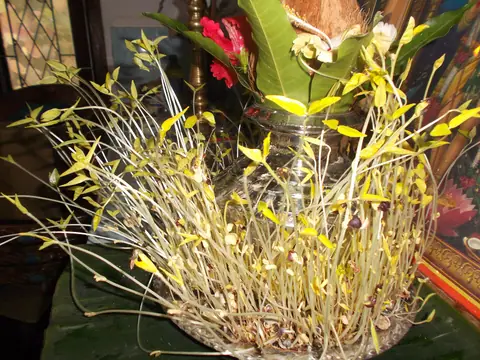
etiolated seedlings stretching pale toward the light
Photo: சஞ்சீவி சிவகுமார் · CC BY-SA 4.0 · Wikimedia Commons
Underwatering
Soft stems wilt hard on hot days; repeated collapses scar lower leaves. The plant is not getting enough water, either from infrequent watering or soil so dry it repels water. Prognosis is excellent - most underwatered plants perk up within days of proper rehydration.
Mealybugs
White fluff collects in the square stem joints and leaf axils. Slow-moving sap-sucking insects that look like bits of white cotton stuck in leaf joints. They are stubborn but very treatable with repeated spot treatment; expect steady improvement over 3-4 weeks.
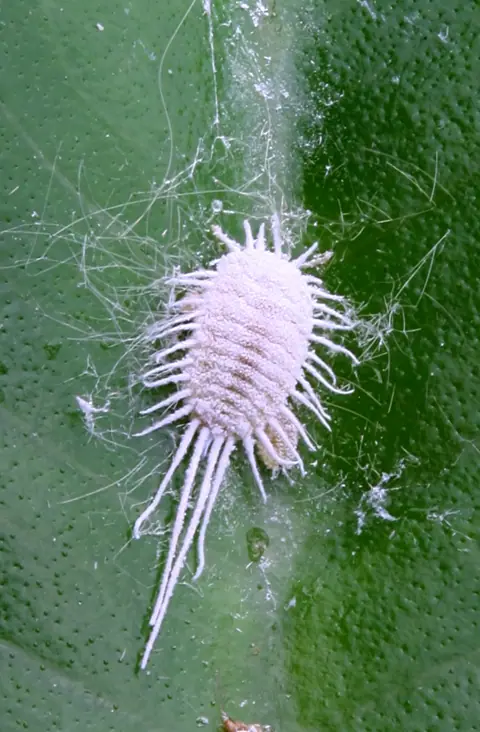
a long-tailed mealybug on a leaf
Photo: D-Kuru · CC BY-SA 3.0 at · Wikimedia Commons
Root rot
Cool, saturated soil rots the fleshy stems at the base. A fungal or bacterial infection of the roots, almost always triggered by soil staying wet too long. Caught early, most plants recover within a few weeks after repotting; if most roots are already mushy, recovery is uncertain.
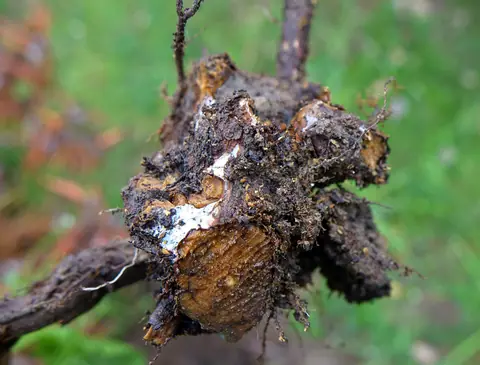
Phytophthora root rot on a dug-up root ball
Photo: Jerzy Opioła · CC BY-SA 4.0 · Wikimedia Commons
The mistakes that most often kill it
- Letting it flower and go to seed, after which it deteriorates.
- Weak light, which wrecks both color and form.
- Cold, wet soil below about 13 C.
Not sure what’s wrong?
Ploomily’s rescue tool walks you through the symptoms, gives an honest diagnosis, and schedules a day-by-day recovery plan. The founding price in force today is shown in full before you confirm, and locked for as long as you stay subscribed — with 30 days to change your mind.
Rescue my plant