How to care for Coleus
Coleus scutellarioides · Lamiaceae
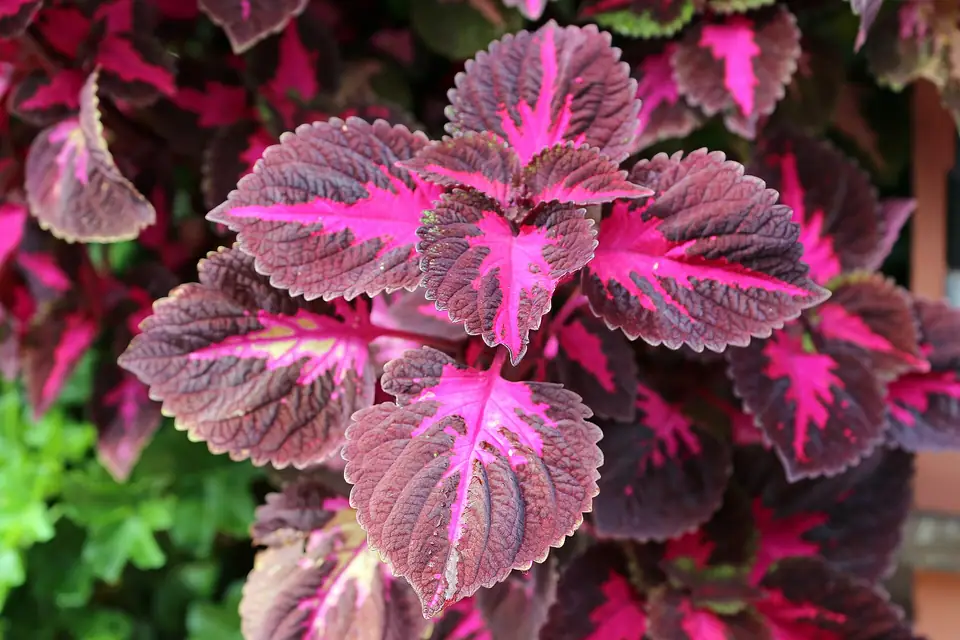
Endless cultivars in burgundy, lime, pink, and near-black make coleus a painter's palette in plant form. It grows extremely fast, roots from cuttings in days, and thrives indoors in strong light with regular pinching. Treat it as a vigorous, semi-disposable joy. Water roughly every 4 days while it's growing (about every 8 in winter), give it bright, indirect light, kept above 55°F (13°C) — average room humidity suits it.
Care at a glance
Water when the surface dries — its soft, fast growth wilts quickly but recovers with a prompt drink.
Very bright light with some gentle direct sun keeps colors saturated and stems compact.
Half-strength balanced fertilizer every 2–3 weeks — it grows fast and feeds accordingly.
Mistakes that kill this plant
- Letting it flower and go to seed, after which it deteriorates.
- Weak light, which wrecks both color and form.
- Cold, wet soil below about 13 C.
Seasonal tips
- Pinch tips and flower spikes relentlessly — flowering signals the plant to decline.
- Take autumn cuttings to overwinter on a bright windowsill; they root in a glass of water.
- Expect slower, leggier growth in winter even in good light.
Is it safe for pets?
We have Coleus recorded as toxic to cats and dogs.
Full pet-safety details for cats & dogsCare for your Coleus on autopilot
Ploomily turns this guide into a Living Schedule — watering tuned to your city’s climate, the season, the pot and the light, and feeding tuned to that same pot, drainage and light, following the growing season and pausing while the plant rests. The founding price in force today is shown in full before you confirm, and locked for as long as you stay subscribed — with 30 days to change your mind.
Build my Living ScheduleColeus is featured in
More foliage plants
Toxicity here is informational, not a safety guarantee. Those are our own records, compiled by following the ASPCA's published toxic and non-toxic plant lists and Pet Poison Helpline's plant poison list rather than copied from them — confirm anything that matters against the ASPCA's published lists, which this one is matched to, or with your vet. If your pet ingested this plant, contact your vet or the ASPCA Animal Poison Control Center at (888) 426-4435.