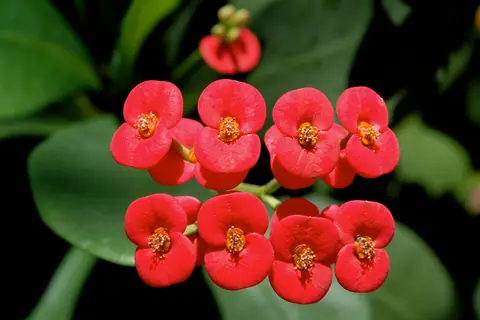
Crown of Thorns problems & how to fix them
Euphorbia milii
Drooping, yellowing, brown tips, or a plant that just won’t thrive? Here are the most common Crown of Thorns problems, what usually causes them, and how to turn things around.
Common problems
Root rot
Woody stems hide root decline until leaves yellow and drop en masse. A fungal or bacterial infection of the roots, almost always triggered by soil staying wet too long. Caught early, most plants recover within a few weeks after repotting; if most roots are already mushy, recovery is uncertain.
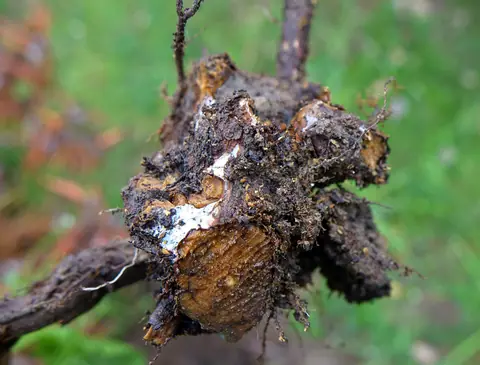
Phytophthora root rot on a dug-up root ball
Photo: Jerzy Opioła · CC BY-SA 4.0 · Wikimedia Commons
Underwatering
Severe drought triggers leaf and flower drop; it prefers a middle path. The plant is not getting enough water, either from infrequent watering or soil so dry it repels water. Prognosis is excellent - most underwatered plants perk up within days of proper rehydration.
Cold damage
Below about 10-13 C it defoliates and stalls for months. Tissue injury from a cold draft, a chilly windowsill, or a night outdoors below the plant's tolerance. Damaged leaves will not heal, but if the stems and roots survived, new growth typically appears within three to four weeks in a warm, stable spot.
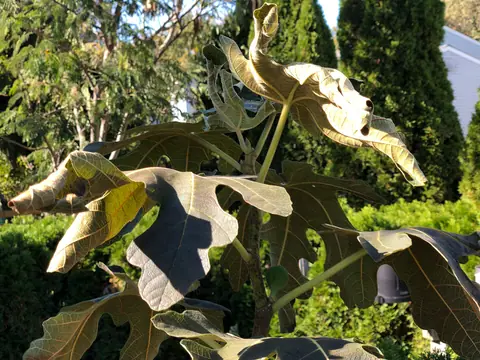
fig leaves killed by a frost
Photo: Famartin · CC BY-SA 4.0 · Wikimedia Commons
Thrips
Silvery scarring on bracts and young leaves betrays thrips on flowering plants. Tiny slender insects that rasp leaf surfaces and suck the sap, leaving silvery patches and deformed new growth. They are among the harder houseplant pests to clear, but persistent weekly treatment usually brings a plant back over 4-6 weeks.

thrips scarring and bronzing on a hydrangea leaf
Photo: m.borden · CC BY-SA 2.0 · Wikimedia Commons
The mistakes that most often kill it
- Cold, wet winter conditions combined — the classic decline.
- Swinging between soaked and desert-dry, which strips leaves and buds.
- Placing this spiny, toxic-sapped plant where kids or pets brush past it.
Not sure what’s wrong?
Ploomily’s rescue tool walks you through the symptoms, gives an honest diagnosis, and schedules a day-by-day recovery plan. The founding price in force today is shown in full before you confirm, and locked for as long as you stay subscribed — with 30 days to change your mind.
Rescue my plant