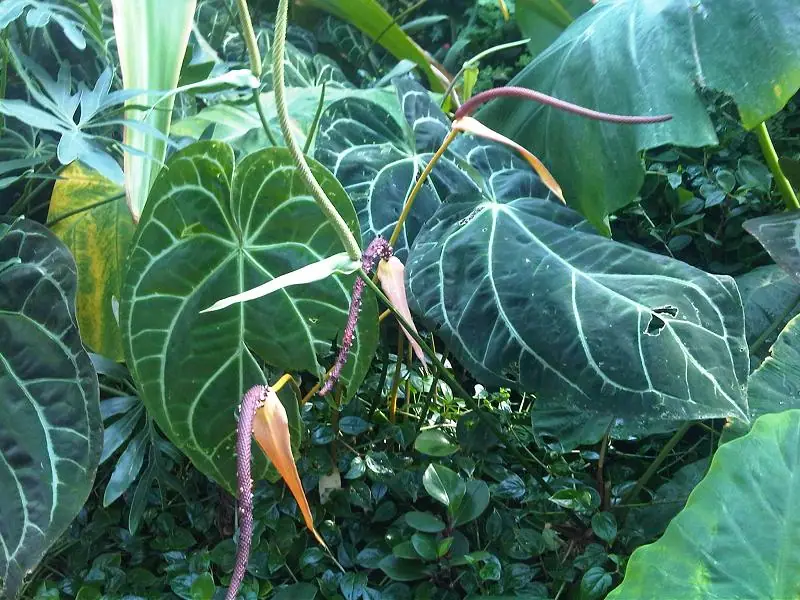
How to care for Crystal Anthurium
Anthurium crystallinum · Araceae
A jewel of the aroid world: large, soft, velvety leaves in deep green with crystalline white veins that sparkle in the light. Thinner-leaved and thirstier than its cardboard cousin, it demands high humidity and consistent moisture in a very airy mix. It is a plant for growers ready to meet it halfway — and it is breathtaking when they do. Water roughly every 5 days while it's growing (about every 9 in winter), give it bright, indirect light, kept above 63°F (17°C) — it wants humid air.
Care at a glance
Keep the chunky mix lightly, evenly moist — its thin velvet leaves crisp quickly if the roots fully dry.
Bright diffused light, never direct sun; a spot near an east window or under a gentle grow light suits it well.
Quarter-strength balanced fertilizer monthly during active growth.
Mistakes that kill this plant
- Treating it like a standard houseplant in dry air and dense soil.
- Cold drafts or a chilly windowsill in winter.
- Letting the root ball dry out completely between waterings.
Seasonal tips
- Winter is the danger season: keep it warm, humid, and slightly drier at the roots.
- Consider a cabinet or humidifier setup if your home drops below 50% humidity.
- Feed lightly but regularly in summer to fuel each large new leaf.
Is it safe for pets?
We have Crystal Anthurium recorded as toxic to cats and dogs.
Full pet-safety details for cats & dogsCare for your Crystal Anthurium on autopilot
Ploomily turns this guide into a Living Schedule — watering tuned to your city’s climate, the season, the pot and the light, and feeding tuned to that same pot, drainage and light, following the growing season and pausing while the plant rests. The founding price in force today is shown in full before you confirm, and locked for as long as you stay subscribed — with 30 days to change your mind.
Build my Living ScheduleCrystal Anthurium is featured in
More foliage plants
Toxicity here is informational, not a safety guarantee. Those are our own records, compiled by following the ASPCA's published toxic and non-toxic plant lists and Pet Poison Helpline's plant poison list rather than copied from them — confirm anything that matters against those lists or with your vet. If your pet ingested this plant, contact your vet or the ASPCA Animal Poison Control Center at (888) 426-4435.