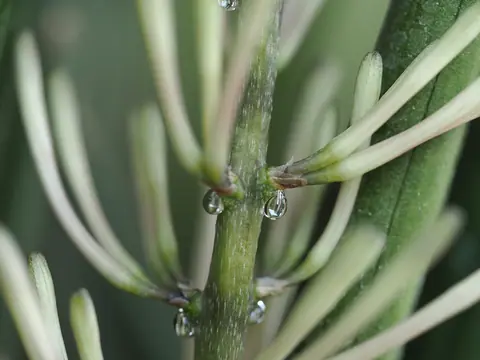
Cylindrical Snake Plant problems & how to fix them
Dracaena angolensis
Drooping, yellowing, brown tips, or a plant that just won’t thrive? Here are the most common Cylindrical Snake Plant problems, what usually causes them, and how to turn things around.
Common problems
Root rot
Slow water use means wet soil lingers for weeks; rot starts invisibly below the surface. A fungal or bacterial infection of the roots, almost always triggered by soil staying wet too long. Caught early, most plants recover within a few weeks after repotting; if most roots are already mushy, recovery is uncertain.
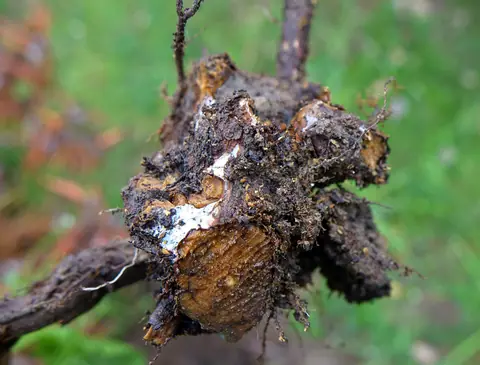
Phytophthora root rot on a dug-up root ball
Photo: Jerzy Opioła · CC BY-SA 4.0 · Wikimedia Commons
Overwatering
Soft, bending spears or yellowing at the base signal drowning roots. The soil is staying wet longer than the plant can handle, starving roots of oxygen. If caught before roots start rotting, the fix is simple - let the soil dry out and adjust the routine - and most plants bounce back within 2-3 weeks.
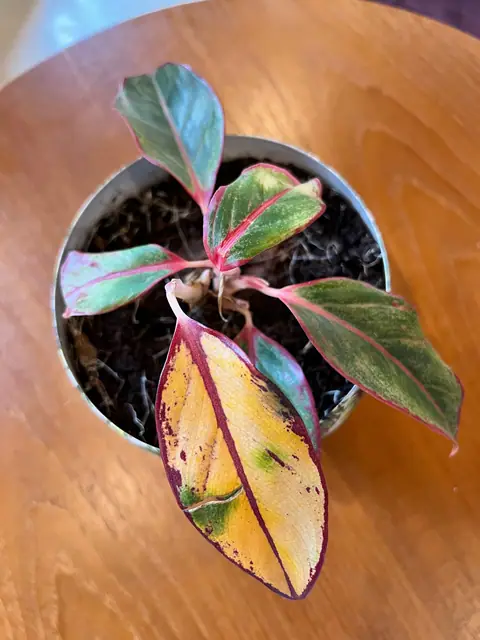
a yellowing lower leaf on a potted Chinese evergreen
Photo: Saurav9656 · CC BY-SA 4.0 · Wikimedia Commons
Etiolation (insufficient light)
In dim light the normally rigid spears grow thin, floppy, and lean toward the window. The plant is stretching toward light it isn't getting: long gaps between leaves, pale thin growth, and leaning. Stretched growth never compacts again, but with more light all new growth comes in full and sturdy - the plant's future is good.
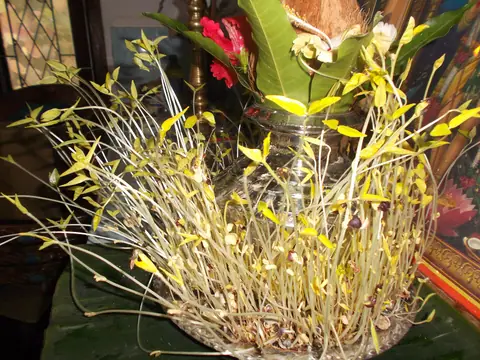
etiolated seedlings stretching pale toward the light
Photo: சஞ்சீவி சிவகுமார் · CC BY-SA 4.0 · Wikimedia Commons
Cold damage
Chilly, damp conditions leave sunken scars along the cylindrical leaves. Tissue injury from a cold draft, a chilly windowsill, or a night outdoors below the plant's tolerance. Damaged leaves will not heal, but if the stems and roots survived, new growth typically appears within three to four weeks in a warm, stable spot.
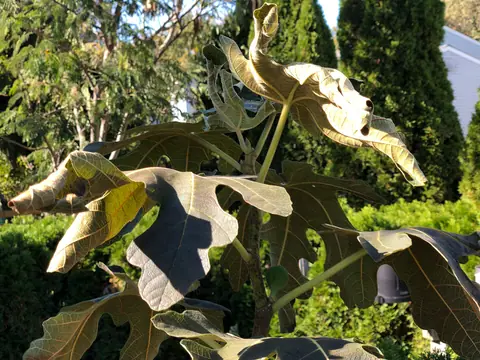
fig leaves killed by a frost
Photo: Famartin · CC BY-SA 4.0 · Wikimedia Commons
The mistakes that most often kill it
- Watering on the same schedule as leafy tropicals.
- A deep pot of moisture-retentive soil around its shallow rhizomes.
- Leaving it in a cold entryway with wet soil in winter.
Not sure what’s wrong?
Ploomily’s rescue tool walks you through the symptoms, gives an honest diagnosis, and schedules a day-by-day recovery plan. The founding price in force today is shown in full before you confirm, and locked for as long as you stay subscribed — with 30 days to change your mind.
Rescue my plant