How to care for Dumb Cane
Dieffenbachia seguine · Araceae
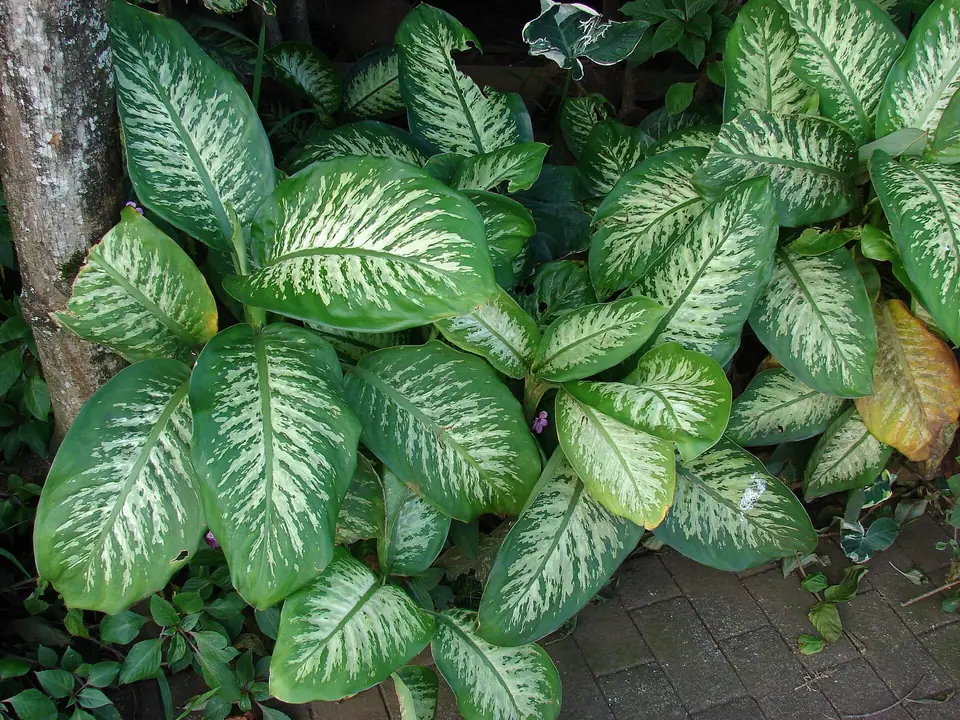
A fast-growing cane-forming plant with broad, cream-and-green marbled leaves that quickly fill a bright corner. The common name refers to its highly irritating sap, which can temporarily inflame the mouth and throat if chewed — handle with care and keep away from pets and children. Given warmth and steady moisture it grows impressively fast. Water roughly every 6 days while it's growing (about every 11 in winter), give it a bright room away from the window, kept above 61°F (16°C) — average room humidity suits it.
Care at a glance
Water when the top 1 inch (3 cm) dry; the big soft leaves droop obviously when thirsty and yellow when soggy.
Medium to bright indirect light; direct sun scorches the broad leaves, while deep shade fades the cream markings.
Balanced fertilizer at half strength monthly — a fairly hungry, fast grower.
Mistakes that kill this plant
- Cold drafts, which collapse it faster than any watering error.
- Consistently soggy soil rotting the cane from the base.
- Letting it dry out completely again and again until lower leaves are all lost.
Seasonal tips
- Wear gloves when pruning — the sap irritates skin and eyes.
- Raise humidity and cut watering when the heating season starts.
- Top leggy canes in spring; both the top and the stump will regrow.
Is it safe for pets?
We have Dumb Cane recorded as toxic to cats and dogs.
Full pet-safety details for cats & dogsCare for your Dumb Cane on autopilot
Ploomily turns this guide into a Living Schedule — watering tuned to your city’s climate, the season, the pot and the light, and feeding tuned to that same pot, drainage and light, following the growing season and pausing while the plant rests. The founding price in force today is shown in full before you confirm, and locked for as long as you stay subscribed — with 30 days to change your mind.
Build my Living ScheduleDumb Cane is featured in
More foliage plants
Toxicity here is informational, not a safety guarantee. Those are our own records, compiled by following the ASPCA's published toxic and non-toxic plant lists and Pet Poison Helpline's plant poison list rather than copied from them — confirm anything that matters against the ASPCA's published lists, which this one is matched to, or with your vet. If your pet ingested this plant, contact your vet or the ASPCA Animal Poison Control Center at (888) 426-4435.