How to care for Earth Star
Cryptanthus bivittatus · Bromeliaceae
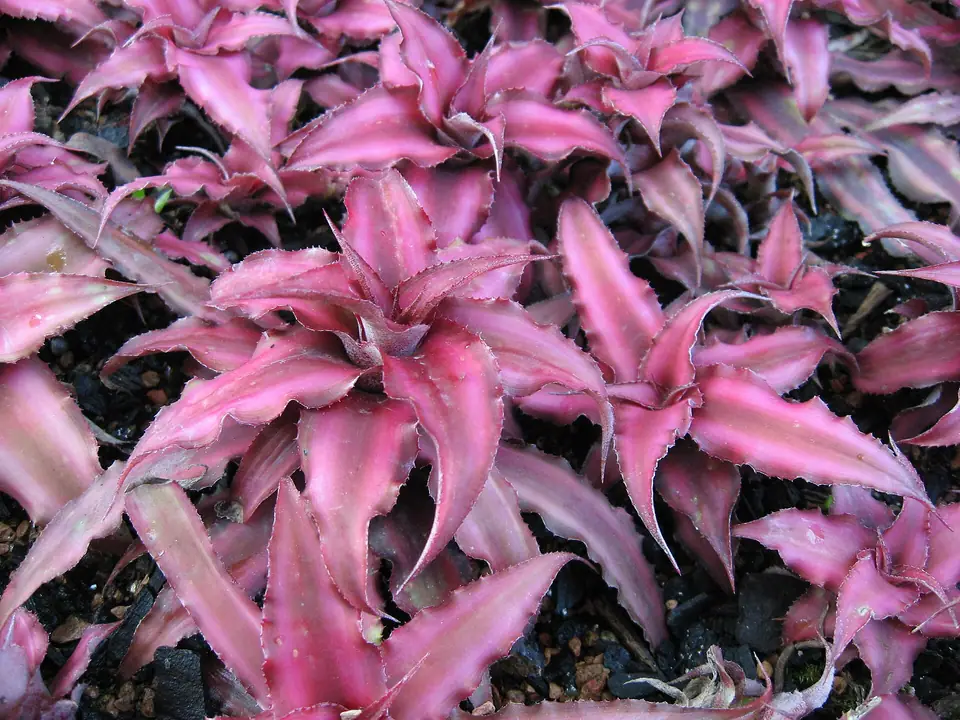
A small ground-dwelling bromeliad that forms a flat, star-shaped rosette of wavy-edged leaves striped in pink, red, or cream. Unlike its tank-forming cousins it grows in soil and drinks through its roots. Its compact size makes it perfect for terrariums, dish gardens, and bright shelves. Water roughly every 7 days while it's growing (about every 12 in winter), give it bright, indirect light, kept above 59°F (15°C) — it wants humid air.
Care at a glance
Water the soil when the top few centimeters dry; unlike tank bromeliads it should not have water held in the rosette.
Bright filtered light brings out the strongest pink striping; deep shade fades it to green.
Very dilute (quarter-strength) balanced fertilizer monthly in the growing season.
Mistakes that kill this plant
- Overpotting into a big container that stays wet for weeks.
- Bone-dry heated air with no humidity all winter.
- Discarding the plant when the old rosette fades instead of saving its pups.
Seasonal tips
- The mother rosette naturally declines after producing pups; pot the pups up to continue the plant.
- Raise humidity in winter with a pebble tray or by grouping plants.
- Keep it in a small, shallow pot that matches its modest roots.
Is it safe for pets?
Our records list Earth Star as non-toxic to cats and dogs.
Full pet-safety details for cats & dogsCare for your Earth Star on autopilot
Ploomily turns this guide into a Living Schedule — watering tuned to your city’s climate, the season, the pot and the light, and feeding tuned to that same pot, drainage and light, following the growing season and pausing while the plant rests. The founding price in force today is shown in full before you confirm, and locked for as long as you stay subscribed — with 30 days to change your mind.
Build my Living ScheduleEarth Star is featured in
More foliage plants
Toxicity here is informational, not a safety guarantee. Those are our own records, compiled by following the ASPCA's published toxic and non-toxic plant lists and Pet Poison Helpline's plant poison list rather than copied from them — confirm anything that matters against the ASPCA's published lists, which this one is matched to, or with your vet. If your pet ingested this plant, contact your vet or the ASPCA Animal Poison Control Center at (888) 426-4435.