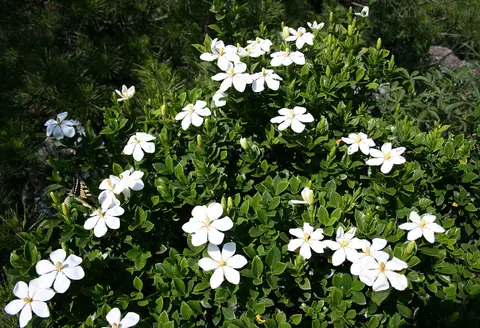
Gardenia problems & how to fix them
Gardenia jasminoides
Drooping, yellowing, brown tips, or a plant that just won’t thrive? Here are the most common Gardenia problems, what usually causes them, and how to turn things around.
Common problems
Nutrient-deficiency yellowing
Hard, alkaline tap water locks out iron and causes classic yellow leaves with green veins. Leaves yellow because the plant has run out of one or more nutrients, usually after a long time in the same soil with no feeding. Old yellow leaves rarely green up fully, but with steady feeding new growth returns to a healthy color within 3-6 weeks.
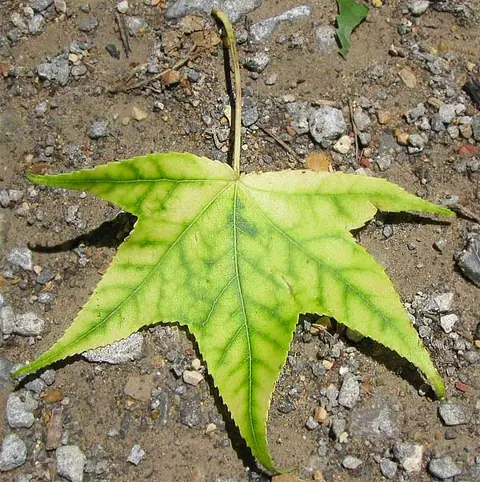
interveinal chlorosis: a leaf yellowing between green veins
Photo: Jim Conrad · Public domain · Wikimedia Commons
Spider mites
Dry indoor air in winter invites mites, which quickly bronze the glossy foliage. Tiny sap-sucking mites that thrive in warm, dry air and leave fine webbing and speckled leaves. Caught early they are very treatable; most plants recover fully within 3-4 weeks of consistent treatment.
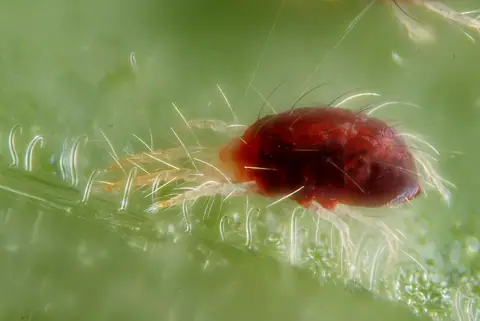
a two-spotted spider mite among its silk threads
Photo: Gilles San Martin · CC BY-SA 2.0 · Wikimedia Commons
Root rot
Constantly wet, heavy soil rots the fine roots even though the plant likes moisture. A fungal or bacterial infection of the roots, almost always triggered by soil staying wet too long. Caught early, most plants recover within a few weeks after repotting; if most roots are already mushy, recovery is uncertain.
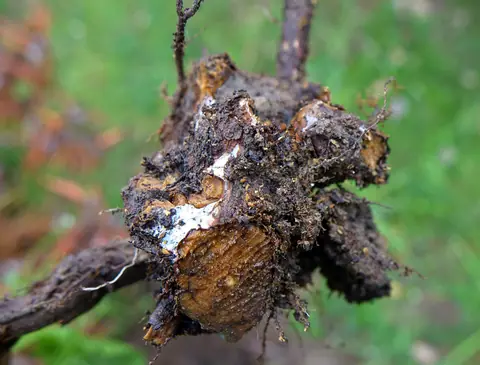
Phytophthora root rot on a dug-up root ball
Photo: Jerzy Opioła · CC BY-SA 4.0 · Wikimedia Commons
Mealybugs
Check leaf axils and bud bases, favorite hiding spots on dense gardenia growth. Slow-moving sap-sucking insects that look like bits of white cotton stuck in leaf joints. They are stubborn but very treatable with repeated spot treatment; expect steady improvement over 3-4 weeks.
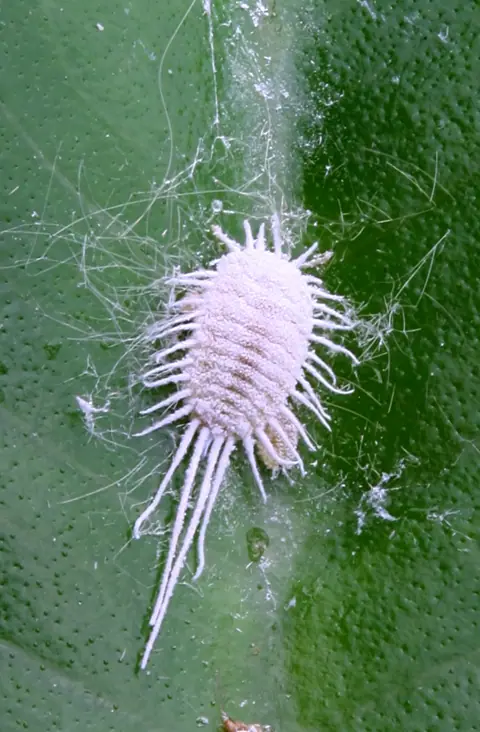
a long-tailed mealybug on a leaf
Photo: D-Kuru · CC BY-SA 3.0 at · Wikimedia Commons
The mistakes that most often kill it
- Watering with hard tap water until the soil turns alkaline and the plant slowly starves.
- Keeping it in a dim corner and expecting flowers.
- Letting the root ball dry out completely even once during bud set.
Not sure what’s wrong?
Ploomily’s rescue tool walks you through the symptoms, gives an honest diagnosis, and schedules a day-by-day recovery plan. The founding price in force today is shown in full before you confirm, and locked for as long as you stay subscribed — with 30 days to change your mind.
Rescue my plant