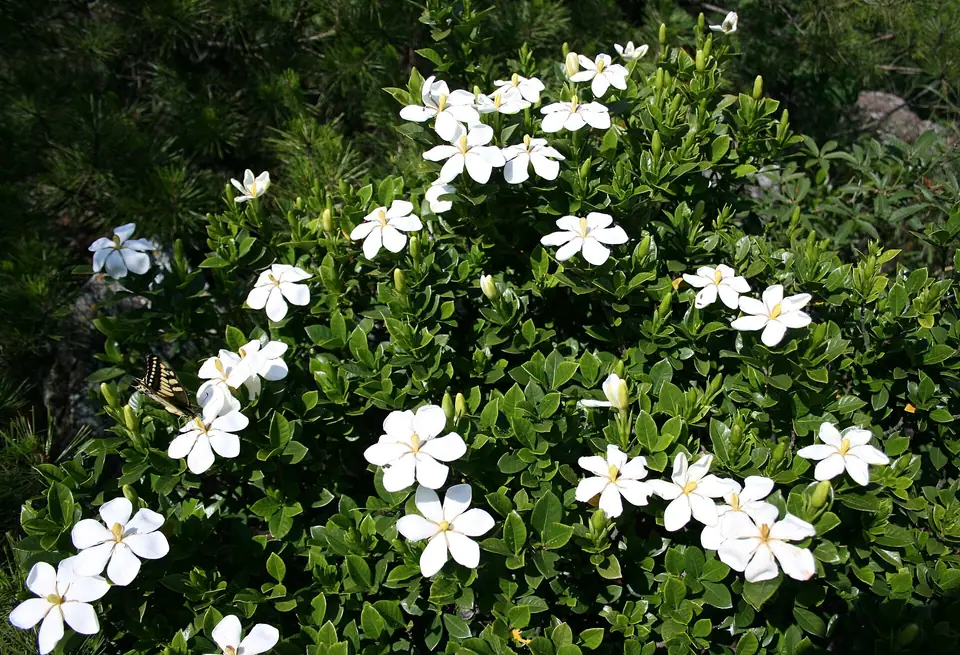
How to care for Gardenia
Gardenia jasminoides · Rubiaceae
Gardenias earn their fussy reputation, but the intoxicating fragrance of a single creamy-white bloom explains why people keep trying. They demand bright light, high humidity, acidic soil, and cool nights to set buds — get those right and they are surprisingly generous. Water roughly every 4 days while it's growing (about every 8 in winter), give it bright, indirect light, kept above 55°F (13°C) — it wants humid air.
Care at a glance
Keep the acidic soil consistently moist but never soggy, ideally with rainwater or distilled water since hard tap water raises the pH over time.
A very bright window with some gentle morning sun is ideal; low light means no buds at all.
Use an acid-loving-plant fertilizer at half strength every three weeks in spring and summer.
Mistakes that kill this plant
- Watering with hard tap water until the soil turns alkaline and the plant slowly starves.
- Keeping it in a dim corner and expecting flowers.
- Letting the root ball dry out completely even once during bud set.
Seasonal tips
- Cool nights around 16-18 C in autumn help buds form; warm nights make them abort.
- Move it outside to a bright, sheltered spot in summer if you can — it usually thrives.
- Don't relocate or rotate the plant once buds appear; sudden changes cause bud drop.
Is it safe for pets?
We have Gardenia recorded as toxic to cats and dogs.
Full pet-safety details for cats & dogsCare for your Gardenia on autopilot
Ploomily turns this guide into a Living Schedule — watering tuned to your city’s climate, the season, the pot and the light, and feeding tuned to that same pot, drainage and light, following the growing season and pausing while the plant rests. The founding price in force today is shown in full before you confirm, and locked for as long as you stay subscribed — with 30 days to change your mind.
Build my Living ScheduleGardenia is featured in
More flowering plants
Toxicity here is informational, not a safety guarantee. Those are our own records, compiled by following the ASPCA's published toxic and non-toxic plant lists and Pet Poison Helpline's plant poison list rather than copied from them — confirm anything that matters against the ASPCA's published lists, which this one is matched to, or with your vet. If your pet ingested this plant, contact your vet or the ASPCA Animal Poison Control Center at (888) 426-4435.