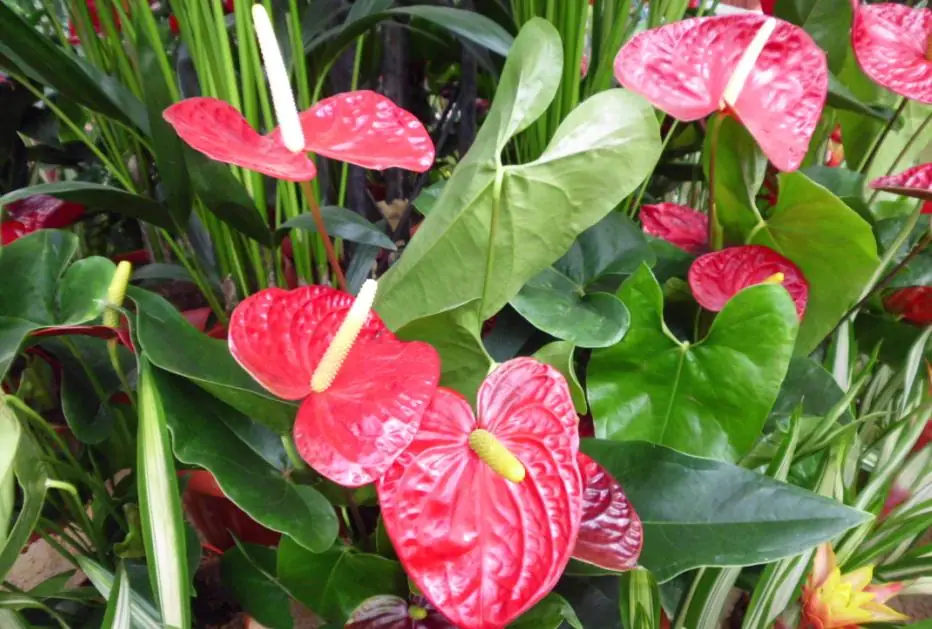
How to care for Flamingo Flower
Anthurium andraeanum · Araceae
The longest-blooming common houseplant: glossy heart-shaped leaves beneath waxy red, pink, or white spathes that can last for months each. With bright light, warmth, and an airy orchid-like mix it flowers nearly year-round. Its epiphytic roots hate dense soil more than anything else. Water roughly every 6 days while it's growing (about every 10 in winter), give it bright, indirect light, kept above 61°F (16°C) — it wants humid air.
Care at a glance
Water when the top 1 inch (2–3 cm) of its chunky mix dries; roots need air as much as moisture, so never let it sit soggy.
Bright indirect light drives blooming — near an east window is ideal; low light means leaves but no flowers.
Quarter-to-half-strength fertilizer with some phosphorus monthly to support continuous blooms.
Mistakes that kill this plant
- Planting in regular dense potting soil.
- Cold exposure below about 59°F (15 °C), which stops blooming and spots leaves.
- Overwatering in low light through winter.
Seasonal tips
- Repot into fresh chunky orchid-style mix every couple of years — old mix compacts and suffocates roots.
- Boost humidity in winter to keep blooms coming.
- Snip faded spathes at the base to encourage the next flush.
Is it safe for pets?
We have Flamingo Flower recorded as toxic to cats and dogs.
Full pet-safety details for cats & dogsCare for your Flamingo Flower on autopilot
Ploomily turns this guide into a Living Schedule — watering tuned to your city’s climate, the season, the pot and the light, and feeding tuned to that same pot, drainage and light, following the growing season and pausing while the plant rests. The founding price in force today is shown in full before you confirm, and locked for as long as you stay subscribed — with 30 days to change your mind.
Build my Living ScheduleFlamingo Flower is featured in
More flowering plants
Toxicity here is informational, not a safety guarantee. Those are our own records, compiled by following the ASPCA's published toxic and non-toxic plant lists and Pet Poison Helpline's plant poison list rather than copied from them — confirm anything that matters against the ASPCA's published lists, which this one is matched to, or with your vet. If your pet ingested this plant, contact your vet or the ASPCA Animal Poison Control Center at (888) 426-4435.