How to care for Peace Lily
Spathiphyllum wallisii · Araceae
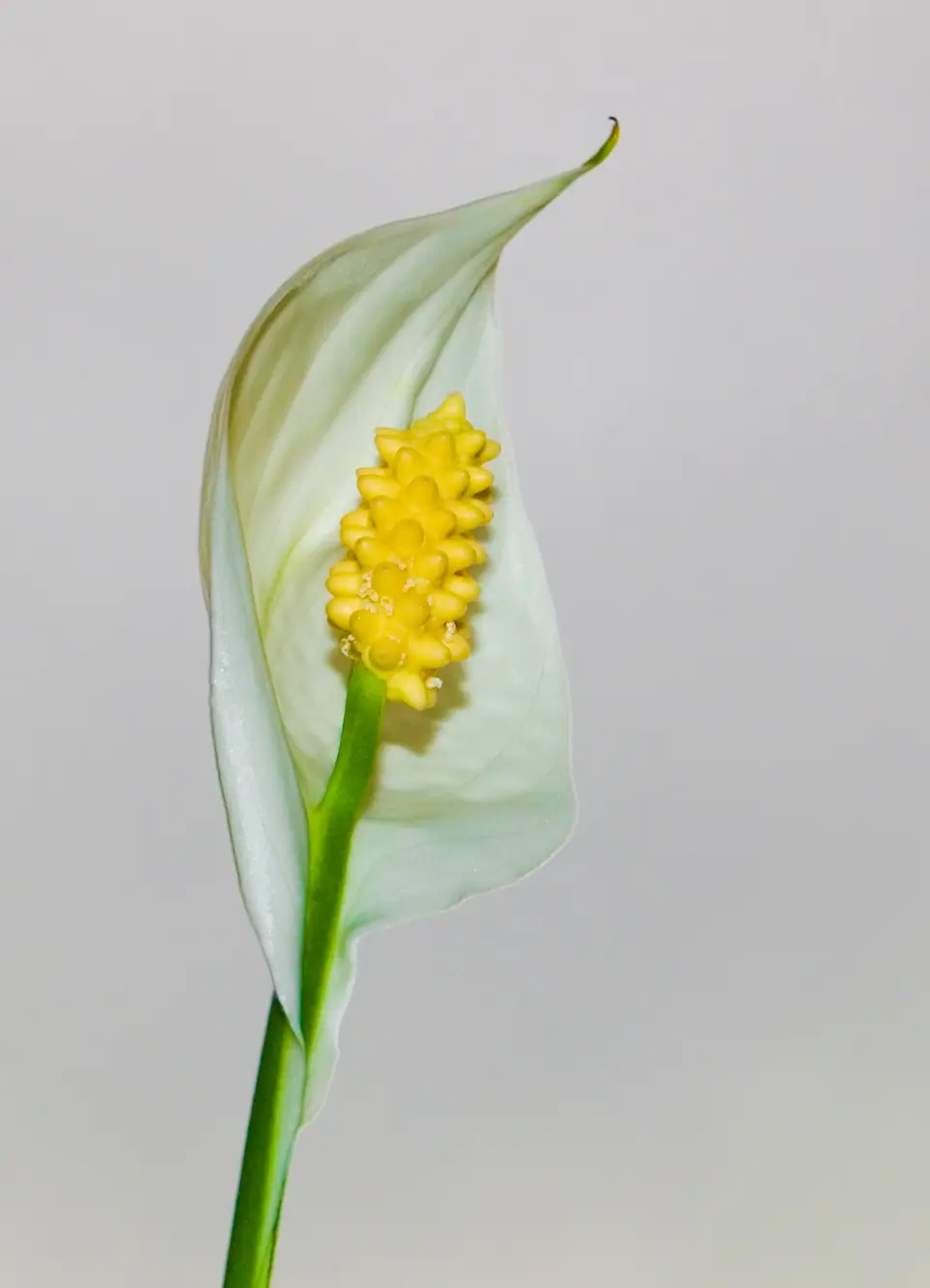
An elegant, shade-tolerant aroid with glossy dark leaves and white sail-like flower spathes that appear off and on all year in good light. It is famously communicative — the whole plant droops theatrically when thirsty and stands back up within hours of watering. Despite the name it is not a true lily. Water roughly every 5 days while it's growing (about every 9 in winter), give it a bright room away from the window, kept above 59°F (15°C) — average room humidity suits it.
Care at a glance
Keep evenly moist and water at the first hint of drooping; use filtered or rested tap water if leaf tips brown.
Tolerates low light but flowers reliably only in medium to bright indirect light; no direct sun.
Half-strength balanced fertilizer every 6 weeks; overfeeding browns the leaf tips.
Mistakes that kill this plant
- Repeatedly letting it collapse from drought — each wilt costs it leaves.
- Leaving it standing in a saucer of water for days.
- Cold drafts and temperatures under about 55°F (13 °C).
Seasonal tips
- Cut spent flower stalks at the base to redirect energy to new blooms.
- In winter, let it dry slightly more between waterings but never fully.
- A slightly snug pot encourages more flowering.
Is it safe for pets?
We have Peace Lily recorded as toxic to cats and dogs.
Full pet-safety details for cats & dogsCare for your Peace Lily on autopilot
Ploomily turns this guide into a Living Schedule — watering tuned to your city’s climate, the season, the pot and the light, and feeding tuned to that same pot, drainage and light, following the growing season and pausing while the plant rests. The founding price in force today is shown in full before you confirm, and locked for as long as you stay subscribed — with 30 days to change your mind.
Build my Living SchedulePeace Lily is featured in
More flowering plants
Toxicity here is informational, not a safety guarantee. Those are our own records, compiled by following the ASPCA's published toxic and non-toxic plant lists and Pet Poison Helpline's plant poison list rather than copied from them — confirm anything that matters against the ASPCA's published lists, which this one is matched to, or with your vet. If your pet ingested this plant, contact your vet or the ASPCA Animal Poison Control Center at (888) 426-4435.