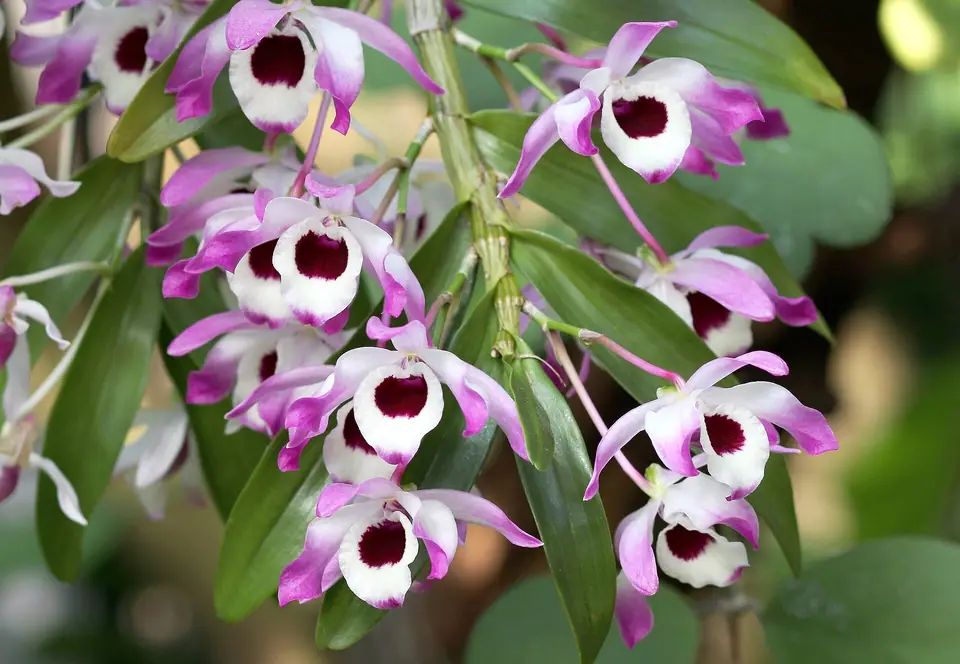
How to care for Dendrobium Orchid
Dendrobium nobile · Orchidaceae
The noble dendrobium produces fragrant blooms all along its tall canes in late winter, an unforgettable display when done right. The catch is that it needs a genuine autumn rest — cool, bright, and nearly dry — to set buds. Skip the rest and you get keikis (plantlets) instead of flowers. Water roughly every 5 days while it's growing (about every 21 in autumn and winter), give it bright, indirect light, kept above 46°F (8°C) — average room humidity suits it.
Care at a glance
Water freely in summer while canes grow, then cut back sharply from autumn until buds show, giving only enough to keep canes from shriveling badly.
Very bright light, even a little direct morning sun; it needs more light than a moth orchid to bloom.
Half-strength balanced orchid feed every 2 weeks in spring and summer, then stop entirely from early autumn.
Mistakes that kill this plant
- Watering and feeding straight through winter, which trades flowers for weak plantlets.
- Cutting off the old bare canes thinking they are dead.
- Overpotting into a large container of moisture-retentive mix.
Seasonal tips
- From autumn: cool nights (46–55°F (8–13°C)), maximum light, almost no water, no fertilizer — this rest is what makes it bloom.
- Resume normal watering only when flower buds appear along the canes.
- Never cut off old leafless canes; they store energy and can still bloom or produce keikis.
Is it safe for pets?
We couldn’t place Dendrobium Orchid on a toxic or a non-toxic list, so its toxicity is unconfirmed — which is not the same as safe.
Full pet-safety details for cats & dogsCare for your Dendrobium Orchid on autopilot
Ploomily turns this guide into a Living Schedule — watering tuned to your city’s climate, the season, the pot and the light, and feeding tuned to that same pot, drainage and light, following the growing season and pausing while the plant rests. The founding price in force today is shown in full before you confirm, and locked for as long as you stay subscribed — with 30 days to change your mind.
Build my Living ScheduleDendrobium Orchid is featured in
More flowering plants
Toxicity here is informational, not a safety guarantee. Those are our own records, compiled by following the ASPCA's published toxic and non-toxic plant lists and Pet Poison Helpline's plant poison list rather than copied from them — confirm anything that matters against those lists or with your vet. If your pet ingested this plant, contact your vet or the ASPCA Animal Poison Control Center at (888) 426-4435.