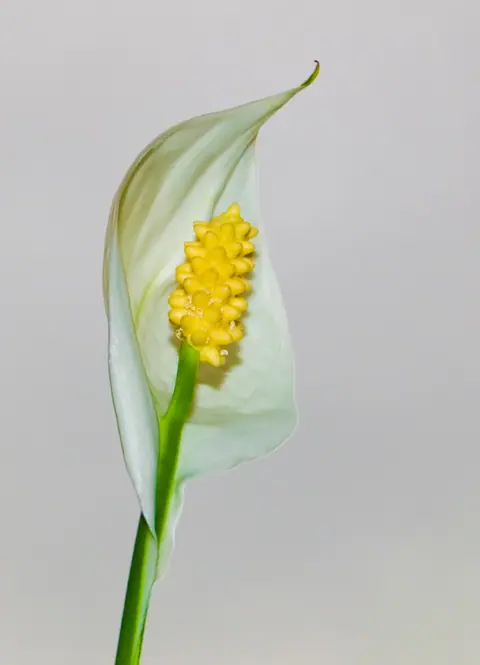
Peace Lily problems & how to fix them
Spathiphyllum wallisii
Drooping, yellowing, brown tips, or a plant that just won’t thrive? Here are the most common Peace Lily problems, what usually causes them, and how to turn things around.
Common problems
Underwatering
Dramatic wilting whenever the pot dries; repeated collapses cause yellow leaves and brown tips. The plant is not getting enough water, either from infrequent watering or soil so dry it repels water. Prognosis is excellent - most underwatered plants perk up within days of proper rehydration.
Crispy tips (low humidity)
Brown tips follow fluoride/salts in tap water, dry air, or overfeeding. Brown, dry leaf tips caused by air that is too dry for the plant, common in heated or air-conditioned rooms. Existing crispy tips never turn green again, but with higher humidity new growth should come in clean within a few weeks.
Root rot
Loving moisture is not the same as loving swamp — standing water still rots it. A fungal or bacterial infection of the roots, almost always triggered by soil staying wet too long. Caught early, most plants recover within a few weeks after repotting; if most roots are already mushy, recovery is uncertain.
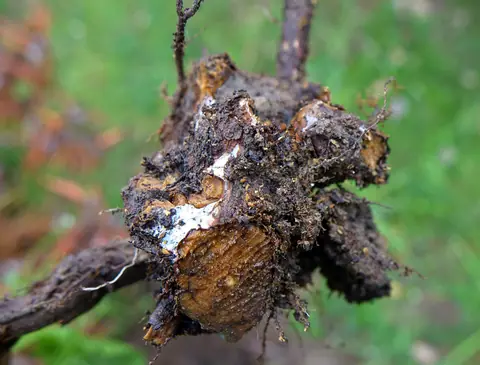
Phytophthora root rot on a dug-up root ball
Photo: Jerzy Opioła · CC BY-SA 4.0 · Wikimedia Commons
Fungus gnats
The constantly moist soil it prefers is ideal gnat habitat. Small dark flies that breed in constantly moist potting soil; the adults are harmless but annoying, while larvae can nibble roots of seedlings and weak plants. Very treatable by drying out the soil; expect the flies to fade over 2-3 weeks.
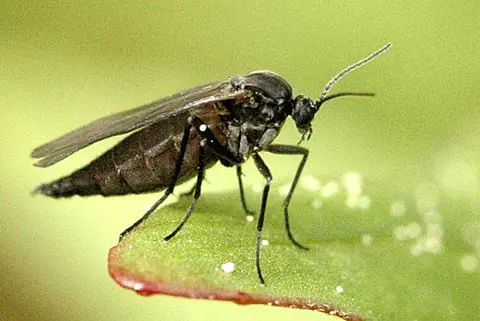
an adult fungus gnat resting on a leaf
Photo: James K. Lindsey · CC BY-SA 3.0 · Wikimedia Commons
The mistakes that most often kill it
- Repeatedly letting it collapse from drought — each wilt costs it leaves.
- Leaving it standing in a saucer of water for days.
- Cold drafts and temperatures under about 55°F (13 °C).
Not sure what’s wrong?
Ploomily’s rescue tool walks you through the symptoms, gives an honest diagnosis, and schedules a day-by-day recovery plan. The founding price in force today is shown in full before you confirm, and locked for as long as you stay subscribed — with 30 days to change your mind.
Rescue my plant