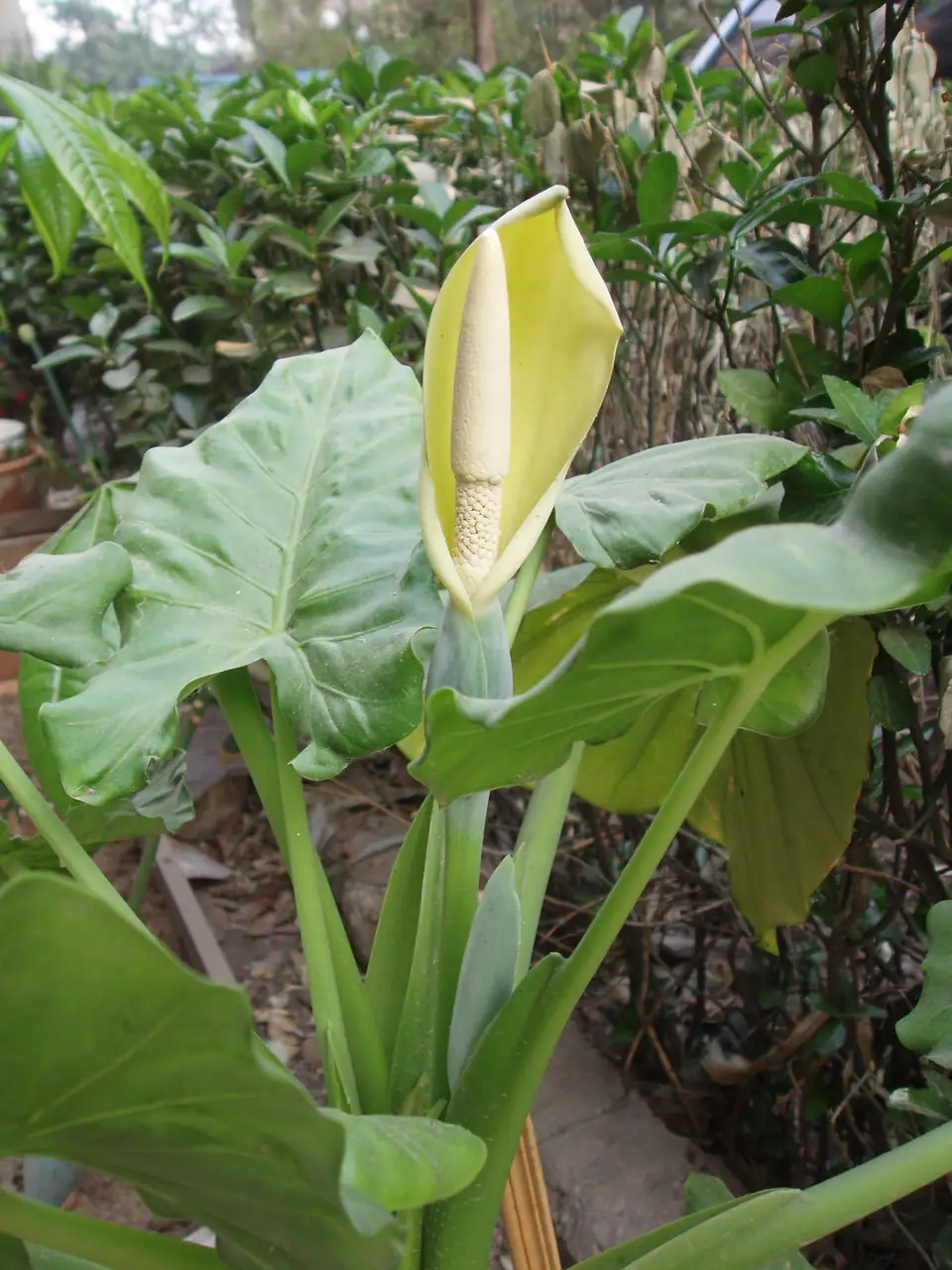
How to care for Giant Taro
Alocasia macrorrhizos · Araceae
One of the largest-leaved plants you can grow indoors, with glossy, upright, arrow-shaped leaves that can exceed a meter in a big pot. It is a fast, hungry, thirsty grower given warmth and light. Far more forgiving than the jewel alocasias, but it needs real space. Water roughly every 5 days while it's growing (about every 10 in winter), give it bright, indirect light, kept above 59°F (15°C) — average room humidity suits it.
Care at a glance
Water deeply when the top few centimeters dry — big leaves transpire heavily and it wilts dramatically when thirsty.
Give it your brightest spot; it tolerates some direct morning sun once acclimated.
Half-strength balanced fertilizer every three weeks — large fast growers feed heavily.
Mistakes that kill this plant
- Leaving it cold and wet in winter, which rots the trunk-like rhizome.
- Starving it of light and food, then blaming the plant for shrinking leaves.
- Letting spider mites establish across those big leaves unchecked.
Seasonal tips
- Growth slows sharply in winter — cut watering back and stop feeding.
- Wipe the huge leaves monthly so they can photosynthesize efficiently.
- Repot in spring before the growth surge; it can double in size over a summer.
Is it safe for pets?
We have Giant Taro recorded as toxic to cats and dogs.
Full pet-safety details for cats & dogsCare for your Giant Taro on autopilot
Ploomily turns this guide into a Living Schedule — watering tuned to your city’s climate, the season, the pot and the light, and feeding tuned to that same pot, drainage and light, following the growing season and pausing while the plant rests. The founding price in force today is shown in full before you confirm, and locked for as long as you stay subscribed — with 30 days to change your mind.
Build my Living ScheduleMore foliage plants
Toxicity here is informational, not a safety guarantee. Those are our own records, compiled by following the ASPCA's published toxic and non-toxic plant lists and Pet Poison Helpline's plant poison list rather than copied from them — confirm anything that matters against the ASPCA's published lists, which this one is matched to, or with your vet. If your pet ingested this plant, contact your vet or the ASPCA Animal Poison Control Center at (888) 426-4435.