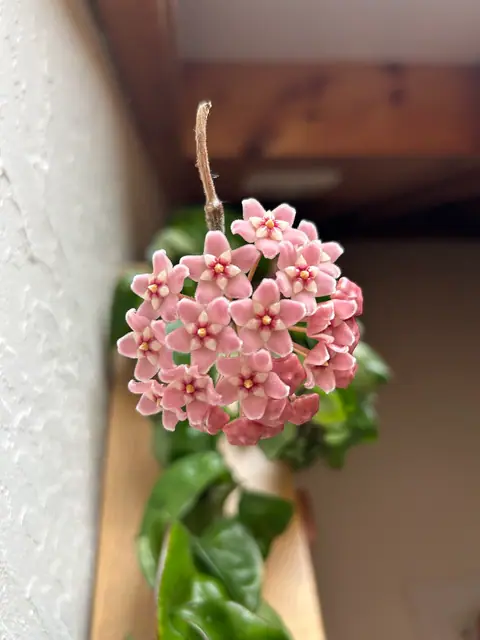
Hindu Rope Hoya problems & how to fix them
Hoya carnosa 'Compacta'
Drooping, yellowing, brown tips, or a plant that just won’t thrive? Here are the most common Hindu Rope Hoya problems, what usually causes them, and how to turn things around.
Common problems
Mealybugs
The curled, overlapping leaves are the perfect mealybug fortress — infestations hide deep in the folds. Slow-moving sap-sucking insects that look like bits of white cotton stuck in leaf joints. They are stubborn but very treatable with repeated spot treatment; expect steady improvement over 3-4 weeks.
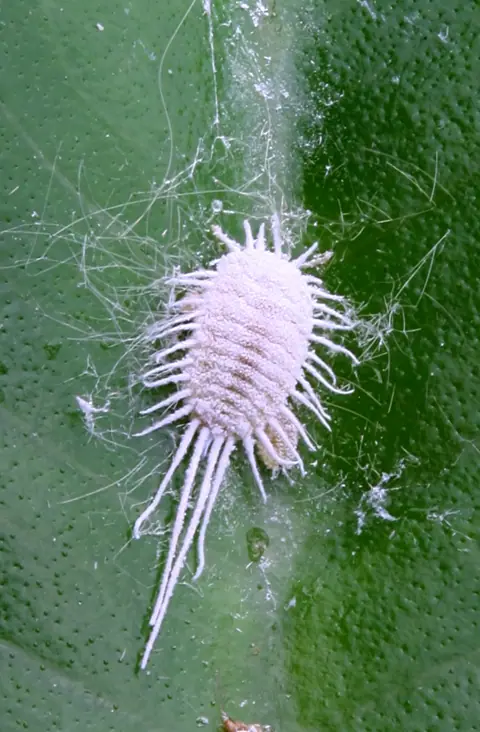
a long-tailed mealybug on a leaf
Photo: D-Kuru · CC BY-SA 3.0 at · Wikimedia Commons
Root rot
Slow growth means slow water use; a wet pot lingers for weeks and rots the roots. A fungal or bacterial infection of the roots, almost always triggered by soil staying wet too long. Caught early, most plants recover within a few weeks after repotting; if most roots are already mushy, recovery is uncertain.
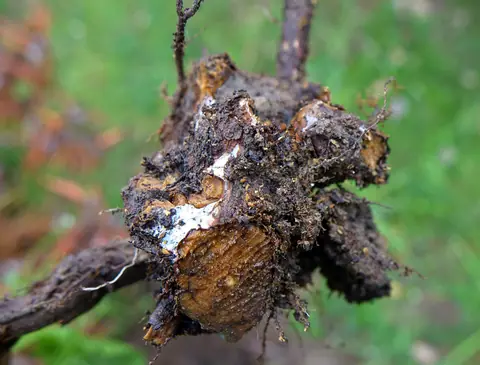
Phytophthora root rot on a dug-up root ball
Photo: Jerzy Opioła · CC BY-SA 4.0 · Wikimedia Commons
Overwatering
Watering on the same schedule as faster plants keeps this slow grower permanently soggy. The soil is staying wet longer than the plant can handle, starving roots of oxygen. If caught before roots start rotting, the fix is simple - let the soil dry out and adjust the routine - and most plants bounce back within 2-3 weeks.
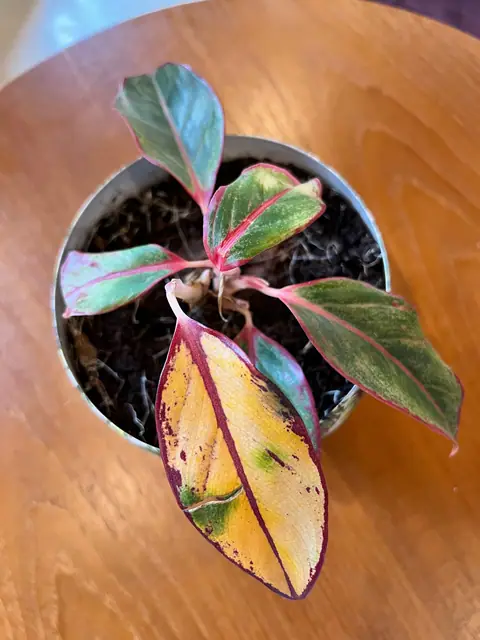
a yellowing lower leaf on a potted Chinese evergreen
Photo: Saurav9656 · CC BY-SA 4.0 · Wikimedia Commons
Scale insects
Soft scale can colonize the twisted stems unnoticed until leaves turn sticky with honeydew. Sap-sucking insects that hide under hard, shell-like bumps stuck to stems and leaves, making them resistant to sprays. Treatment is mostly manual and takes patience, but most plants recover well over 4-6 weeks of consistent removal.
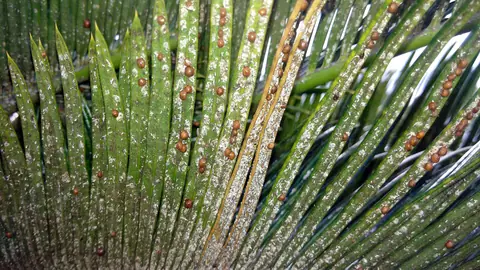
armoured scale insects dotting a cycad frond
Photo: Plant pests and diseases · CC0 · Wikimedia Commons
The mistakes that most often kill it
- Overwatering a plant that may only need a drink every two or three weeks.
- Missing a mealybug infestation hidden in the curled foliage until it is overwhelming.
- Using dense soil — its epiphytic roots need bark-heavy, fast-draining mix.
Not sure what’s wrong?
Ploomily’s rescue tool walks you through the symptoms, gives an honest diagnosis, and schedules a day-by-day recovery plan. The founding price in force today is shown in full before you confirm, and locked for as long as you stay subscribed — with 30 days to change your mind.
Rescue my plant