How to care for Hindu Rope Hoya
Hoya carnosa 'Compacta' · Apocynaceae
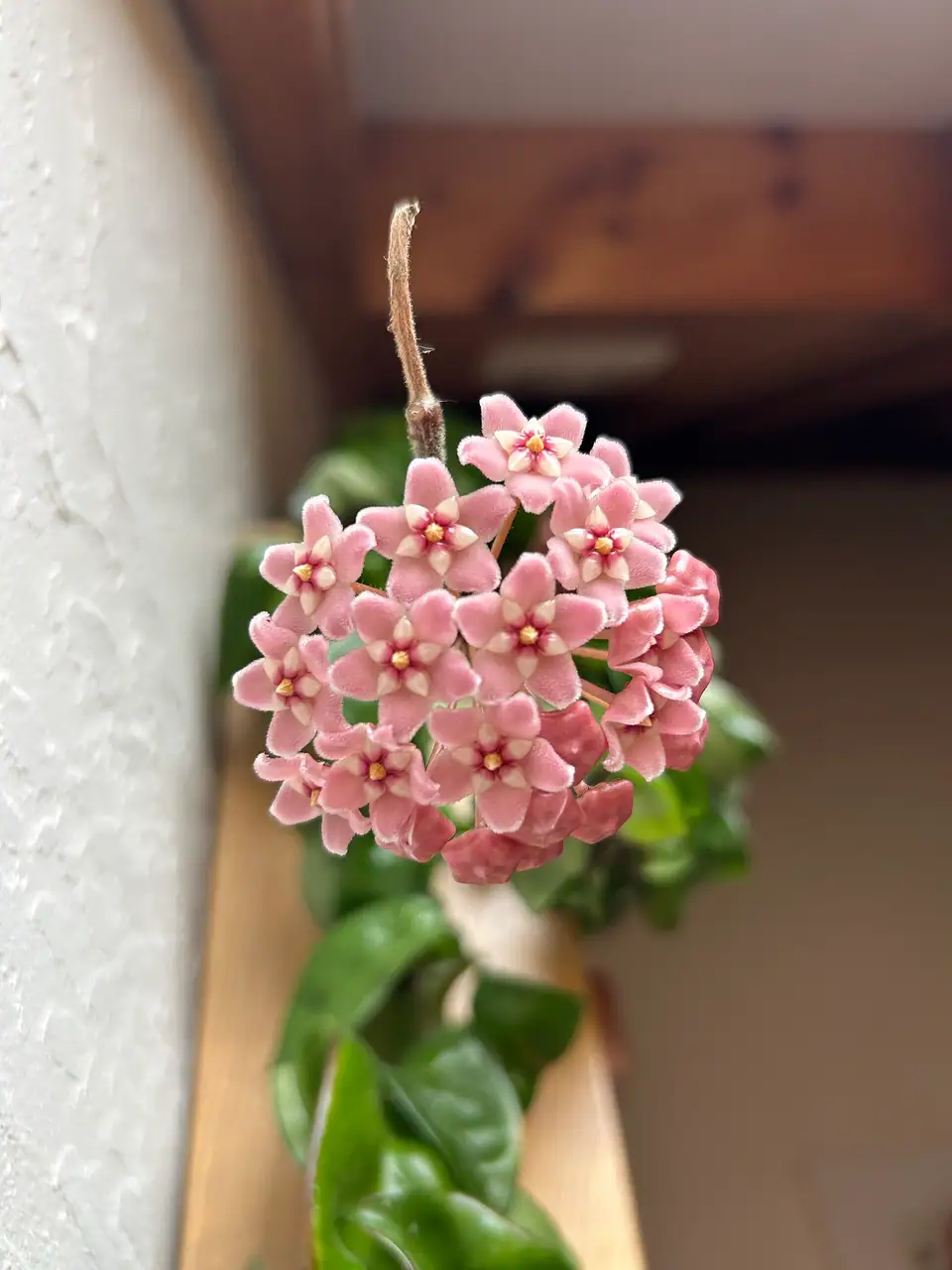
A curly-leaved cultivar of the wax plant whose twisted, tightly packed foliage looks like braided green rope. It grows even more slowly than the species and carries the same fragrant pink flower clusters. The convoluted leaves are beautiful but give pests plenty of hiding places, so it rewards a watchful owner. Water roughly every 10 days while it's growing (about every 21 in winter), give it bright, indirect light, kept above 50°F (10°C) — average room humidity suits it.
Care at a glance
Water thoroughly only when the mix is nearly dry throughout; the dense curled foliage holds moisture and dries slowly.
Bright indirect light with a touch of morning sun; too little light and the already slow growth stalls completely.
Quarter- to half-strength balanced fertilizer every 4-6 weeks in the growing season.
Mistakes that kill this plant
- Overwatering a plant that may only need a drink every two or three weeks.
- Missing a mealybug infestation hidden in the curled foliage until it is overwhelming.
- Using dense soil — its epiphytic roots need bark-heavy, fast-draining mix.
Seasonal tips
- Inspect deep inside the leaf curls monthly — pests establish there long before you see them.
- Keep it drier and unfertilized through winter; growth essentially pauses.
- Be patient: a few new curled leaves per season is normal, not a problem.
Is it safe for pets?
Our records list Hindu Rope Hoya as non-toxic to cats and dogs.
Full pet-safety details for cats & dogsCare for your Hindu Rope Hoya on autopilot
Ploomily turns this guide into a Living Schedule — watering tuned to your city’s climate, the season, the pot and the light, and feeding tuned to that same pot, drainage and light, following the growing season and pausing while the plant rests. The founding price in force today is shown in full before you confirm, and locked for as long as you stay subscribed — with 30 days to change your mind.
Build my Living ScheduleHindu Rope Hoya is featured in
More vine plants
Toxicity here is informational, not a safety guarantee. Those are our own records, compiled by following the ASPCA's published toxic and non-toxic plant lists and Pet Poison Helpline's plant poison list rather than copied from them — confirm anything that matters against the ASPCA's published lists, which this one is matched to, or with your vet. If your pet ingested this plant, contact your vet or the ASPCA Animal Poison Control Center at (888) 426-4435.