How to care for Swedish Ivy
Plectranthus verticillatus · Lamiaceae
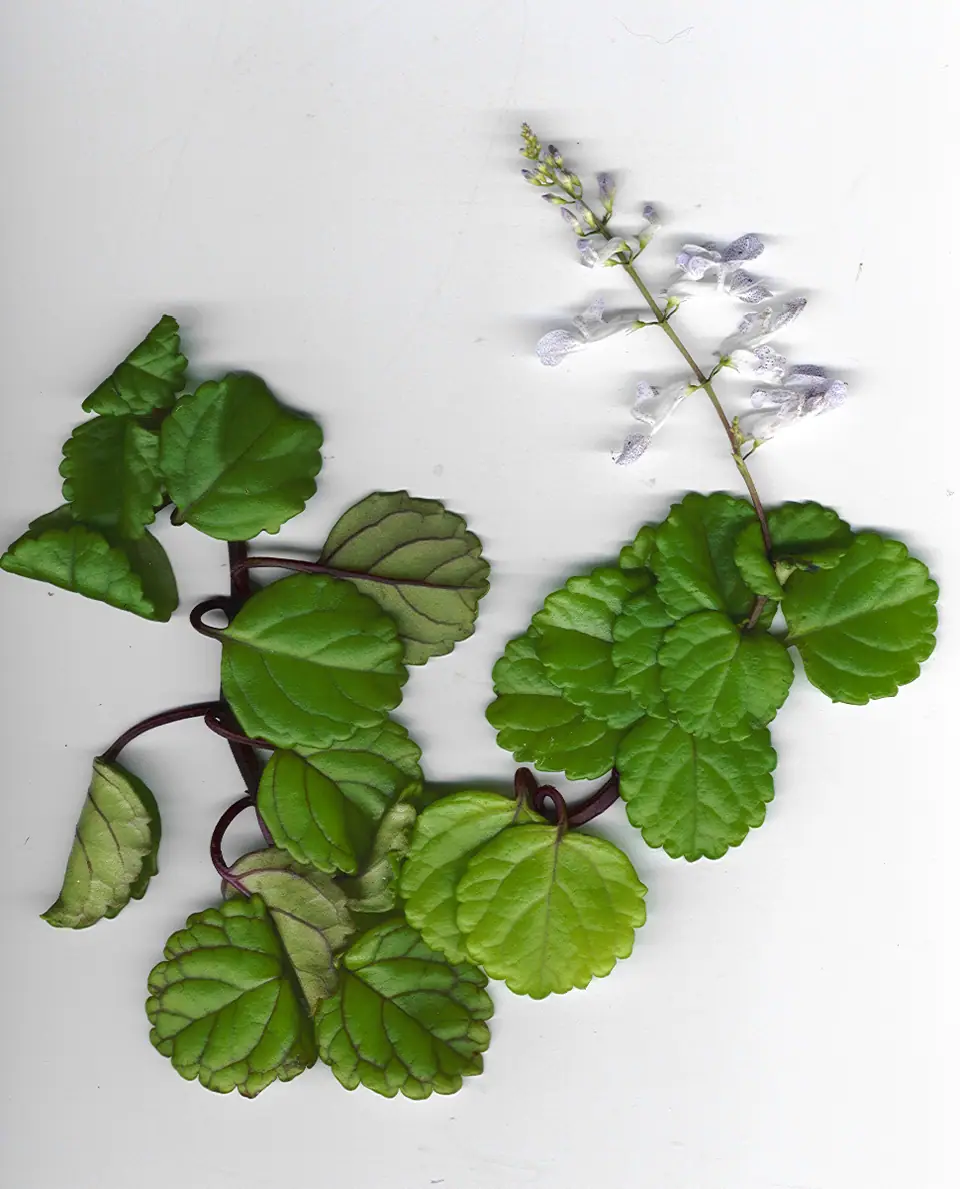
A cheerful trailing plant in the mint family with rounded, scalloped, glossy leaves on squared stems, famous as a White House Oval Office fixture. It grows fast, roots from cuttings in days, and forgives most beginner errors. Despite the name it is neither Swedish nor an ivy. Water roughly every 6 days while it's growing (about every 10 in winter), give it bright, indirect light, kept above 50°F (10°C) — dry air is fine for it.
Care at a glance
Water when the surface of the soil dries; it wilts visibly when thirsty and bounces back quickly after a drink.
Bright indirect light keeps growth compact; a little gentle morning sun is welcome.
Half-strength balanced fertilizer every few weeks while growing.
Mistakes that kill this plant
- Soggy soil rotting the stems at soil level.
- Never pruning, until the plant is all bare stem and no leaf.
- Deep shade, which slowly starves this fast grower.
Seasonal tips
- Pinch tips often in spring and summer; it becomes lush fast.
- Restart tired, woody plants from cuttings, which root in water within days.
- Ease off watering in winter when growth slows.
Is it safe for pets?
Our records list Swedish Ivy as non-toxic to cats and dogs.
Full pet-safety details for cats & dogsCare for your Swedish Ivy on autopilot
Ploomily turns this guide into a Living Schedule — watering tuned to your city’s climate, the season, the pot and the light, and feeding tuned to that same pot, drainage and light, following the growing season and pausing while the plant rests. The founding price in force today is shown in full before you confirm, and locked for as long as you stay subscribed — with 30 days to change your mind.
Build my Living ScheduleSwedish Ivy is featured in
More vine plants
Toxicity here is informational, not a safety guarantee. Those are our own records, compiled by following the ASPCA's published toxic and non-toxic plant lists and Pet Poison Helpline's plant poison list rather than copied from them — confirm anything that matters against the ASPCA's published lists, which this one is matched to, or with your vet. If your pet ingested this plant, contact your vet or the ASPCA Animal Poison Control Center at (888) 426-4435.