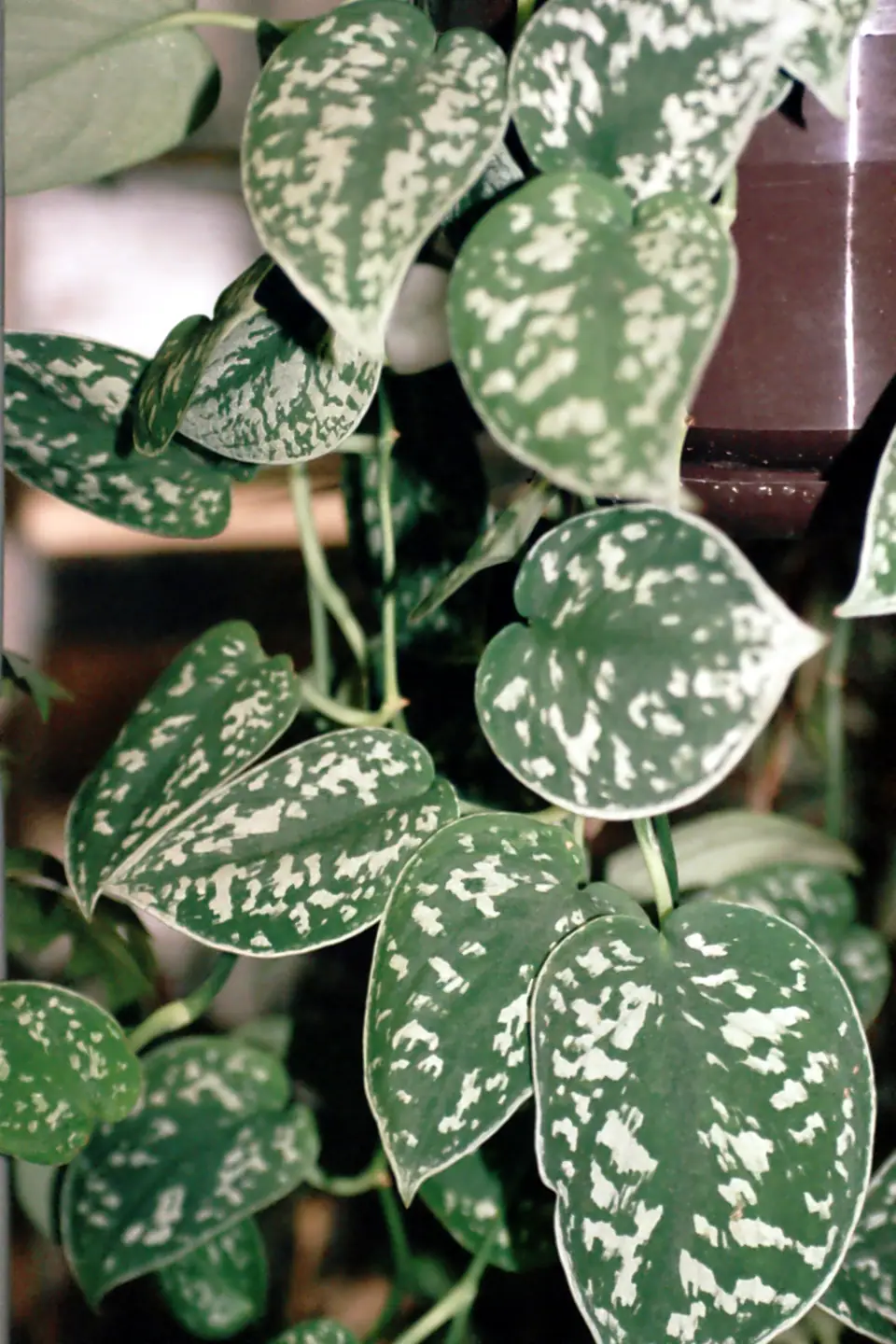
How to care for Satin Pothos
Scindapsus pictus · Araceae
A velvety trailing vine with dark green, heart-shaped leaves flecked in silvery satin. Despite the common name it is a Scindapsus, not a true pothos, but care is nearly identical and just as forgiving. It curls its leaves inward when thirsty — one of the clearest watering signals of any houseplant. Water roughly every 7 days while it's growing (about every 12 in winter), give it a bright room away from the window, kept above 59°F (15°C) — average room humidity suits it.
Care at a glance
Water thoroughly once the top half of the pot dries; curling leaves mean it wants a drink now.
Medium to bright indirect light keeps the silver markings vivid; harsh sun bleaches and burns the leaves.
Light feeder — half-strength balanced fertilizer every 6 weeks in the growing season.
Mistakes that kill this plant
- Overwatering — this is the most rot-prone of the pothos lookalikes.
- Winter cold exposure near single-pane windows.
- Keeping it in a dark room where it slowly starves and stretches.
Seasonal tips
- Keep it well away from cold windows and drafts in winter — it hates chill.
- Trim and propagate in spring; nodes root easily in water.
- Reduce watering sharply in the darker months.
Is it safe for pets?
We have Satin Pothos recorded as toxic to cats and dogs.
Full pet-safety details for cats & dogsCare for your Satin Pothos on autopilot
Ploomily turns this guide into a Living Schedule — watering tuned to your city’s climate, the season, the pot and the light, and feeding tuned to that same pot, drainage and light, following the growing season and pausing while the plant rests. The founding price in force today is shown in full before you confirm, and locked for as long as you stay subscribed — with 30 days to change your mind.
Build my Living ScheduleSatin Pothos is featured in
More vine plants
Toxicity here is informational, not a safety guarantee. Those are our own records, compiled by following the ASPCA's published toxic and non-toxic plant lists and Pet Poison Helpline's plant poison list rather than copied from them — confirm anything that matters against the ASPCA's published lists, which this one is matched to, or with your vet. If your pet ingested this plant, contact your vet or the ASPCA Animal Poison Control Center at (888) 426-4435.