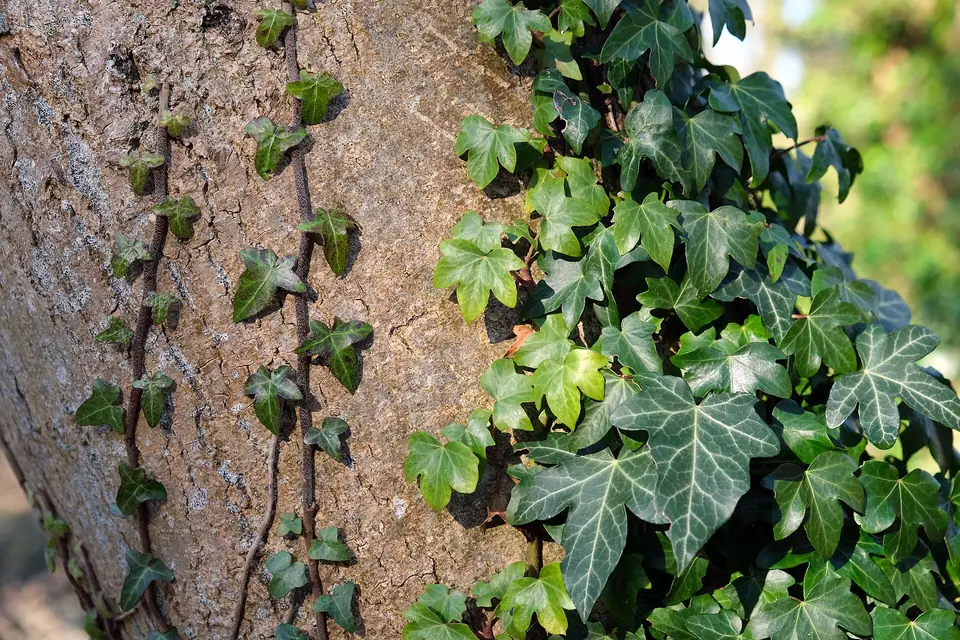
How to care for English Ivy
Hedera helix · Araliaceae
The classic trailing ivy with lobed leaves in countless green and variegated forms, at home in hanging baskets or trained on frames. Indoors it prefers things cooler and brighter than most people expect. Master its two enemies — hot dry air and spider mites — and it's a long-lived, fast-growing companion. Water roughly every 6 days while it's growing (about every 10 in winter), give it bright, indirect light, kept above 45°F (7°C) — average room humidity suits it.
Care at a glance
Water when the top few centimeters dry; it likes even moisture but sulks with yellow leaves in soggy soil.
Bright indirect light, ideally in a cool room; variegated types need more light to hold their pattern.
Half-strength balanced fertilizer monthly in spring and summer.
Mistakes that kill this plant
- Parking it above a heater in winter, which brings mites and crisped leaves within weeks.
- Constantly soggy soil.
- Ignoring the first fine webbing until mites have stripped the plant.
Seasonal tips
- Shower the foliage monthly, undersides included, to keep mites away.
- It thrives in cool winter rooms; keep it well away from radiators.
- Trim long runners in spring to keep the plant dense.
Is it safe for pets?
We have English Ivy recorded as toxic to cats and dogs.
Full pet-safety details for cats & dogsCare for your English Ivy on autopilot
Ploomily turns this guide into a Living Schedule — watering tuned to your city’s climate, the season, the pot and the light, and feeding tuned to that same pot, drainage and light, following the growing season and pausing while the plant rests. The founding price in force today is shown in full before you confirm, and locked for as long as you stay subscribed — with 30 days to change your mind.
Build my Living ScheduleEnglish Ivy is featured in
More vine plants
Toxicity here is informational, not a safety guarantee. Those are our own records, compiled by following the ASPCA's published toxic and non-toxic plant lists and Pet Poison Helpline's plant poison list rather than copied from them — confirm anything that matters against the ASPCA's published lists, which this one is matched to, or with your vet. If your pet ingested this plant, contact your vet or the ASPCA Animal Poison Control Center at (888) 426-4435.