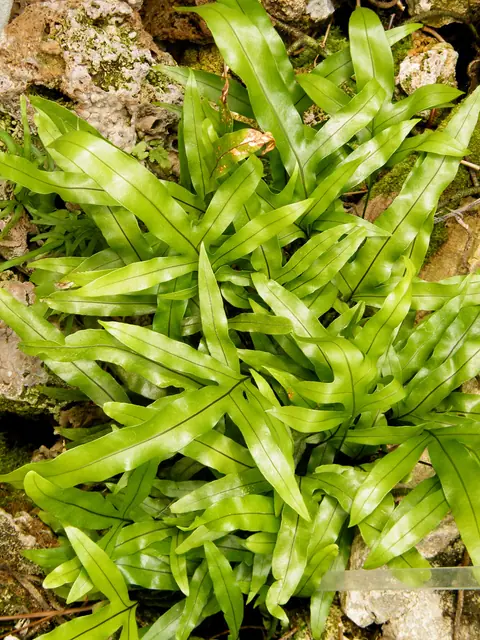
Kangaroo Paw Fern problems & how to fix them
Microsorum diversifolium
Drooping, yellowing, brown tips, or a plant that just won’t thrive? Here are the most common Kangaroo Paw Fern problems, what usually causes them, and how to turn things around.
Common problems
Overwatering
Its rhizomes sit near the surface and rot if the mix stays waterlogged. The soil is staying wet longer than the plant can handle, starving roots of oxygen. If caught before roots start rotting, the fix is simple - let the soil dry out and adjust the routine - and most plants bounce back within 2-3 weeks.
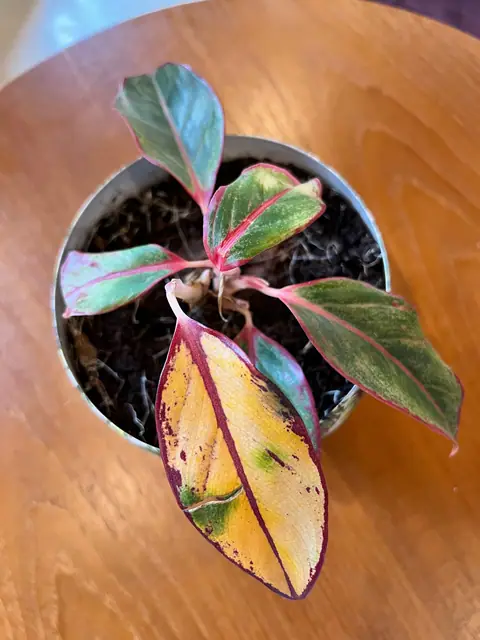
a yellowing lower leaf on a potted Chinese evergreen
Photo: Saurav9656 · CC BY-SA 4.0 · Wikimedia Commons
Crispy tips (low humidity)
Very dry air or salty tap water can brown the frond edges. Brown, dry leaf tips caused by air that is too dry for the plant, common in heated or air-conditioned rooms. Existing crispy tips never turn green again, but with higher humidity new growth should come in clean within a few weeks.
Scale insects
Check the undersides of the leathery fronds, where scale can settle unnoticed — the natural spore dots are normal, scale wipes off. Sap-sucking insects that hide under hard, shell-like bumps stuck to stems and leaves, making them resistant to sprays. Treatment is mostly manual and takes patience, but most plants recover well over 4-6 weeks of consistent removal.
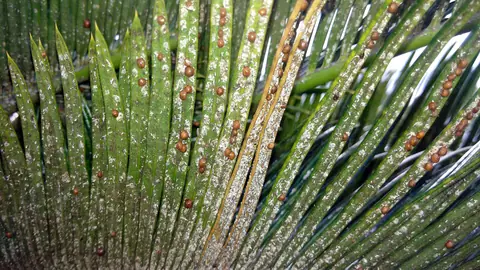
armoured scale insects dotting a cycad frond
Photo: Plant pests and diseases · CC0 · Wikimedia Commons
Rootbound
The creeping rhizomes fill wide pots fast and will climb out over the rim when crowded. The plant has outgrown its pot: roots circle the inside, crowd out the soil, and can no longer hold water or nutrients well. Repotting into a slightly larger pot almost always fixes it, with the plant perking up within a few weeks.
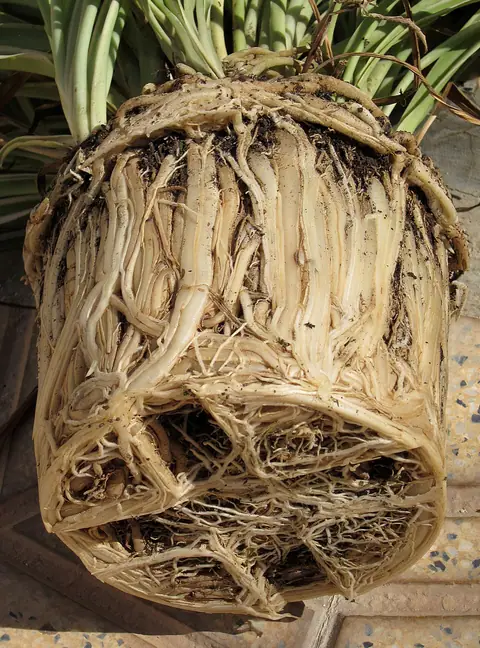
a root-bound root ball, roots circling the pot's shape
Photo: Keith Williamson · CC BY 2.0 · Wikimedia Commons
The mistakes that most often kill it
- Constantly soggy soil in a heavy, peat-only mix.
- Scrubbing off spore patches thinking they are scale, damaging the fronds.
- Deep pots that stay wet at the bottom — it prefers shallow, wide containers.
Not sure what’s wrong?
Ploomily’s rescue tool walks you through the symptoms, gives an honest diagnosis, and schedules a day-by-day recovery plan. The founding price in force today is shown in full before you confirm, and locked for as long as you stay subscribed — with 30 days to change your mind.
Rescue my plant