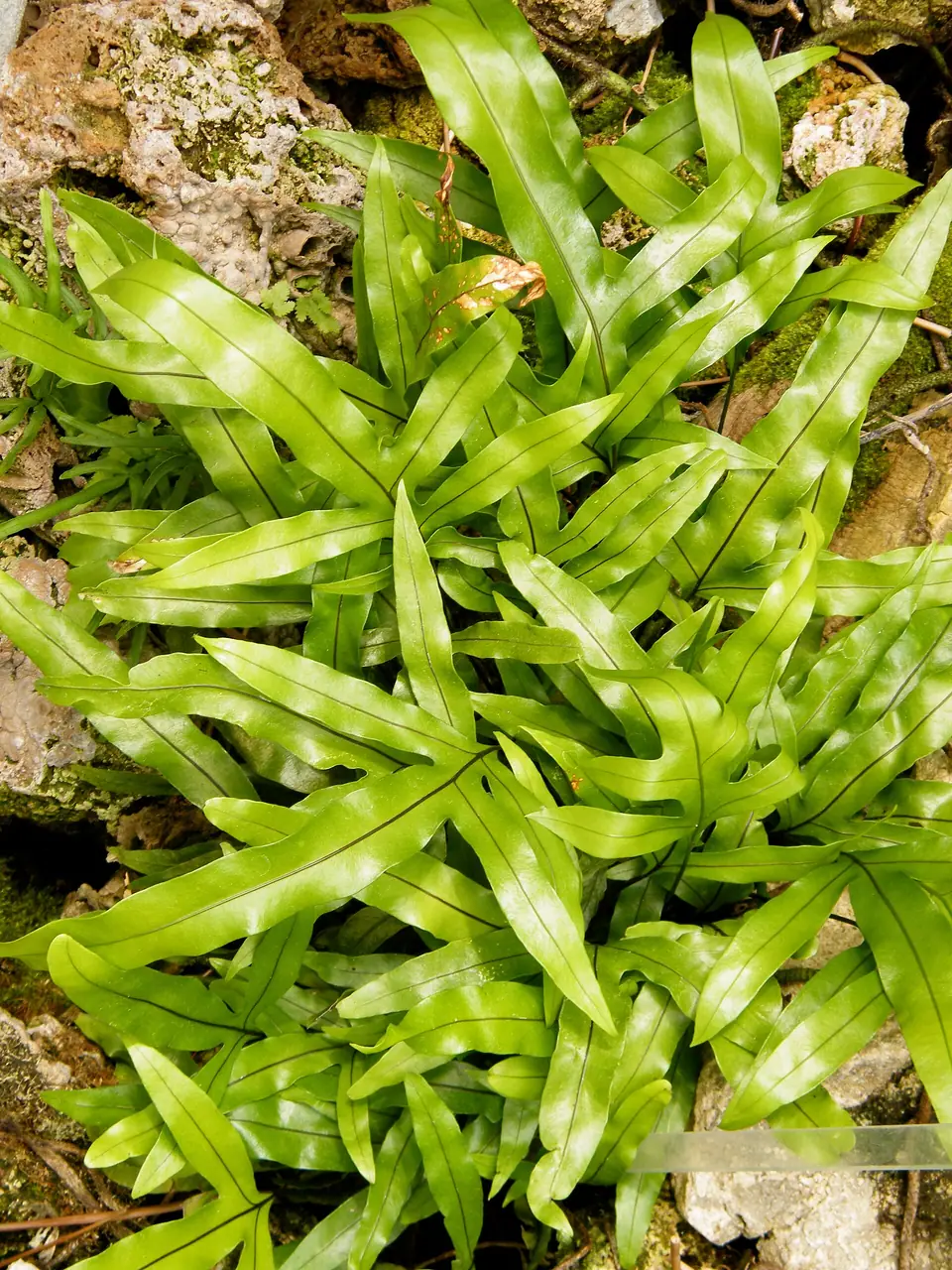
How to care for Kangaroo Paw Fern
Microsorum diversifolium · Polypodiaceae
An Australian native with glossy, leathery fronds of varying shapes, the kangaroo paw fern is one of the most forgiving ferns you can grow indoors. Its thicker leaves tolerate average household humidity far better than feathery ferns. It spreads slowly from creeping rhizomes, filling a pot or hanging basket with deep green shine. Water roughly every 5 days while it's growing (about every 9 in winter), give it a bright room away from the window, kept above 54°F (12°C) — average room humidity suits it.
Care at a glance
Water when the top few centimeters of mix have dried; it prefers evenly moist but tolerates brief drying better than most ferns.
Medium to bright indirect light; it also handles lower light better than most ferns, though growth slows.
Half-strength balanced liquid feed monthly in the growing season.
Mistakes that kill this plant
- Constantly soggy soil in a heavy, peat-only mix.
- Scrubbing off spore patches thinking they are scale, damaging the fronds.
- Deep pots that stay wet at the bottom — it prefers shallow, wide containers.
Seasonal tips
- Reduce watering in winter and keep it away from cold windowsills.
- Divide the rhizomes in spring if it has outgrown its pot.
- Don't mistake the orderly rows of brown spore dots under fronds for pests.
Is it safe for pets?
We couldn’t place Kangaroo Paw Fern on a toxic or a non-toxic list, so its toxicity is unconfirmed — which is not the same as safe.
Full pet-safety details for cats & dogsCare for your Kangaroo Paw Fern on autopilot
Ploomily turns this guide into a Living Schedule — watering tuned to your city’s climate, the season, the pot and the light, and feeding tuned to that same pot, drainage and light, following the growing season and pausing while the plant rests. The founding price in force today is shown in full before you confirm, and locked for as long as you stay subscribed — with 30 days to change your mind.
Build my Living ScheduleKangaroo Paw Fern is featured in
More fern plants
Toxicity here is informational, not a safety guarantee. Those are our own records, compiled by following the ASPCA's published toxic and non-toxic plant lists and Pet Poison Helpline's plant poison list rather than copied from them — confirm anything that matters against those lists or with your vet. If your pet ingested this plant, contact your vet or the ASPCA Animal Poison Control Center at (888) 426-4435.