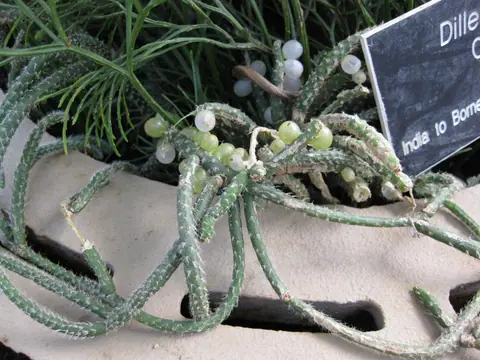
Mistletoe Cactus problems & how to fix them
Rhipsalis baccifera
Drooping, yellowing, brown tips, or a plant that just won’t thrive? Here are the most common Mistletoe Cactus problems, what usually causes them, and how to turn things around.
Common problems
Underwatering
Long dry spells make the thread-like stems shrivel, brown, and shed in sections. The plant is not getting enough water, either from infrequent watering or soil so dry it repels water. Prognosis is excellent - most underwatered plants perk up within days of proper rehydration.
Root rot
Its epiphytic roots rot in dense, constantly wet soil — use a chunky, fast-draining mix. A fungal or bacterial infection of the roots, almost always triggered by soil staying wet too long. Caught early, most plants recover within a few weeks after repotting; if most roots are already mushy, recovery is uncertain.
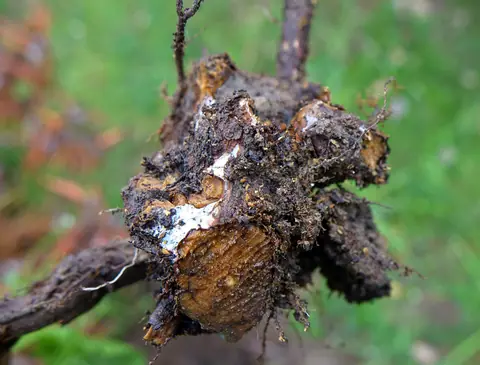
Phytophthora root rot on a dug-up root ball
Photo: Jerzy Opioła · CC BY-SA 4.0 · Wikimedia Commons
Sunburn
Stems blush red then scorch in strong direct sun. Leaf tissue scorched by more direct sun than the plant was acclimated to, often after moving it to a brighter spot or outdoors. Burned patches are permanent, but the plant itself usually recovers fully once moved - new growth comes in healthy.
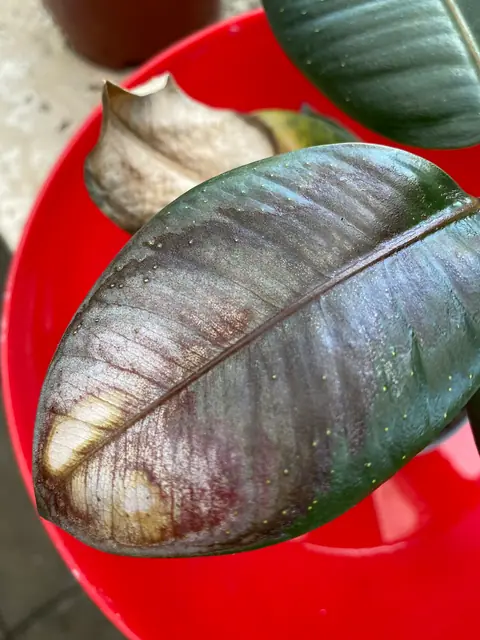
a sunburnt rubber plant leaf, bleached and browned where the sun hit
Photo: Secretlondon · CC BY-SA 4.0 · Wikimedia Commons
Mealybugs
They tuck into the joints where the branching strands meet. Slow-moving sap-sucking insects that look like bits of white cotton stuck in leaf joints. They are stubborn but very treatable with repeated spot treatment; expect steady improvement over 3-4 weeks.
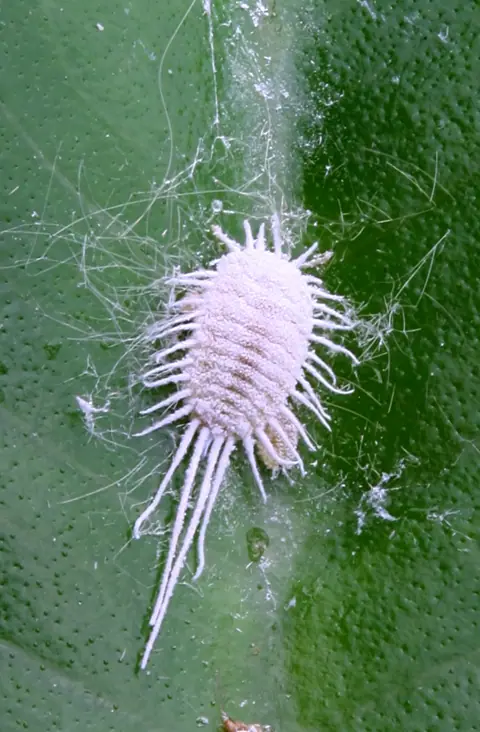
a long-tailed mealybug on a leaf
Photo: D-Kuru · CC BY-SA 3.0 at · Wikimedia Commons
Succulent-specific pests
Root mealybugs hide below the soil line on succulents and cacti — check the root ball when a plant stalls for no visible reason. Mealybugs, scale, and root mealybugs love the crevices and thick leaves of succulents and cacti, sucking sap and weakening the plant. Caught early they are very treatable, but expect a few repeat treatments over 2-3 weeks to break the life cycle.
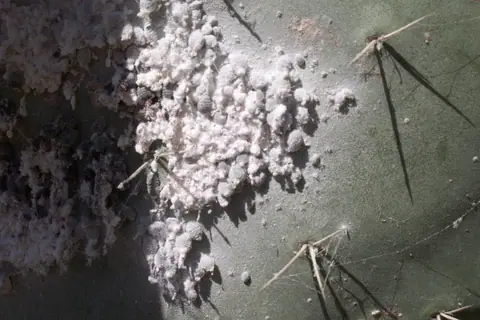
cottony cochineal scale massed on a prickly pear pad
Photo: Juandev · CC BY-SA 3.0 · Wikimedia Commons
The mistakes that most often kill it
- Treating it like a desert cactus and watering once a month.
- Hanging it in a hot, sunny window where the fine stems fry.
- Heavy potting soil that suffocates its air-loving roots.
Not sure what’s wrong?
Ploomily’s rescue tool walks you through the symptoms, gives an honest diagnosis, and schedules a day-by-day recovery plan. The founding price in force today is shown in full before you confirm, and locked for as long as you stay subscribed — with 30 days to change your mind.
Rescue my plant