How to care for Mistletoe Cactus
Rhipsalis baccifera · Cactaceae
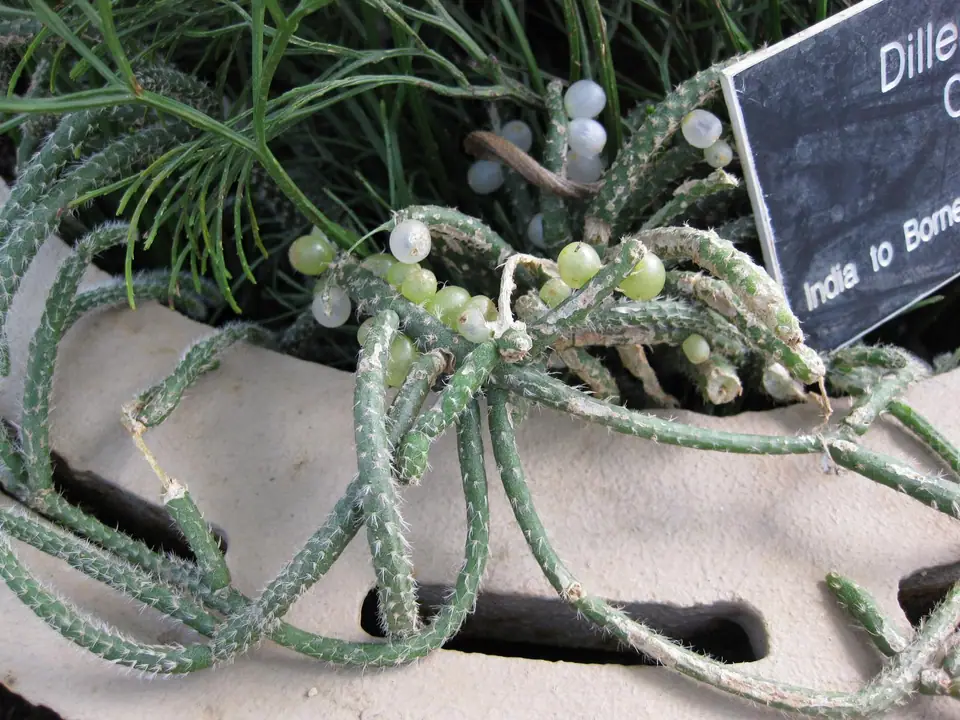
A spineless, thread-stemmed cactus that dangles from rainforest trees across the tropics — the only cactus species found growing wild outside the Americas. Its soft green strands and tiny white mistletoe-like berries make it look more like a fern than a cactus. Treat it like a tropical houseplant, not a desert dweller. Water roughly every 10 days while it's growing (about every 21 in winter), give it bright, indirect light, kept above 50°F (10°C) — average room humidity suits it.
Care at a glance
Keep the airy mix lightly moist in the growing season, watering when the top few centimeters dry — never let it stay bone dry for weeks.
Bright, filtered light or gentle morning sun; hot direct sun reddens and burns the thin stems.
Balanced liquid feed at quarter to half strength monthly in spring and summer.
Mistakes that kill this plant
- Treating it like a desert cactus and watering once a month.
- Hanging it in a hot, sunny window where the fine stems fry.
- Heavy potting soil that suffocates its air-loving roots.
Seasonal tips
- Raise humidity in winter when heating dries the air — it is a rainforest plant.
- Slightly cooler, drier late-winter conditions encourage the tiny flowers and berries.
- Stem segments root easily in spring for effortless propagation.
Is it safe for pets?
Our records list Mistletoe Cactus as non-toxic to cats and dogs.
Full pet-safety details for cats & dogsCare for your Mistletoe Cactus on autopilot
Ploomily turns this guide into a Living Schedule — watering tuned to your city’s climate, the season, the pot and the light, and feeding tuned to that same pot, drainage and light, following the growing season and pausing while the plant rests. The founding price in force today is shown in full before you confirm, and locked for as long as you stay subscribed — with 30 days to change your mind.
Build my Living ScheduleMistletoe Cactus is featured in
More cactus plants
Toxicity here is informational, not a safety guarantee. Those are our own records, compiled by following the ASPCA's published toxic and non-toxic plant lists and Pet Poison Helpline's plant poison list rather than copied from them — confirm anything that matters against the ASPCA's published lists, which this one is matched to, or with your vet. If your pet ingested this plant, contact your vet or the ASPCA Animal Poison Control Center at (888) 426-4435.