How to care for Christmas Cactus
Schlumbergera × buckleyi · Cactaceae
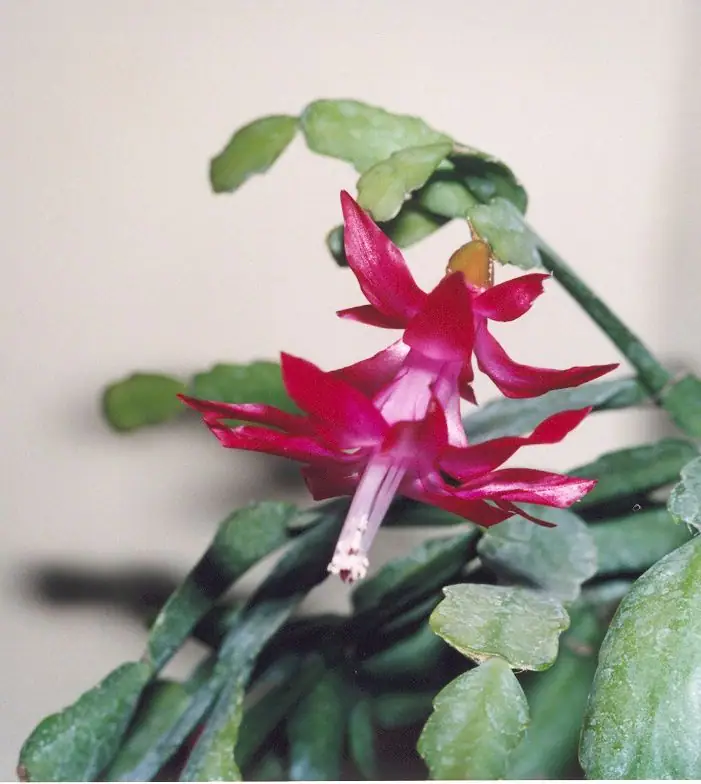
A rainforest cactus, not a desert one — in the wild its relatives drape from Brazilian trees, so it wants dappled light and steadier moisture than any spiny cousin. Scalloped, arching stem segments erupt in fuchsia-pink tubular flowers around midwinter, triggered by long nights and cool temperatures. Heirloom plants are passed down for generations. Water roughly every 7 days while it's growing (about every 18 in winter), give it bright, indirect light, kept above 50°F (10°C) — average room humidity suits it.
Care at a glance
Water when the top few centimeters feel dry — it should never be desert-dry, but soggy roots are equally fatal.
An east window or bright shade suits it; hot direct sun reddens and shrivels the segments.
Half-strength balanced fertilizer monthly from spring to late summer, then stop while buds set.
Mistakes that kill this plant
- Treating it like a desert cactus and letting it desiccate for weeks.
- Waterlogged, peat-heavy soil rotting the fine epiphyte roots.
- Moving it around while in bud, dropping every flower it worked all autumn to make.
Seasonal tips
- In autumn give it cool nights and about 13-14 hours of darkness to set buds.
- Once buds show, do not move or rotate the plant — bud drop follows relocation.
- Twist off a few segments after flowering to propagate and to encourage branching.
Is it safe for pets?
Our records list Christmas Cactus as non-toxic to cats and dogs.
Full pet-safety details for cats & dogsCare for your Christmas Cactus on autopilot
Ploomily turns this guide into a Living Schedule — watering tuned to your city’s climate, the season, the pot and the light, and feeding tuned to that same pot, drainage and light, following the growing season and pausing while the plant rests. The founding price in force today is shown in full before you confirm, and locked for as long as you stay subscribed — with 30 days to change your mind.
Build my Living ScheduleChristmas Cactus is featured in
More cactus plants
Toxicity here is informational, not a safety guarantee. Those are our own records, compiled by following the ASPCA's published toxic and non-toxic plant lists and Pet Poison Helpline's plant poison list rather than copied from them — confirm anything that matters against the ASPCA's published lists, which this one is matched to, or with your vet. If your pet ingested this plant, contact your vet or the ASPCA Animal Poison Control Center at (888) 426-4435.