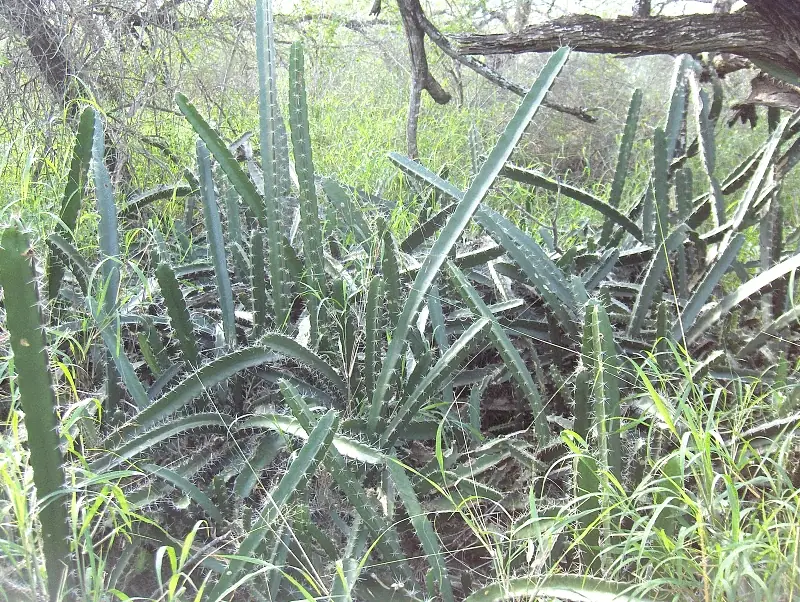
How to care for Fairy Castle Cactus
Acanthocereus tetragonus · Cactaceae
A slow-growing columnar cactus whose clustered upright stems really do resemble turrets on a miniature castle. It is a compact, forgiving desert species that thrives on sun and neglect. Note that the yellow 'flowers' it is often sold with are usually glued-on strawflowers, not real blooms. Water roughly every 14 days while it's growing (about every 35 in winter), give it direct sun, kept above 50°F (10°C) — dry air is fine for it.
Care at a glance
Soak the pot thoroughly, let it drain fully, then wait until the soil is bone dry before watering again.
Give it your sunniest windowsill — a south or west exposure with several hours of direct sun.
Low-nitrogen cactus fertilizer at half strength, two or three times over the growing season.
Mistakes that kill this plant
- Watering on a fixed weekly schedule regardless of soil dryness.
- Keeping it in a dark corner where it stretches into a pale, floppy tower.
- Using a pot without a drainage hole.
Seasonal tips
- Keep it cool and nearly dry from late autumn to early spring.
- Rotate the pot monthly so the turrets grow straight instead of leaning to the light.
- If it came with a glued strawflower, gently remove it — the glue can damage the stem.
Is it safe for pets?
We couldn’t place Fairy Castle Cactus on a toxic or a non-toxic list, so its toxicity is unconfirmed — which is not the same as safe.
Full pet-safety details for cats & dogsCare for your Fairy Castle Cactus on autopilot
Ploomily turns this guide into a Living Schedule — watering tuned to your city’s climate, the season, the pot and the light, and feeding tuned to that same pot, drainage and light, following the growing season and pausing while the plant rests. The founding price in force today is shown in full before you confirm, and locked for as long as you stay subscribed — with 30 days to change your mind.
Build my Living ScheduleFairy Castle Cactus is featured in
More cactus plants
Toxicity here is informational, not a safety guarantee. Those are our own records, compiled by following the ASPCA's published toxic and non-toxic plant lists and Pet Poison Helpline's plant poison list rather than copied from them — confirm anything that matters against those lists or with your vet. If your pet ingested this plant, contact your vet or the ASPCA Animal Poison Control Center at (888) 426-4435.