How to care for Bunny Ears Cactus
Opuntia microdasys · Cactaceae
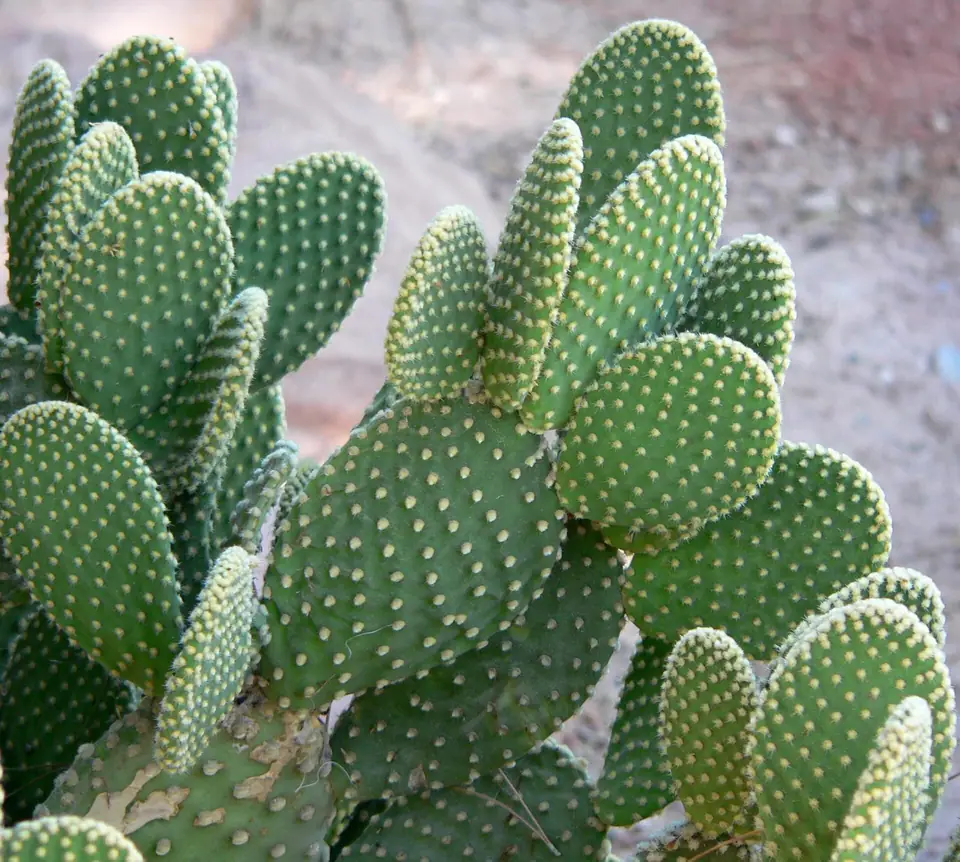
Paired oval pads dotted with polka-dot tufts give this Mexican prickly pear its adorable rabbit silhouette — but those fuzzy dots are glochids, hundreds of hair-fine barbed bristles that detach into skin at the lightest touch. Look, never pet. Beyond that one rule it is a classic easy cactus: sun, grit, and near-neglect. Water roughly every 16 days while it's growing (about every 40 in winter), give it direct sun, kept above 45°F (7°C) — dry air is fine for it.
Care at a glance
Water deeply once the soil has been fully dry for several days, and keep it almost completely dry over winter.
Direct sun for most of the day keeps pads thick and well-spotted; south-facing exposure is best.
Dilute cactus fertilizer once or twice in spring and summer.
Mistakes that kill this plant
- Winter watering while the plant is cold and resting.
- Placing it within reach of pets, children, or passing sleeves.
- A shady spot that produces weak, etiolated pads prone to flopping and rot.
Seasonal tips
- Give it a cold, dry, bright winter rest to encourage compact spring pads and possible flowers.
- Handle only with thick folded newspaper or leather gloves — never fabric gloves, which glochids penetrate.
- Remove any embedded glochids from skin with tape or tweezers promptly.
Is it safe for pets?
Our records list Bunny Ears Cactus as non-toxic to cats and dogs.
Full pet-safety details for cats & dogsCare for your Bunny Ears Cactus on autopilot
Ploomily turns this guide into a Living Schedule — watering tuned to your city’s climate, the season, the pot and the light, and feeding tuned to that same pot, drainage and light, following the growing season and pausing while the plant rests. The founding price in force today is shown in full before you confirm, and locked for as long as you stay subscribed — with 30 days to change your mind.
Build my Living ScheduleBunny Ears Cactus is featured in
More cactus plants
Toxicity here is informational, not a safety guarantee. Those are our own records, compiled by following the ASPCA's published toxic and non-toxic plant lists and Pet Poison Helpline's plant poison list rather than copied from them — confirm anything that matters against the ASPCA's published lists, which this one is matched to, or with your vet. If your pet ingested this plant, contact your vet or the ASPCA Animal Poison Control Center at (888) 426-4435.