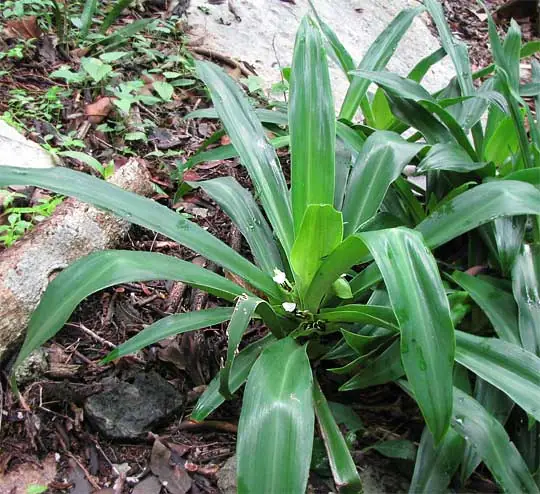
How to care for Moses in the Cradle
Tradescantia spathacea · Commelinaceae
A tough rosette-forming tradescantia with sword-like leaves, green on top and rich purple underneath, plus tiny white flowers tucked into boat-shaped bracts. It shrugs off average indoor conditions and irregular care better than most colorful plants. A great confidence-builder that still looks special. Water roughly every 7 days while it's growing (about every 12 in winter), give it bright, indirect light, kept above 54°F (12°C) — average room humidity suits it.
Care at a glance
Let the top few centimeters of soil dry between waterings; it forgives a missed watering far better than a soggy pot.
Bright indirect light keeps the purple undersides vivid, though it tolerates medium light with slightly duller color.
Balanced liquid fertilizer at half strength monthly in spring and summer.
Mistakes that kill this plant
- Letting water sit in the central rosette until the crown rots.
- Chronic overwatering in a heavy, peaty mix.
- Freezing drafts near winter windows.
Seasonal tips
- Water into the soil, not the crown, especially in cool winter rooms.
- Trim browned tips with clean scissors, following the natural leaf shape.
- Pot up offsets in spring for easy extra plants.
Is it safe for pets?
We have Moses in the Cradle recorded as toxic to cats and dogs.
Full pet-safety details for cats & dogsCare for your Moses in the Cradle on autopilot
Ploomily turns this guide into a Living Schedule — watering tuned to your city’s climate, the season, the pot and the light, and feeding tuned to that same pot, drainage and light, following the growing season and pausing while the plant rests. The founding price in force today is shown in full before you confirm, and locked for as long as you stay subscribed — with 30 days to change your mind.
Build my Living ScheduleMoses in the Cradle is featured in
More foliage plants
Toxicity here is informational, not a safety guarantee. Those are our own records, compiled by following the ASPCA's published toxic and non-toxic plant lists and Pet Poison Helpline's plant poison list rather than copied from them — confirm anything that matters against those lists or with your vet. If your pet ingested this plant, contact your vet or the ASPCA Animal Poison Control Center at (888) 426-4435.