How to care for Philodendron Birkin
Philodendron 'Birkin' · Araceae
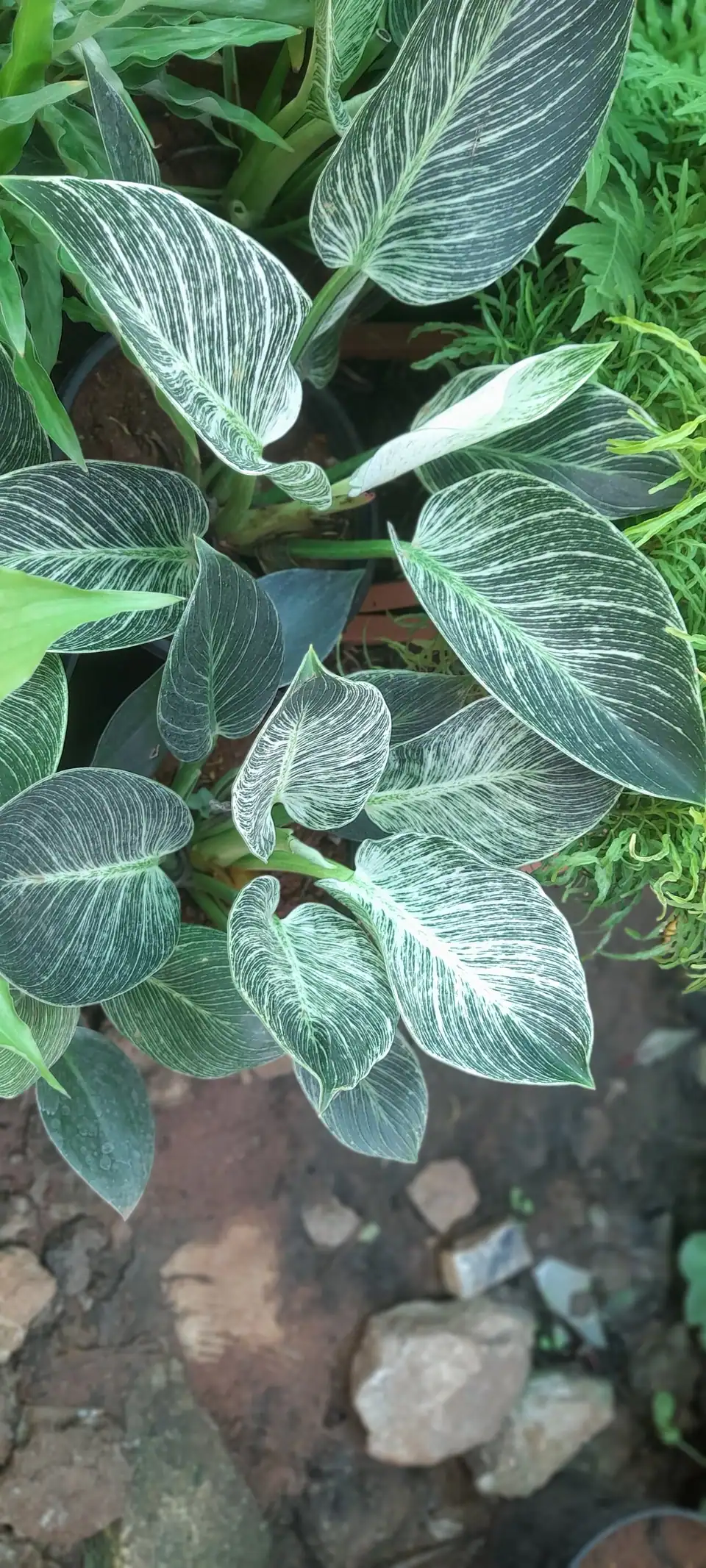
A compact, self-heading philodendron whose dark green leaves are pinstriped in creamy white, each one patterned a little differently. It arose as a spontaneous mutation and its variegation can shift over time — some leaves emerge nearly white, others almost plain. It stays tidy and shelf-sized, making it a favourite statement plant for small spaces. Water roughly every 7 days while it's growing (about every 12 in winter), give it bright, indirect light, kept above 59°F (15°C) — average room humidity suits it.
Care at a glance
Water when the top 1–1.5 inches (3–4 cm) are dry; the white-striped tissue browns fast if the plant sits either soggy or bone dry.
Bright indirect light maintains crisp pinstripes; low light dulls variegation and slows it to a crawl.
Balanced liquid fertilizer at half strength monthly during active growth.
Mistakes that kill this plant
- Watering into the crown and letting it rot from the centre.
- Chronic overwatering in a heavy mix.
- Ignoring thrips until every new leaf emerges scarred.
Seasonal tips
- Inspect new leaves for thrips every couple of weeks in warm months.
- Rotate a quarter turn weekly so the rosette grows symmetrically.
- Keep above 59°F (15 °C) in winter and away from cold sills.
Is it safe for pets?
We have Philodendron Birkin recorded as toxic to cats and dogs.
Full pet-safety details for cats & dogsCare for your Philodendron Birkin on autopilot
Ploomily turns this guide into a Living Schedule — watering tuned to your city’s climate, the season, the pot and the light, and feeding tuned to that same pot, drainage and light, following the growing season and pausing while the plant rests. The founding price in force today is shown in full before you confirm, and locked for as long as you stay subscribed — with 30 days to change your mind.
Build my Living ScheduleMore foliage plants
Toxicity here is informational, not a safety guarantee. Those are our own records, compiled by following the ASPCA's published toxic and non-toxic plant lists and Pet Poison Helpline's plant poison list rather than copied from them — confirm anything that matters against the ASPCA's published lists, which this one is matched to, or with your vet. If your pet ingested this plant, contact your vet or the ASPCA Animal Poison Control Center at (888) 426-4435.