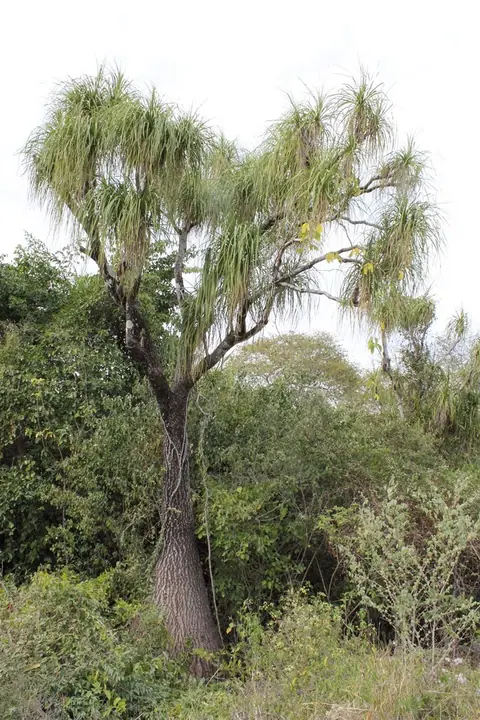
Ponytail Palm problems & how to fix them
Beaucarnea recurvata
Drooping, yellowing, brown tips, or a plant that just won’t thrive? Here are the most common Ponytail Palm problems, what usually causes them, and how to turn things around.
Common problems
Root rot
A soft, spongy caudex means overwatering has reached the storage tissue — often too late. A fungal or bacterial infection of the roots, almost always triggered by soil staying wet too long. Caught early, most plants recover within a few weeks after repotting; if most roots are already mushy, recovery is uncertain.
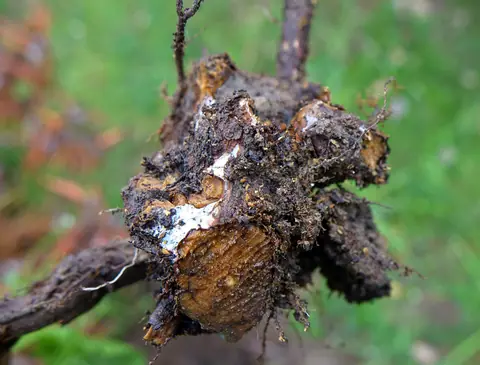
Phytophthora root rot on a dug-up root ball
Photo: Jerzy Opioła · CC BY-SA 4.0 · Wikimedia Commons
Crispy tips (low humidity)
Brown leaf tips are near-universal indoors, from dry air, fluoride, or salt buildup. Brown, dry leaf tips caused by air that is too dry for the plant, common in heated or air-conditioned rooms. Existing crispy tips never turn green again, but with higher humidity new growth should come in clean within a few weeks.
Spider mites
Mites stipple the long strappy leaves in warm, dry rooms. Tiny sap-sucking mites that thrive in warm, dry air and leave fine webbing and speckled leaves. Caught early they are very treatable; most plants recover fully within 3-4 weeks of consistent treatment.
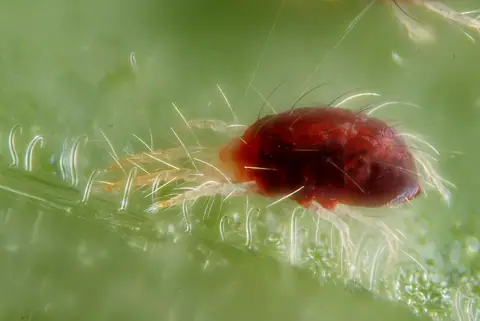
a two-spotted spider mite among its silk threads
Photo: Gilles San Martin · CC BY-SA 2.0 · Wikimedia Commons
Scale insects
Brown bumps line the leaf bases where the ponytail emerges from the caudex. Sap-sucking insects that hide under hard, shell-like bumps stuck to stems and leaves, making them resistant to sprays. Treatment is mostly manual and takes patience, but most plants recover well over 4-6 weeks of consistent removal.
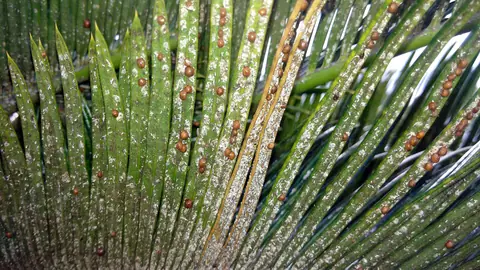
armoured scale insects dotting a cycad frond
Photo: Plant pests and diseases · CC0 · Wikimedia Commons
The mistakes that most often kill it
- Frequent watering 'because it is a big plant' — the caudex rots from the base.
- Potting into a huge container of moisture-holding soil.
- Letting cats shred the tempting leaves is ugly but not dangerous — the real killer remains the watering can.
Not sure what’s wrong?
Ploomily’s rescue tool walks you through the symptoms, gives an honest diagnosis, and schedules a day-by-day recovery plan. The founding price in force today is shown in full before you confirm, and locked for as long as you stay subscribed — with 30 days to change your mind.
Rescue my plant