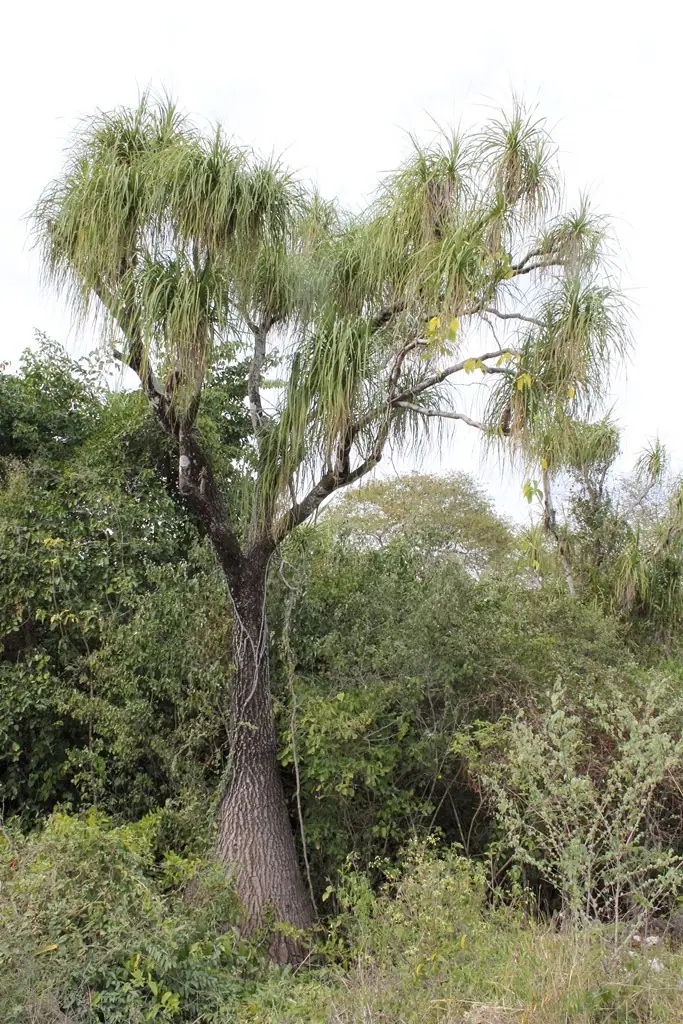
How to care for Ponytail Palm
Beaucarnea recurvata · Asparagaceae
Not a palm but a Mexican succulent tree, storing water in its swollen, elephant-foot base while a fountain of long ribbon leaves cascades from the top. It shrugs off missed waterings, dry air, and neglect, growing serenely for decades in the same pot. One of the best big statement plants for busy households — and pet owners. Water roughly every 14 days while it's growing (about every 30 in winter), give it direct sun, kept above 50°F (10°C) — dry air is fine for it.
Care at a glance
Soak thoroughly, then wait until the soil is fully dry — the bulbous caudex is its canteen and hates sitting wet.
Brightest light possible, with direct sun ideal; it tolerates bright indirect light with slower, thinner growth.
Half-strength balanced fertilizer every month or two in spring and summer.
Mistakes that kill this plant
- Frequent watering 'because it is a big plant' — the caudex rots from the base.
- Potting into a huge container of moisture-holding soil.
- Letting cats shred the tempting leaves is ugly but not dangerous — the real killer remains the watering can.
Seasonal tips
- Trim brown leaf tips at an angle with clean scissors for a tidy look.
- Water even less in winter — once every four to six weeks is often right.
- Flush the pot with plenty of water each spring to wash out accumulated salts.
Is it safe for pets?
Our records list Ponytail Palm as non-toxic to cats and dogs.
Full pet-safety details for cats & dogsCare for your Ponytail Palm on autopilot
Ploomily turns this guide into a Living Schedule — watering tuned to your city’s climate, the season, the pot and the light, and feeding tuned to that same pot, drainage and light, following the growing season and pausing while the plant rests. The founding price in force today is shown in full before you confirm, and locked for as long as you stay subscribed — with 30 days to change your mind.
Build my Living SchedulePonytail Palm is featured in
More succulent plants
Toxicity here is informational, not a safety guarantee. Those are our own records, compiled by following the ASPCA's published toxic and non-toxic plant lists and Pet Poison Helpline's plant poison list rather than copied from them — confirm anything that matters against the ASPCA's published lists, which this one is matched to, or with your vet. If your pet ingested this plant, contact your vet or the ASPCA Animal Poison Control Center at (888) 426-4435.