How to care for Jade Plant
Crassula ovata · Crassulaceae
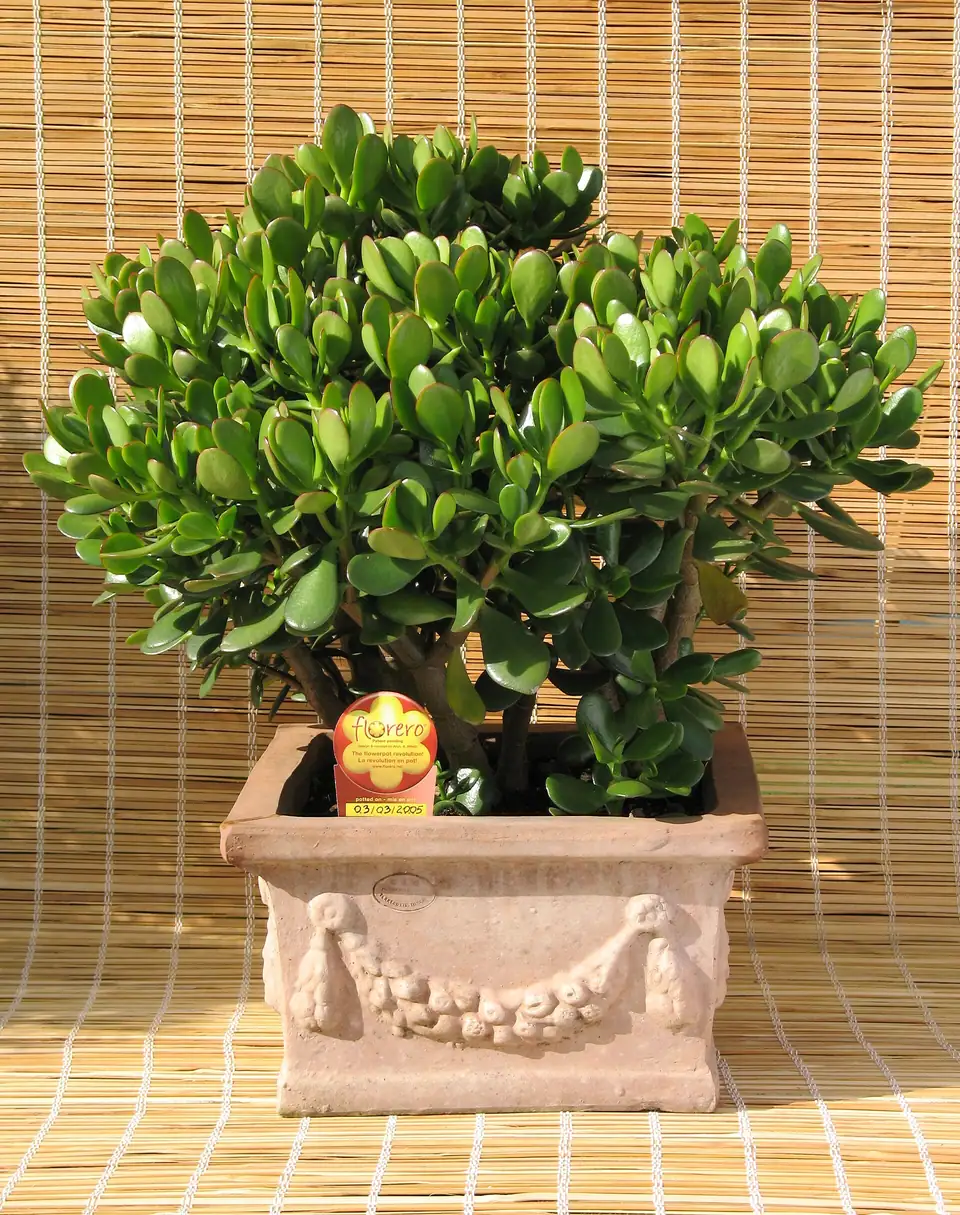
A classic 'money tree' succulent with a thick trunk and glossy, coin-shaped leaves that can live for generations. Given real sun and restraint with water, it slowly becomes a miniature tree with a woody trunk. Red leaf edges are a sign of good, strong light rather than a problem. Water roughly every 14 days while it's growing (about every 30 in winter), give it direct sun, kept above 45°F (7°C) — dry air is fine for it.
Care at a glance
Water deeply only when the soil is fully dry and the leaves lose a little of their firmness; err on the side of drought.
At least four hours of direct sun keeps growth compact and stems sturdy; a south-facing window is ideal.
Diluted cactus fertilizer every two months in spring and summer.
Mistakes that kill this plant
- Watering on a weekly schedule regardless of soil dryness.
- Keeping it in ambient room light — jades need actual sun to stay sturdy.
- Repotting into a big pot of peat-based soil after purchase.
Seasonal tips
- A cool, bright, dry winter (around 10-13 C) can trigger star-shaped winter flowers on mature plants.
- Prune in spring to build a tree-like branching structure.
- Move it outside to real sun for summer if you can — growth compacts beautifully.
Is it safe for pets?
We have Jade Plant recorded as toxic to cats and dogs.
Full pet-safety details for cats & dogsCare for your Jade Plant on autopilot
Ploomily turns this guide into a Living Schedule — watering tuned to your city’s climate, the season, the pot and the light, and feeding tuned to that same pot, drainage and light, following the growing season and pausing while the plant rests. The founding price in force today is shown in full before you confirm, and locked for as long as you stay subscribed — with 30 days to change your mind.
Build my Living ScheduleJade Plant is featured in
More succulent plants
Toxicity here is informational, not a safety guarantee. Those are our own records, compiled by following the ASPCA's published toxic and non-toxic plant lists and Pet Poison Helpline's plant poison list rather than copied from them — confirm anything that matters against the ASPCA's published lists, which this one is matched to, or with your vet. If your pet ingested this plant, contact your vet or the ASPCA Animal Poison Control Center at (888) 426-4435.