How to care for Mexican Snowball
Echeveria elegans · Crassulaceae
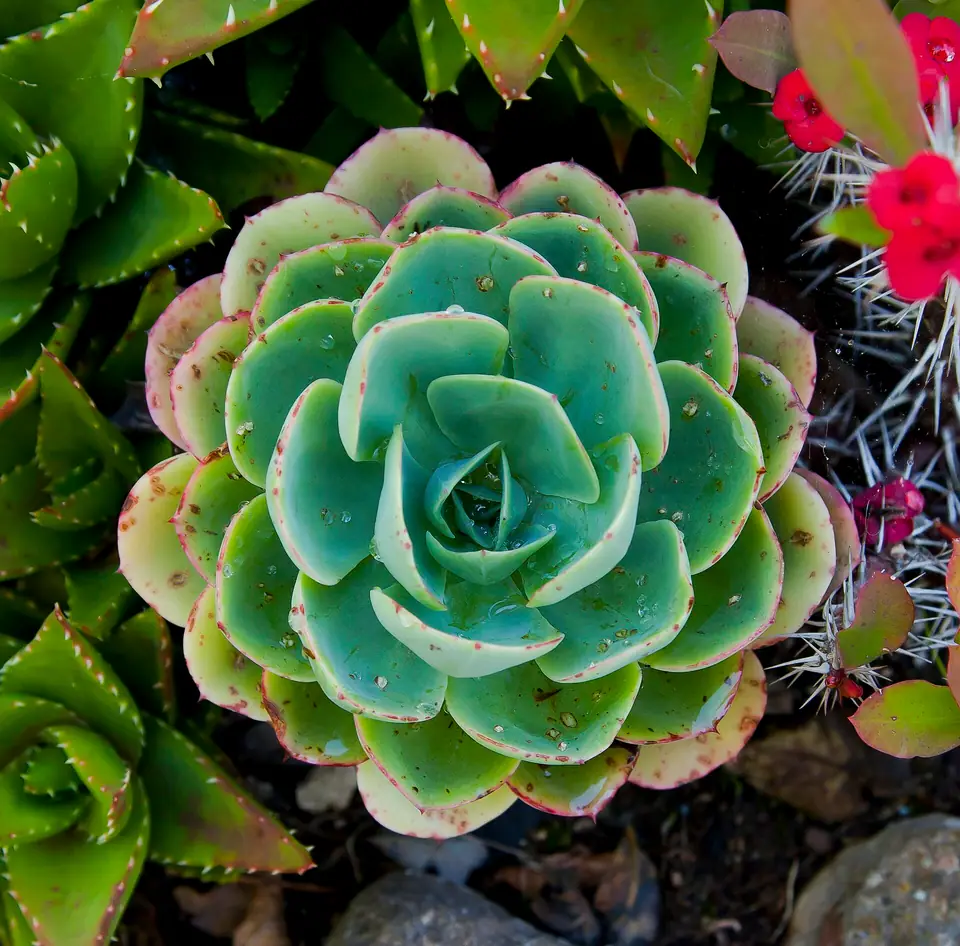
A pristine pale blue-green rosette with a soft powdery coating, one of the most beloved echeverias. It offsets generously into clusters and sends up arching pink stems of coral flowers in spring. Indoors it demands the sunniest spot you have — anything less and the perfect rosette opens up and stretches. Water roughly every 12 days while it's growing (about every 28 in winter), give it direct sun, kept above 41°F (5°C) — dry air is fine for it.
Care at a glance
Water the soil (never the rosette) only when fully dry; the lower leaves soften and thin when it is truly thirsty.
A south-facing windowsill with direct sun for most of the day; this is the hardest part of keeping it indoors.
Quarter-strength cactus fertilizer once or twice in the growing season.
Mistakes that kill this plant
- Insufficient light — an etiolated echeveria never regains its shape.
- Watering overhead so droplets sit in the powdery rosette.
- Winter watering at the same frequency as summer.
Seasonal tips
- Summer it outdoors in sun if possible — indoor light alone is rarely enough.
- Keep it nearly dry through winter; cool and dry is safe, cool and wet is fatal.
- Remove dying lower leaves promptly — they are mealybug and rot shelters.
Is it safe for pets?
Our records list Mexican Snowball as non-toxic to cats and dogs.
Full pet-safety details for cats & dogsCare for your Mexican Snowball on autopilot
Ploomily turns this guide into a Living Schedule — watering tuned to your city’s climate, the season, the pot and the light, and feeding tuned to that same pot, drainage and light, following the growing season and pausing while the plant rests. The founding price in force today is shown in full before you confirm, and locked for as long as you stay subscribed — with 30 days to change your mind.
Build my Living ScheduleMexican Snowball is featured in
More succulent plants
Toxicity here is informational, not a safety guarantee. Those are our own records, compiled by following the ASPCA's published toxic and non-toxic plant lists and Pet Poison Helpline's plant poison list rather than copied from them — confirm anything that matters against the ASPCA's published lists, which this one is matched to, or with your vet. If your pet ingested this plant, contact your vet or the ASPCA Animal Poison Control Center at (888) 426-4435.