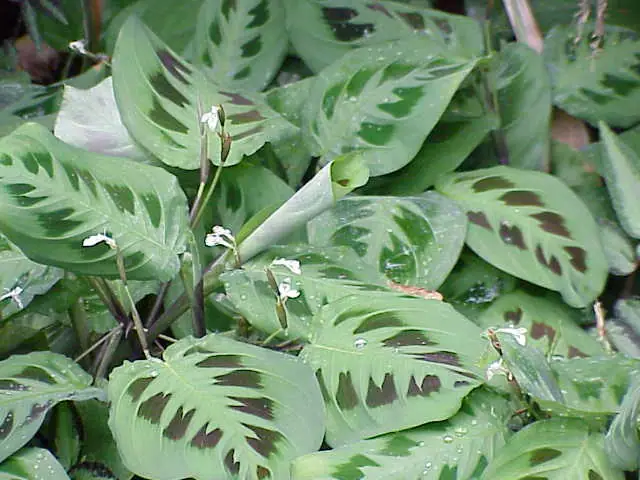
How to care for Prayer Plant
Maranta leuconeura · Marantaceae
The original prayer plant, folding its beautifully patterned leaves upward each evening like hands in prayer. Varieties range from the red-veined erythroneura to the blotched kerchoveana. It is the most forgiving of the prayer plant family and trails nicely from a shelf or hanging pot. Water roughly every 5 days while it's growing (about every 9 in winter), give it a bright room away from the window, kept above 59°F (15°C) — average room humidity suits it.
Care at a glance
Water when the top centimeter dries, ideally with filtered or rainwater, keeping the mix lightly moist.
Medium to bright indirect light; strong sun fades the vein colors and scorches leaves.
Half-strength balanced fertilizer every 2–3 weeks during active growth.
Mistakes that kill this plant
- Soggy soil in a cold room over winter.
- Direct summer sun through glass.
- Bone-dry air paired with missed waterings.
Seasonal tips
- Trim leggy stems in spring — cuttings root easily in water and thicken the parent.
- Slow watering in winter and hold fertilizer entirely.
- If nightly leaf folding stops, check for stress: light too strong, or soil too dry.
Is it safe for pets?
We couldn’t place Prayer Plant on a toxic or a non-toxic list, so its toxicity is unconfirmed — which is not the same as safe.
Full pet-safety details for cats & dogsCare for your Prayer Plant on autopilot
Ploomily turns this guide into a Living Schedule — watering tuned to your city’s climate, the season, the pot and the light, and feeding tuned to that same pot, drainage and light, following the growing season and pausing while the plant rests. The founding price in force today is shown in full before you confirm, and locked for as long as you stay subscribed — with 30 days to change your mind.
Build my Living SchedulePrayer Plant is featured in
More foliage plants
Toxicity here is informational, not a safety guarantee. Those are our own records, compiled by following the ASPCA's published toxic and non-toxic plant lists and Pet Poison Helpline's plant poison list rather than copied from them — confirm anything that matters against those lists or with your vet. If your pet ingested this plant, contact your vet or the ASPCA Animal Poison Control Center at (888) 426-4435.