How to care for Purple Shamrock
Oxalis triangularis · Oxalidaceae
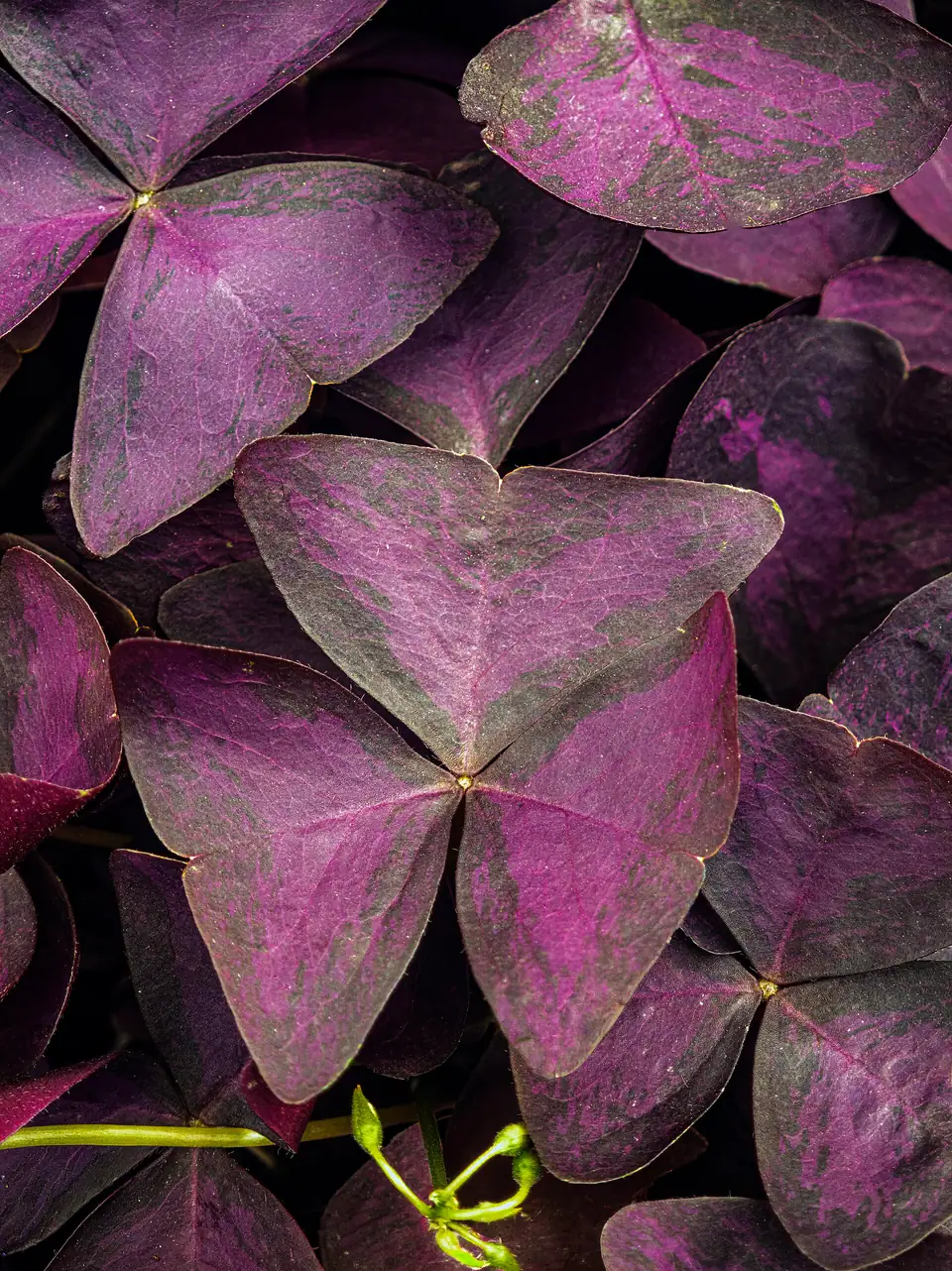
A charming bulb plant with deep purple, butterfly-shaped leaflets that fold closed each night and reopen with the morning light. It sends up delicate pale pink flowers on and off through the growing season. If it ever collapses, don't panic: it grows from small bulbs and often resurrects after a rest. Water roughly every 7 days while it's growing (about every 21 in winter), give it bright, indirect light, kept above 50°F (10°C) — dry air is fine for it.
Care at a glance
Water when the top half of the soil is dry; when the plant enters dormancy and dies back, water only sparingly until new shoots appear.
A bright window with some gentle direct sun keeps growth compact and the color deep.
Half-strength balanced liquid feed monthly while leaves are actively growing.
Mistakes that kill this plant
- Watering a dormant pot as if it were in full growth, rotting the bulbs.
- Throwing the plant away during natural dieback, mistaking dormancy for death.
- Constantly soggy soil at any stage.
Seasonal tips
- If foliage dies back in summer or after stress, stop watering and let the bulbs rest for a few weeks.
- Resume normal watering and feeding as soon as new shoots emerge.
- Divide the bulbs when repotting to make new plants easily.
Is it safe for pets?
We have Purple Shamrock recorded as toxic to cats and dogs.
Full pet-safety details for cats & dogsCare for your Purple Shamrock on autopilot
Ploomily turns this guide into a Living Schedule — watering tuned to your city’s climate, the season, the pot and the light, and feeding tuned to that same pot, drainage and light, following the growing season and pausing while the plant rests. The founding price in force today is shown in full before you confirm, and locked for as long as you stay subscribed — with 30 days to change your mind.
Build my Living SchedulePurple Shamrock is featured in
More foliage plants
Toxicity here is informational, not a safety guarantee. Those are our own records, compiled by following the ASPCA's published toxic and non-toxic plant lists and Pet Poison Helpline's plant poison list rather than copied from them — confirm anything that matters against the ASPCA's published lists, which this one is matched to, or with your vet. If your pet ingested this plant, contact your vet or the ASPCA Animal Poison Control Center at (888) 426-4435.