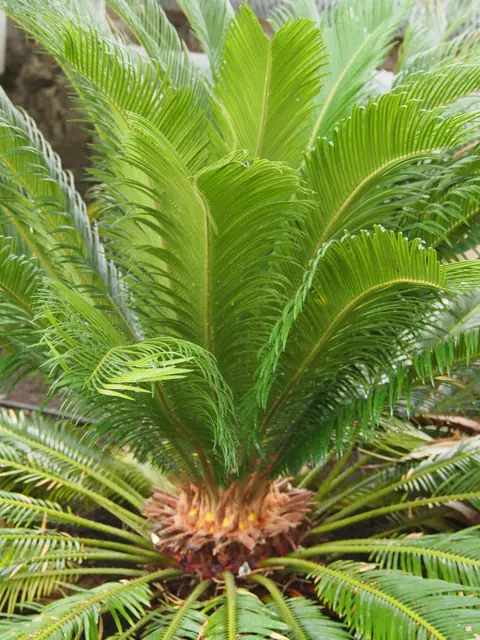
Sago Palm problems & how to fix them
Cycas revoluta
Drooping, yellowing, brown tips, or a plant that just won’t thrive? Here are the most common Sago Palm problems, what usually causes them, and how to turn things around.
Common problems
Root rot
The most common killer — wet soil or water pooled in the crown rots the trunk. A fungal or bacterial infection of the roots, almost always triggered by soil staying wet too long. Caught early, most plants recover within a few weeks after repotting; if most roots are already mushy, recovery is uncertain.
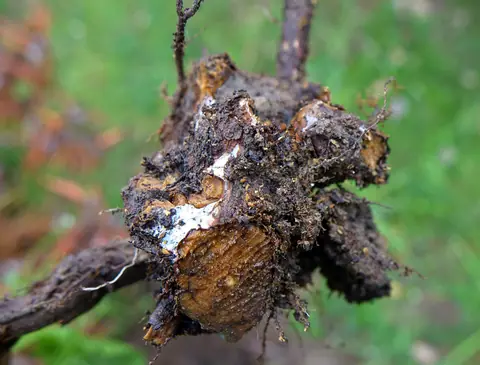
Phytophthora root rot on a dug-up root ball
Photo: Jerzy Opioła · CC BY-SA 4.0 · Wikimedia Commons
Scale insects
Armored scale (including cycad scale) crusts the leaf undersides and trunk and is stubborn to clear. Sap-sucking insects that hide under hard, shell-like bumps stuck to stems and leaves, making them resistant to sprays. Treatment is mostly manual and takes patience, but most plants recover well over 4-6 weeks of consistent removal.
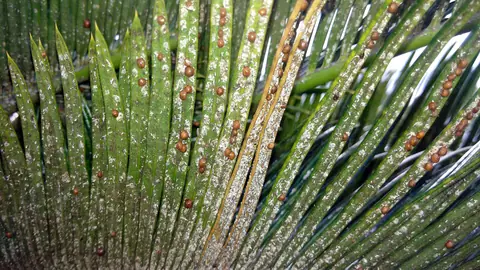
armoured scale insects dotting a cycad frond
Photo: Plant pests and diseases · CC0 · Wikimedia Commons
Nutrient-deficiency yellowing
Manganese or magnesium shortage yellows and frizzles new fronds ('frizzle top'). Leaves yellow because the plant has run out of one or more nutrients, usually after a long time in the same soil with no feeding. Old yellow leaves rarely green up fully, but with steady feeding new growth returns to a healthy color within 3-6 weeks.
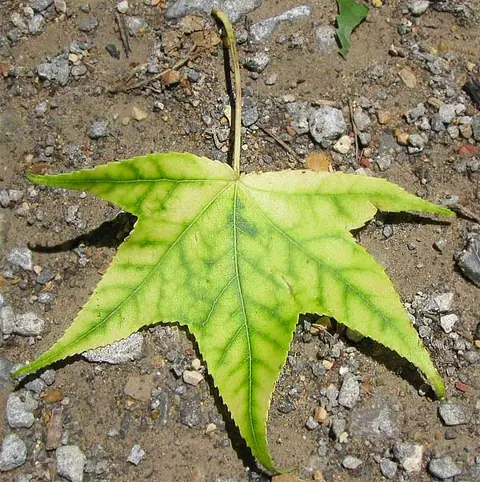
interveinal chlorosis: a leaf yellowing between green veins
Photo: Jim Conrad · Public domain · Wikimedia Commons
Sunburn
A sudden move into hot sun bleaches the stiff leaflets yellow-white. Leaf tissue scorched by more direct sun than the plant was acclimated to, often after moving it to a brighter spot or outdoors. Burned patches are permanent, but the plant itself usually recovers fully once moved - new growth comes in healthy.
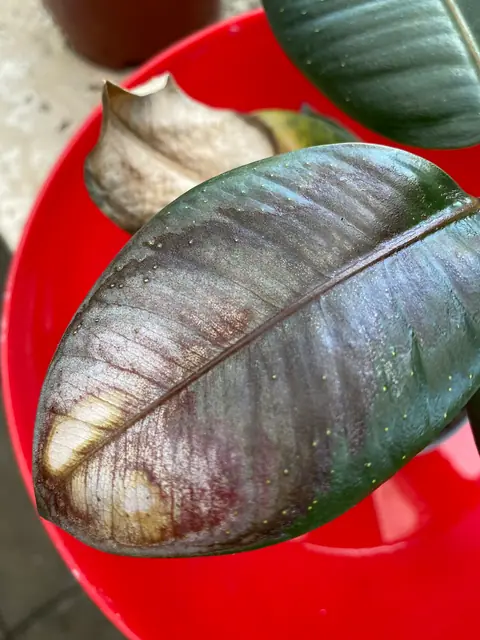
a sunburnt rubber plant leaf, bleached and browned where the sun hit
Photo: Secretlondon · CC BY-SA 4.0 · Wikimedia Commons
The mistakes that most often kill it
- Overwatering — a rotted sago trunk rarely recovers.
- Keeping it anywhere a dog or cat can chew it; ingestion is a genuine veterinary emergency.
- Letting the crown collect water, which rots the growing point.
Not sure what’s wrong?
Ploomily’s rescue tool walks you through the symptoms, gives an honest diagnosis, and schedules a day-by-day recovery plan. The founding price in force today is shown in full before you confirm, and locked for as long as you stay subscribed — with 30 days to change your mind.
Rescue my plant