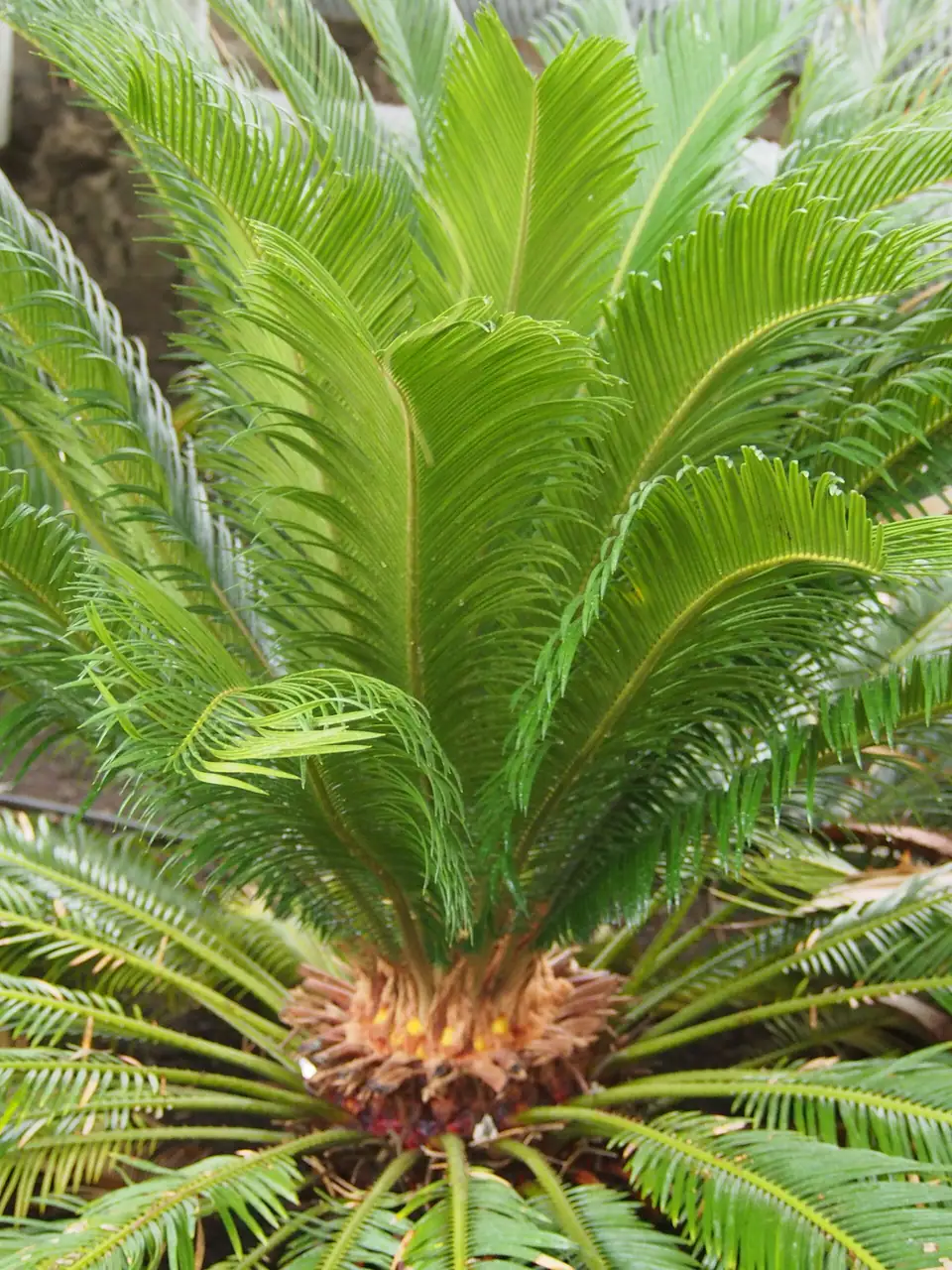
How to care for Sago Palm
Cycas revoluta · Cycadaceae
Not a true palm at all but a cycad — a lineage older than the dinosaurs — with a shaggy trunk and a stiff rosette of glossy, feathered leaves. It grows in slow, dramatic bursts, pushing out a whole new whorl of fronds at once and then resting for months. Beautiful and nearly indestructible, but seriously poisonous to pets. Water roughly every 10 days while it's growing (about every 21 in winter), give it bright, indirect light, kept above 46°F (8°C) — average room humidity suits it.
Care at a glance
Water deeply when the top half of the soil is dry, keeping water out of the crown; it stores reserves and hates wet feet.
Bright light with a few hours of gentle direct sun keeps the rosette compact and symmetrical.
Half-strength balanced or palm fertilizer two or three times in the growing season.
Mistakes that kill this plant
- Overwatering — a rotted sago trunk rarely recovers.
- Keeping it anywhere a dog or cat can chew it; ingestion is a genuine veterinary emergency.
- Letting the crown collect water, which rots the growing point.
Seasonal tips
- New fronds emerge soft — don't move or touch the plant during a flush or they harden bent.
- Water sparingly in winter; a cool, bright rest suits it.
- Inspect the frond undersides and trunk for scale every few weeks.
Is it safe for pets?
We have Sago Palm recorded as toxic to cats and dogs.
Full pet-safety details for cats & dogsCare for your Sago Palm on autopilot
Ploomily turns this guide into a Living Schedule — watering tuned to your city’s climate, the season, the pot and the light, and feeding tuned to that same pot, drainage and light, following the growing season and pausing while the plant rests. The founding price in force today is shown in full before you confirm, and locked for as long as you stay subscribed — with 30 days to change your mind.
Build my Living ScheduleMore palm plants
Toxicity here is informational, not a safety guarantee. Those are our own records, compiled by following the ASPCA's published toxic and non-toxic plant lists and Pet Poison Helpline's plant poison list rather than copied from them — confirm anything that matters against the ASPCA's published lists, which this one is matched to, or with your vet. If your pet ingested this plant, contact your vet or the ASPCA Animal Poison Control Center at (888) 426-4435.