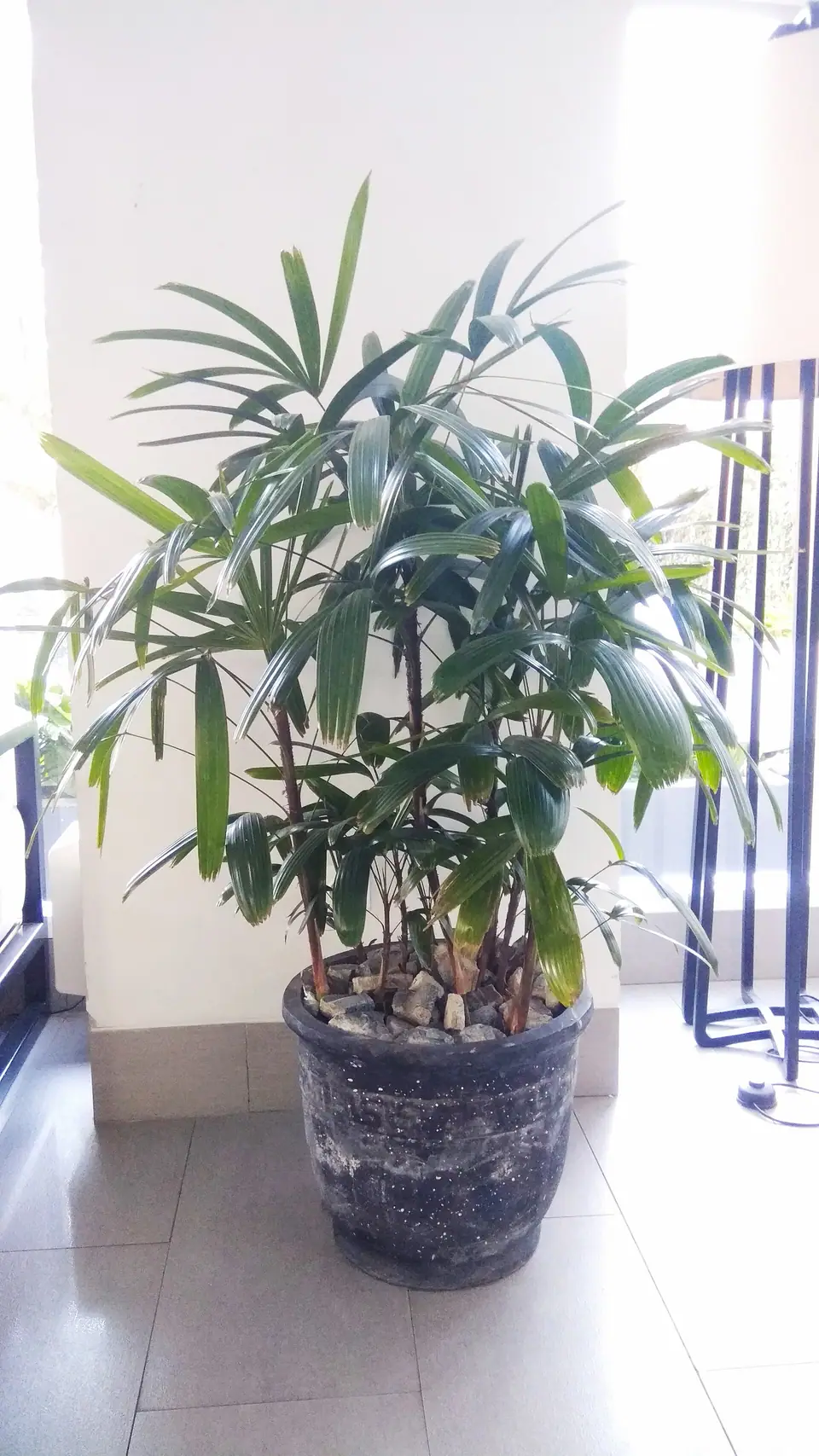
How to care for Lady Palm
Rhapis excelsa · Arecaceae
A refined clumping palm with fans of glossy, blunt-tipped leaflets on slender bamboo-like canes wrapped in dark fiber. Cultivated for centuries in China and Japan, it is one of the most shade-tolerant and long-lived palms you can grow indoors. Slow, dignified, and very hard to offend. Water roughly every 7 days while it's growing (about every 12 in winter), give it a bright room away from the window, kept above 46°F (8°C) — average room humidity suits it.
Care at a glance
Water when the top few centimeters dry; it likes even, moderate moisture and forgives the occasional lapse.
Bright shade to filtered light — an east window or a spot back from a bright one; direct sun yellows the fans.
Light feeder — half-strength balanced fertilizer a few times in the growing season.
Mistakes that kill this plant
- Leaving it in a waterlogged cachepot until the canes rot.
- Full sun placement that bleaches and burns the fans.
- Heavy fertilizing — its roots burn easily.
Seasonal tips
- Use rain or filtered water where possible to keep leaf tips clean.
- Trim browned tips with scissors following the leaflet's natural angle.
- New canes rise from the soil each year — thin old, tired ones at the base to keep the clump handsome.
Is it safe for pets?
Our records list Lady Palm as non-toxic to cats and dogs.
Full pet-safety details for cats & dogsCare for your Lady Palm on autopilot
Ploomily turns this guide into a Living Schedule — watering tuned to your city’s climate, the season, the pot and the light, and feeding tuned to that same pot, drainage and light, following the growing season and pausing while the plant rests. The founding price in force today is shown in full before you confirm, and locked for as long as you stay subscribed — with 30 days to change your mind.
Build my Living ScheduleLady Palm is featured in
More palm plants
Toxicity here is informational, not a safety guarantee. Those are our own records, compiled by following the ASPCA's published toxic and non-toxic plant lists and Pet Poison Helpline's plant poison list rather than copied from them — confirm anything that matters against the ASPCA's published lists, which this one is matched to, or with your vet. If your pet ingested this plant, contact your vet or the ASPCA Animal Poison Control Center at (888) 426-4435.