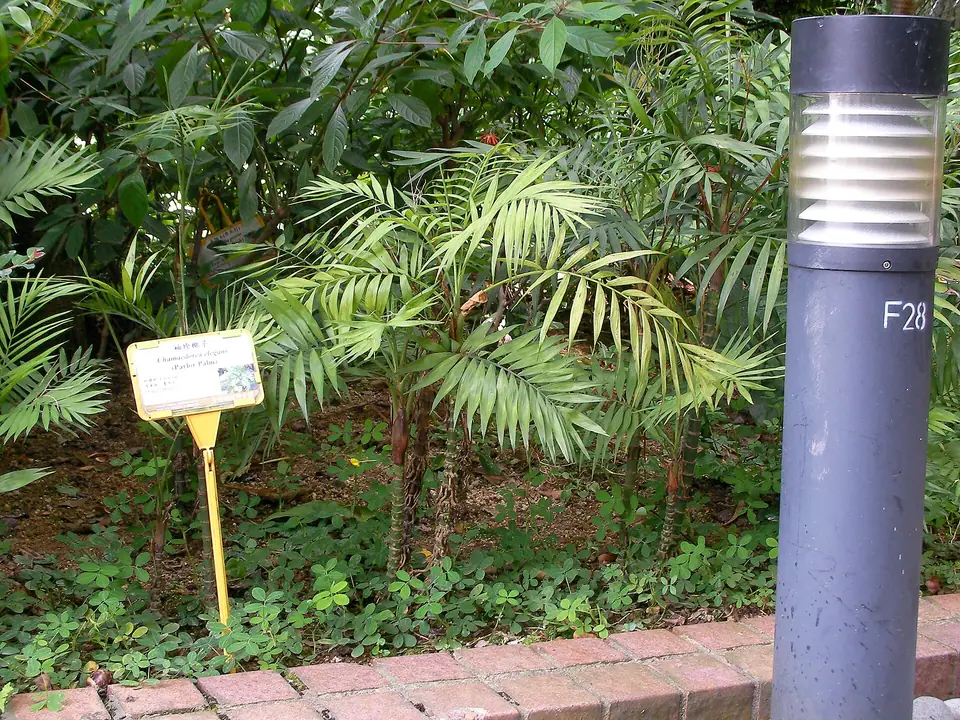
How to care for Parlor Palm
Chamaedorea elegans · Arecaceae
The classic Victorian houseplant palm — compact, elegant, and famously tolerant of the low light and dry air that defeat most palms. It grows slowly to about a meter indoors, often sold as several seedlings per pot for a fuller look. A near-perfect first palm and safe around curious pets. Water roughly every 7 days while it's growing (about every 12 in winter), give it a bright room away from the window, kept above 54°F (12°C) — average room humidity suits it.
Care at a glance
Water when the top 1 inch (2-3 cm) of soil are dry; it prefers evenly light moisture over swings between soggy and parched.
Happy in bright shade or near a north or east window; direct sun yellows and burns the delicate fronds.
Balanced houseplant fertilizer at half strength monthly in spring and summer — it is a light feeder.
Mistakes that kill this plant
- Letting spider mites go unnoticed through a dry winter.
- Keeping the pot standing in water until the roots rot.
- Placing it in hot direct sun, which bleaches the fronds beyond recovery.
Seasonal tips
- Shower the foliage every month or two — it deters spider mites and cleans the fronds.
- Keep it away from heat vents and cold drafts in winter.
- It likes being a bit rootbound; repot only when roots circle the pot.
Is it safe for pets?
Our records list Parlor Palm as non-toxic to cats and dogs.
Full pet-safety details for cats & dogsCare for your Parlor Palm on autopilot
Ploomily turns this guide into a Living Schedule — watering tuned to your city’s climate, the season, the pot and the light, and feeding tuned to that same pot, drainage and light, following the growing season and pausing while the plant rests. The founding price in force today is shown in full before you confirm, and locked for as long as you stay subscribed — with 30 days to change your mind.
Build my Living ScheduleParlor Palm is featured in
More palm plants
Toxicity here is informational, not a safety guarantee. Those are our own records, compiled by following the ASPCA's published toxic and non-toxic plant lists and Pet Poison Helpline's plant poison list rather than copied from them — confirm anything that matters against the ASPCA's published lists, which this one is matched to, or with your vet. If your pet ingested this plant, contact your vet or the ASPCA Animal Poison Control Center at (888) 426-4435.