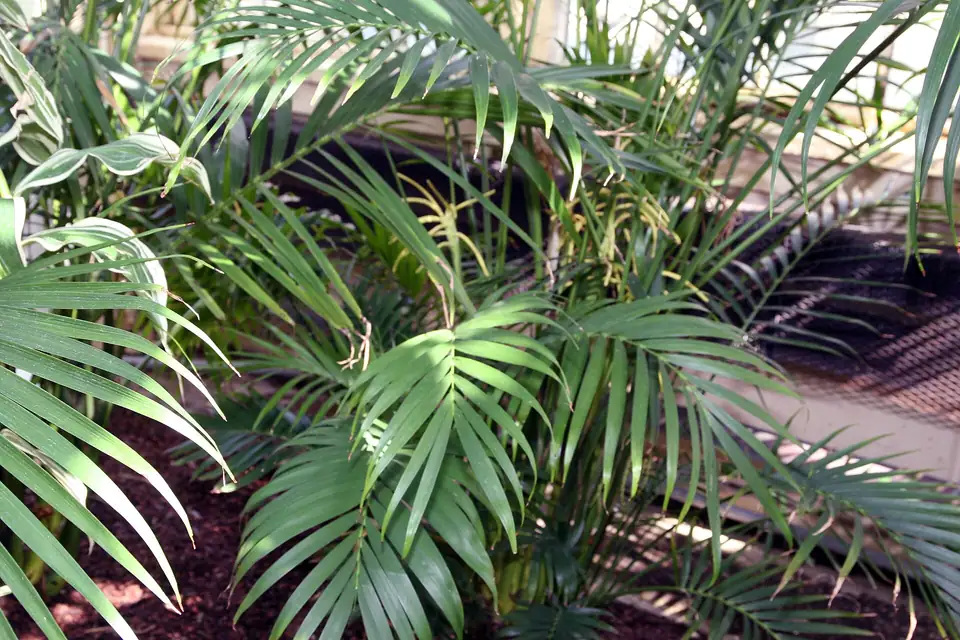
How to care for Cat Palm
Chamaedorea cataractarum · Arecaceae
A trunkless, bushy palm from Mexican streamsides that makes a dense fountain of glossy fronds — like a fuller, thirstier parlor palm. The species name means 'of the waterfalls', which tells you everything about its watering preferences. Popular with pet owners: its Chamaedorea relatives are widely regarded as low-risk, though this exact species isn't matched on the pet-toxicity list we follow, so treat it as unverified. Water roughly every 5 days while it's growing (about every 9 in winter), give it bright, indirect light, kept above 55°F (13°C) — it wants humid air.
Care at a glance
Keep the soil consistently lightly moist — this streamside palm browns quickly if the root ball dries right out.
Bright, indirect light keeps it dense; it tolerates medium light but thins out, and direct sun scorches it.
Half-strength balanced feed monthly in spring and summer.
Mistakes that kill this plant
- Erratic watering that lets the root ball dry completely.
- Dry heated air plus unchecked spider mites.
- A dim corner where the dense clump slowly thins to sticks.
Seasonal tips
- Group it with other plants or run a humidifier in winter.
- Shower the whole plant occasionally to rinse dust and deter mites.
- Trim spent fronds at the base; the clump renews itself from the center.
Is it safe for pets?
We couldn’t place Cat Palm on a toxic or a non-toxic list, so its toxicity is unconfirmed — which is not the same as safe.
Full pet-safety details for cats & dogsCare for your Cat Palm on autopilot
Ploomily turns this guide into a Living Schedule — watering tuned to your city’s climate, the season, the pot and the light, and feeding tuned to that same pot, drainage and light, following the growing season and pausing while the plant rests. The founding price in force today is shown in full before you confirm, and locked for as long as you stay subscribed — with 30 days to change your mind.
Build my Living ScheduleCat Palm is featured in
More palm plants
Toxicity here is informational, not a safety guarantee. Those are our own records, compiled by following the ASPCA's published toxic and non-toxic plant lists and Pet Poison Helpline's plant poison list rather than copied from them — confirm anything that matters against those lists or with your vet. If your pet ingested this plant, contact your vet or the ASPCA Animal Poison Control Center at (888) 426-4435.